






Supply chains have always been complex beasts to manage, but today’s global networks are more intricate than ever. That’s where agentic AI is stepping in to revolutionize how we handle procurement and logistics. Unlike traditional automation, these autonomous agents can make decisions, learn from outcomes, and adapt to changing conditions—all without constant human oversight.
What Makes Agentic AI Different in Supply Chain Management?
When we talk about AI in supply chain management, we’re often referring to systems that analyze data and provide recommendations. Agentic AI in supply chain takes this several steps further. These intelligent agents don’t just suggest actions—they execute them, monitor results, and continuously refine their approaches based on real-world feedback.
Think of agentic AI as having a team of tireless digital colleagues who handle routine decisions, flag anomalies, and optimize processes 24/7. They’re proactive rather than reactive, anticipating problems before they cascade through your supply network.
Autonomous Procurement Agents: Your Always-On Buying Team
One of the most exciting applications is in autonomous procurement agents. These AI systems can monitor inventory levels, track supplier performance, negotiate prices within predetermined parameters, and automatically place orders when conditions are optimal.
What’s particularly impressive is how these agents learn supplier patterns over time. They recognize which vendors consistently deliver on time, which ones offer the best quality-to-price ratios, and even which suppliers are likely to have capacity during peak seasons. This means your procurement function becomes smarter with every transaction.
Real-Time Decision Making at Scale
Traditional procurement requires human buyers to juggle hundreds of variables. Autonomous agents excel at this complexity, processing market conditions, currency fluctuations, transportation costs, and supplier reliability simultaneously to make optimal purchasing decisions in milliseconds.
AI-Powered Demand Forecasting: Seeing Around Corners
Predicting customer demand has always been part art, part science. AI-powered demand forecasting transforms this into a much more precise discipline. By analyzing historical sales data, seasonal patterns, economic indicators, weather forecasts, social media trends, and countless other signals, agentic AI creates remarkably accurate demand predictions.
The beauty of these systems is their ability to detect subtle patterns humans might miss. They might notice that sales of a particular product spike three days after certain weather conditions or that social media sentiment predicts demand shifts weeks in advance.
Generative AI for Logistics: Creative Problem Solving
Generative AI for logistics is opening new frontiers in route optimization and resource allocation. These systems don’t just choose from existing options—they generate novel solutions to logistical challenges.
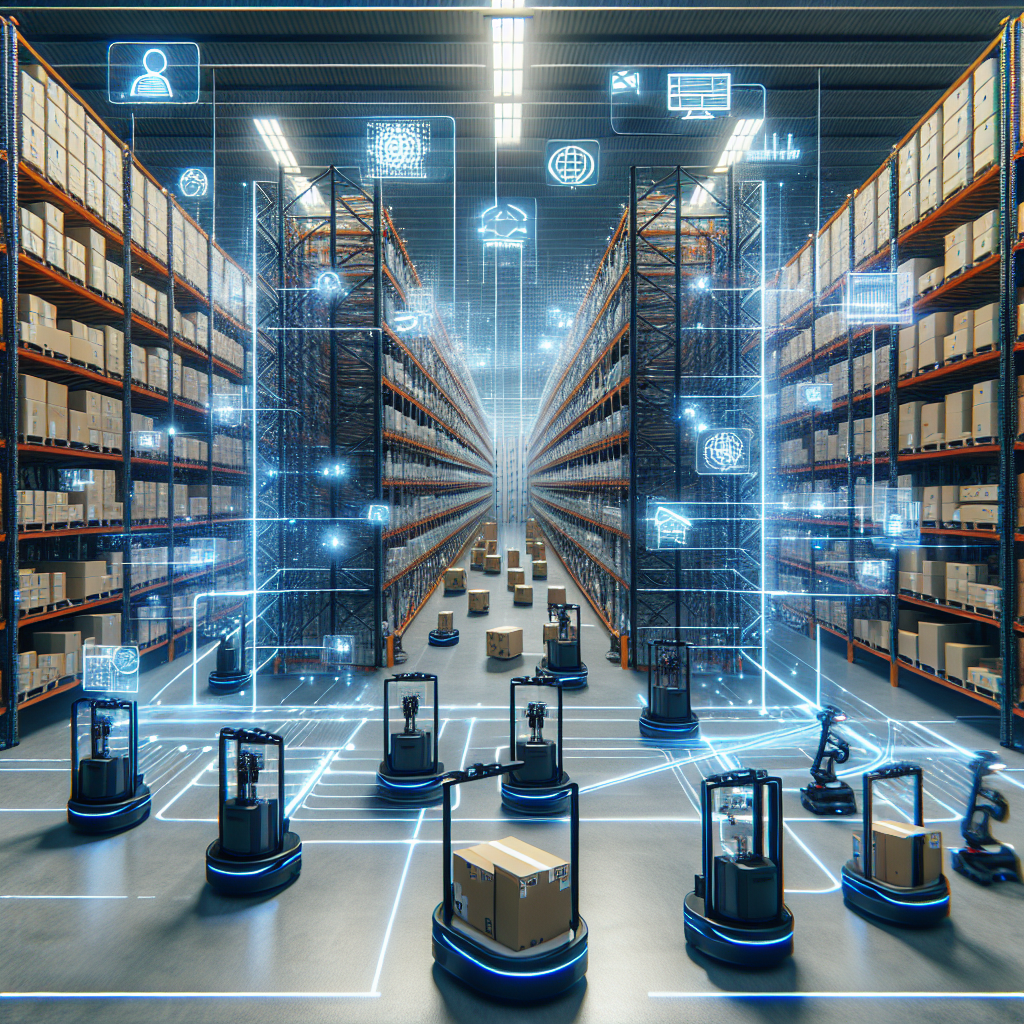
Imagine an AI that can create entirely new delivery routes that no human planner considered, or one that generates innovative warehouse layouts that maximize efficiency in ways that defy conventional wisdom. That’s the power of generative approaches applied to logistics problems.
Dynamic Routing and Load Optimization
Generative AI can create thousands of potential routing scenarios, evaluating each for cost, time, carbon footprint, and reliability. It then selects or even combines elements from multiple scenarios to craft the optimal solution for current conditions.
Cognitive Supply Chain Automation: Systems That Think
Cognitive supply chain automation represents the evolution from simple if-then rules to systems that genuinely understand context and nuance. These platforms can interpret unstructured data like emails from suppliers, read shipping documents, understand quality reports, and make informed decisions based on this information.
When a supplier sends a vague email about potential delays, cognitive automation can assess the impact, check alternative suppliers, adjust production schedules, and notify relevant stakeholders—all without human intervention for routine situations.