





The Dawn of Intelligent Supply Chains
Remember when supply chain management meant endless spreadsheets, manual orders, and crossing your fingers that everything would arrive on time? Those days are quickly becoming history. We’re entering an exciting era where agentic AI in supply chain operations is revolutionizing how businesses manage logistics, procurement, and planning. Think of it as having a team of tireless, intelligent assistants working around the clock to optimize every aspect of your supply chain.
What makes this transformation so remarkable is that we’re not just talking about simple automation anymore. AI in supply chain management has evolved into sophisticated systems that can think, learn, and make decisions autonomously. These aren’t your grandfather’s workflow automations—they’re intelligent agents that understand context, anticipate problems, and adapt to changing conditions in real-time.
What Makes Agentic AI Different?
You might be wondering what sets agentic AI apart from traditional automation. The key difference lies in autonomy and decision-making capability. While conventional systems follow pre-programmed rules, agentic AI can set its own goals, plan actions, and execute tasks with minimal human intervention. It’s like comparing a basic calculator to a brilliant analyst who not only crunches numbers but also provides strategic recommendations.
In the context of supply chains, this means systems that don’t just react to events but proactively prevent disruptions before they happen. These intelligent agents monitor thousands of data points simultaneously, learning from patterns and continuously improving their performance. The result? A supply chain that becomes smarter and more efficient with each passing day.
Autonomous Procurement Agents: Your 24/7 Buying Team
Let’s talk about one of the most exciting applications: autonomous procurement agents. These digital workers are transforming how companies source materials and negotiate with suppliers. Instead of procurement teams spending hours comparing quotes and tracking orders, AI agents handle the heavy lifting automatically.
These agents analyze historical purchasing data, monitor market prices, evaluate supplier performance, and even negotiate terms within predefined parameters. They can identify the best time to buy based on price trends, automatically reorder inventory when stock levels drop, and switch suppliers instantly if quality issues arise. It’s like having a procurement expert with perfect memory and infinite patience working exclusively for your organization.
The Strategic Advantage
What’s particularly impressive is how autonomous procurement agents free up human teams to focus on strategic relationships and complex negotiations. The AI handles routine purchases and spot-buys, while your team concentrates on building partnerships, managing risks, and developing supplier ecosystems. This human-AI collaboration creates a procurement function that’s both efficient and strategically sophisticated.
AI-Powered Demand Forecasting: Predicting the Unpredictable
If there’s one area where AI truly shines, it’s in AI-powered demand forecasting. Traditional forecasting methods often struggle with the complexity of modern markets—seasonal variations, trending products, economic shifts, and unexpected events all create forecasting nightmares. Enter AI, which can analyze massive datasets and identify patterns that humans simply cannot see.
Modern AI forecasting systems ingest data from dozens of sources: historical sales, weather patterns, social media trends, economic indicators, and even competitor activities. They continuously refine their predictions based on real-world outcomes, becoming more accurate over time. Some systems can now predict demand with accuracy levels that were unimaginable just a few years ago.
The practical impact is enormous. Better forecasts mean less overstock sitting in warehouses and fewer stockouts disappointing customers. Companies can optimize inventory levels, reduce waste, and improve cash flow—all while providing better service to their customers.
Generative AI for Logistics: Creating Smarter Solutions
Here’s where things get really interesting. Generative AI for logistics isn’t just analyzing existing data—it’s creating entirely new solutions to complex problems. Need to optimize delivery routes across a fleet of 500 trucks considering traffic, weather, delivery windows, and driver schedules? Generative AI can create and evaluate thousands of potential scenarios in seconds.
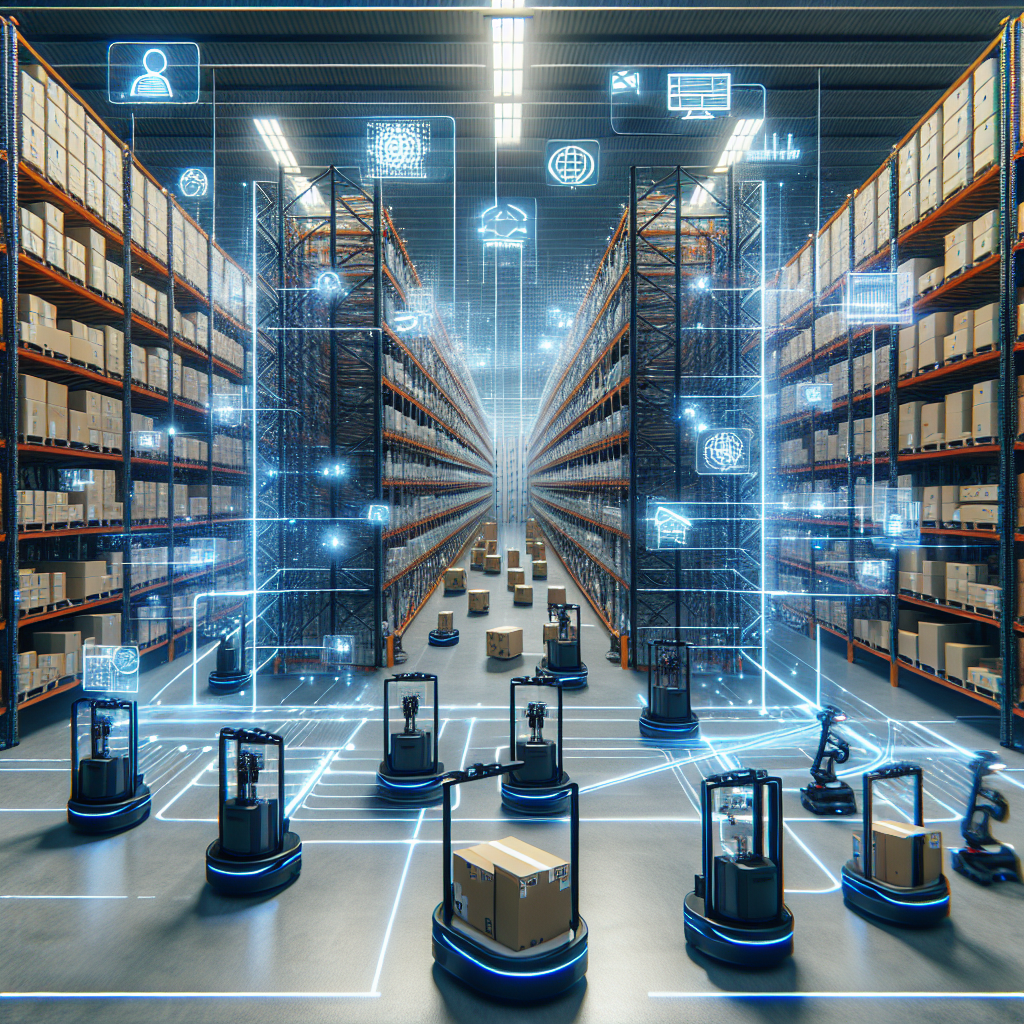
These systems can generate optimized warehouse layouts, design efficient packaging configurations, and even create contingency plans for various disruption scenarios. It’s like having a creative problem-solver that can think through countless possibilities and identify solutions that human planners might never consider.
Real-World Applications
Companies are using generative AI to redesign distribution networks, optimize container loading, and create dynamic routing strategies that adapt to real-time conditions. The technology can even generate synthetic data to test new strategies without risking real operations—a safe sandbox for innovation.
Cognitive Supply Chain Automation: Beyond Simple Tasks
Cognitive supply chain automation represents the next level of intelligent operations. Unlike traditional automation that handles repetitive tasks, cognitive automation can manage complex processes requiring judgment, interpretation, and decision-making. Think of it as the difference between a robot arm on an assembly line and an AI system that can read documents, understand context, and make nuanced decisions.
These systems can process invoices from various suppliers in different formats, identify discrepancies, resolve simple issues automatically, and flag complex problems for human review. They can monitor shipment documentation, ensure compliance with regulations across different countries, and even handle customer inquiries about order status with natural language understanding.
The beauty of cognitive automation is that it handles the mundane while understanding the meaningful. It doesn’t just move data around—it comprehends what that data means and takes appropriate action.
Supply Chain Digital Twins: Your Virtual Crystal Ball
One of the most powerful tools emerging in modern logistics is supply chain digital twins. Imagine having a complete virtual replica of your entire supply chain—every warehouse, vehicle, product, and process—that updates in real-time and allows you to test changes before implementing them in the real world.
That’s exactly what digital twins provide. These virtual models synchronize with your physical operations through IoT sensors, GPS tracking, and integrated systems. You can simulate scenarios like “What happens if our main supplier has a two-week delay?” or “How would a new distribution center in Texas affect delivery times and costs?” without any risk to actual operations.
Companies are using digital twins to stress-test their supply chains against various scenarios—natural disasters, demand spikes, supplier failures, and more. This allows them to identify vulnerabilities and develop mitigation strategies before problems occur. It’s like having a time machine that lets you see the future consequences of today’s decisions.
Continuous S&OP Planning: Always-On Strategy
Traditional Sales and Operations Planning (S&OP) typically happens monthly or quarterly in long meetings where teams align forecasts with capacity. But in today’s fast-moving markets, monthly planning cycles can leave companies constantly playing catch-up. That’s where continuous S&OP planning comes in.
AI-powered systems enable continuous planning by constantly updating forecasts, capacity models, and financial projections based on the latest data. Instead of waiting for the monthly meeting, decision-makers have access to current plans that reflect today’s reality. When significant changes occur—a major order comes in, a supplier has issues, or market conditions shift—the system automatically recalculates plans and alerts relevant stakeholders.
This doesn’t eliminate the need for human judgment and collaboration, but it makes those interactions more productive. Teams spend less time gathering data and more time discussing strategic choices. The planning process becomes dynamic, responsive, and aligned with the actual pace of business.
Predictive Maintenance for Fleet IoT: Preventing Problems Before They Happen
Fleet management has always been a critical component of logistics, but predictive maintenance for fleet IoT is changing the game entirely. Instead of maintaining vehicles on fixed schedules or waiting for breakdowns, AI systems predict exactly when components will need service based on actual usage patterns and conditions.
IoT sensors throughout vehicles monitor everything from engine performance to tire pressure, brake wear to battery health. AI algorithms analyze this data stream alongside historical maintenance records, weather conditions, driving patterns, and more. The result? Predictions like “Truck 47’s alternator will likely fail within the next 200 miles” or “The brake pads on delivery van 12 need replacement before the next service interval.”
This approach dramatically reduces unexpected breakdowns, extends vehicle life, and optimizes maintenance costs. Fleet managers can schedule repairs proactively during slow periods, keep critical vehicles on the road, and maintain detailed health records for every asset. The impact on operational reliability and cost control can be transformative.