



Why Supply Chains Break (And How to Stop It Happening to You)
If the past few years have taught businesses anything, it’s that supply chain disruption is not a rare, once-in-a-generation event. It’s a recurring reality. From global pandemics to geopolitical conflicts, natural disasters to sudden demand spikes, the modern supply chain is under constant pressure. The good news? With the right approach to supply chain risk management, you can identify your vulnerabilities before they become full-blown crises and build the kind of resilience that keeps your business moving no matter what.
In this post, we’re going to walk through how supply chains break down, how to spot the warning signs, and most importantly, what you can actually do about it. Whether you’re a small business owner or a supply chain professional at a large enterprise, there’s something here for you.
Understanding Supply Chain Fragility
Before you can fix a problem, you need to understand it. Supply chain fragility refers to how susceptible your supply network is to shocks, stresses, and unexpected disruptions. A fragile supply chain might look perfectly fine on a normal day, but the moment something goes wrong, the cracks appear fast and spread wide.
The trouble is, many businesses don’t realize just how fragile their supply chains are until they’re already in the middle of a supply chain crisis. By that point, options are limited, costs are high, and customers are unhappy. Understanding the structural weaknesses in your supply network is the first and most important step toward meaningful improvement.
The Difference Between a Disruption and a Crisis
Not every hiccup is a crisis, but every crisis starts as a hiccup that wasn’t caught in time. A supply chain shock is a sudden, unexpected event that rattles your operations. It could be a supplier fire, a port strike, or an unexpected spike in demand. A supply chain crisis, on the other hand, is what happens when those shocks ripple through an unprepared network and create cascading failures that are hard to contain.
The difference between a disruption and a crisis is often preparation. Businesses that have mapped their risks, diversified their sources, and built buffer capacity tend to absorb shocks much more effectively than those who haven’t.
Identifying Your Supply Chain Vulnerabilities
Every supply chain has vulnerabilities. The key is finding yours before your competitors, customers, or the evening news finds them for you. A supply chain vulnerability is any point in your network where a failure could cause significant operational, financial, or reputational damage.
Identifying these vulnerabilities requires a structured approach. You can’t just guess or rely on gut feel. You need data, visibility, and honest conversations with your suppliers, logistics partners, and internal teams.
Single Source Dependency: The Silent Risk
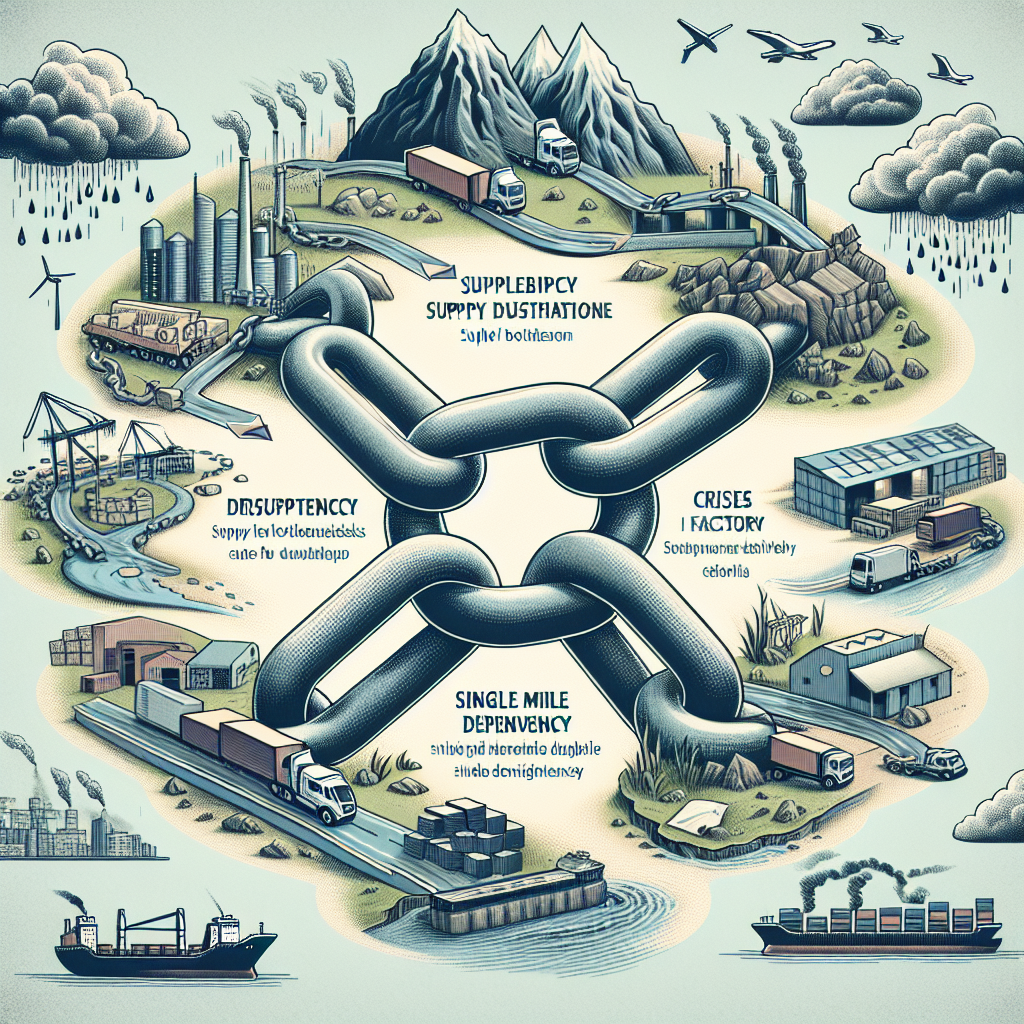
One of the most common and dangerous vulnerabilities in any supply chain is single source dependency. This is when your business relies on just one supplier for a critical component, material, or service. It might feel efficient and cost-effective during normal times, but it creates a massive single point of failure.
When that single supplier experiences a disruption, whether it’s a factory fire, a financial collapse, or a geopolitical restriction, your entire operation can grind to a halt. Supplier failure is one of the leading causes of supply chain disruptions globally, and businesses with single source dependency are disproportionately affected. Mapping your dependencies is essential, and addressing them is non-negotiable if you’re serious about resilience.
Raw Material Shortage Risks
Raw material shortage has become a headline-grabbing issue in recent years, from semiconductor chips to steel to rare earth minerals. But the vulnerability often runs deeper than the shortage itself. The real problem is that many businesses don’t know how exposed they are to raw material risks until they’re already scrambling to find alternatives.
Understanding where your raw materials come from, how concentrated those sources are, and what alternatives exist is critical intelligence. If a significant portion of a key raw material comes from a single country or region, you’re exposed to geopolitical risk, environmental risk, and logistical risk all at once. Diversifying your raw material sourcing, even if it costs a little more up front, can save enormous pain down the line.
Supply Chain Bottlenecks and Where They Hide
A supply chain bottleneck is any point in your network where capacity is constrained, slowing the flow of goods or information. Bottlenecks can exist in manufacturing, warehousing, customs processing, or transportation. What makes them tricky is that they’re not always obvious until the system is under stress.
Common bottlenecks include limited warehouse space near major ports, insufficient trucking capacity in key corridors, and single-facility manufacturing for high-demand products. Identifying bottlenecks requires you to stress-test your supply chain mentally, asking what would happen if volume doubled, or if a key facility went offline. The answers can be eye-opening.
Logistics Disruption: The Moving Parts That Can Go Wrong
Logistics disruption is one of the most visible and frustrating forms of supply chain breakdown. When goods can’t move efficiently, everything downstream suffers. And over the past several years, we’ve seen just about every form of logistics disruption imaginable hit at once.
Port Congestion and Its Ripple Effects
Port congestion has become a defining feature of the modern supply chain crisis. When ships queue for days or weeks outside major ports, the ripple effects spread far and wide. Container availability drops, freight costs spike, and delivery timelines become unpredictable. Businesses that rely on just-in-time delivery models are especially vulnerable to port congestion because they have no inventory buffer to absorb the delays.
Addressing port congestion risk often means rethinking your inventory strategy, diversifying your port entry points, and building stronger relationships with freight forwarders who have the flexibility and connections to reroute shipments when congestion hits.
Freight Delays and Transportation Bottlenecks
Freight delays are often the most immediate symptom of a supply chain under stress. Whether caused by driver shortages, fuel price spikes, infrastructure failures, or weather events, transportation bottlenecks can turn a manageable situation into a serious supply shortage very quickly.
Building resilience against freight delays means working with multiple carriers, maintaining relationships with backup logistics providers, and being willing to pay for priority capacity when necessary. It also means better forecasting so that you’re not constantly operating at the edge of your lead time tolerance.
Cold Chain Disruption: A Special Kind of Risk
For businesses dealing in perishable goods, pharmaceuticals, or temperature-sensitive products, cold chain disruption is a particularly serious vulnerability. A break in the cold chain doesn’t just mean a delay. It means product loss, compliance failures, and potentially serious safety issues.
Cold chain resilience requires redundancy at every link, from refrigerated warehousing to temperature-monitored transport to backup power arrangements. It also requires clear protocols for what happens when a temperature breach is detected, so that teams can respond quickly rather than scrambling to figure out next steps in the moment.
Last Mile Delivery Problems
Last mile delivery problems are often the final and most customer-visible form of logistics disruption. The last mile, getting a product from a distribution hub to its final destination, is frequently the most expensive, complex, and failure-prone part of the entire journey. Traffic, failed delivery attempts, address errors, and capacity constraints all pile up at the last mile.
Solving last mile delivery problems often requires a combination of technology, such as route optimization and real-time tracking, and strategic partnerships with local delivery providers who understand specific markets. Giving customers visibility into their delivery status also helps manage expectations when delays do occur.
Building True Supply Chain Resilience
Understanding your vulnerabilities is step one. Building supply chain resilience is the ongoing work that turns that understanding into real protection. Resilience isn’t about eliminating all risk. That’s impossible. It’s about building the capacity to absorb shocks, adapt quickly, and recover faster than your competitors.