





Supply chains have always been a juggling act, but the stakes have never been higher. Companies that still rely on spreadsheets and gut instincts for planning are finding themselves outpaced by competitors who’ve embraced smarter, faster tools. That’s where AI-powered demand forecasting and continuous S&OP planning come in — reshaping how businesses think about supply chain analytics from the ground up.
What Is AI-Powered Demand Forecasting?
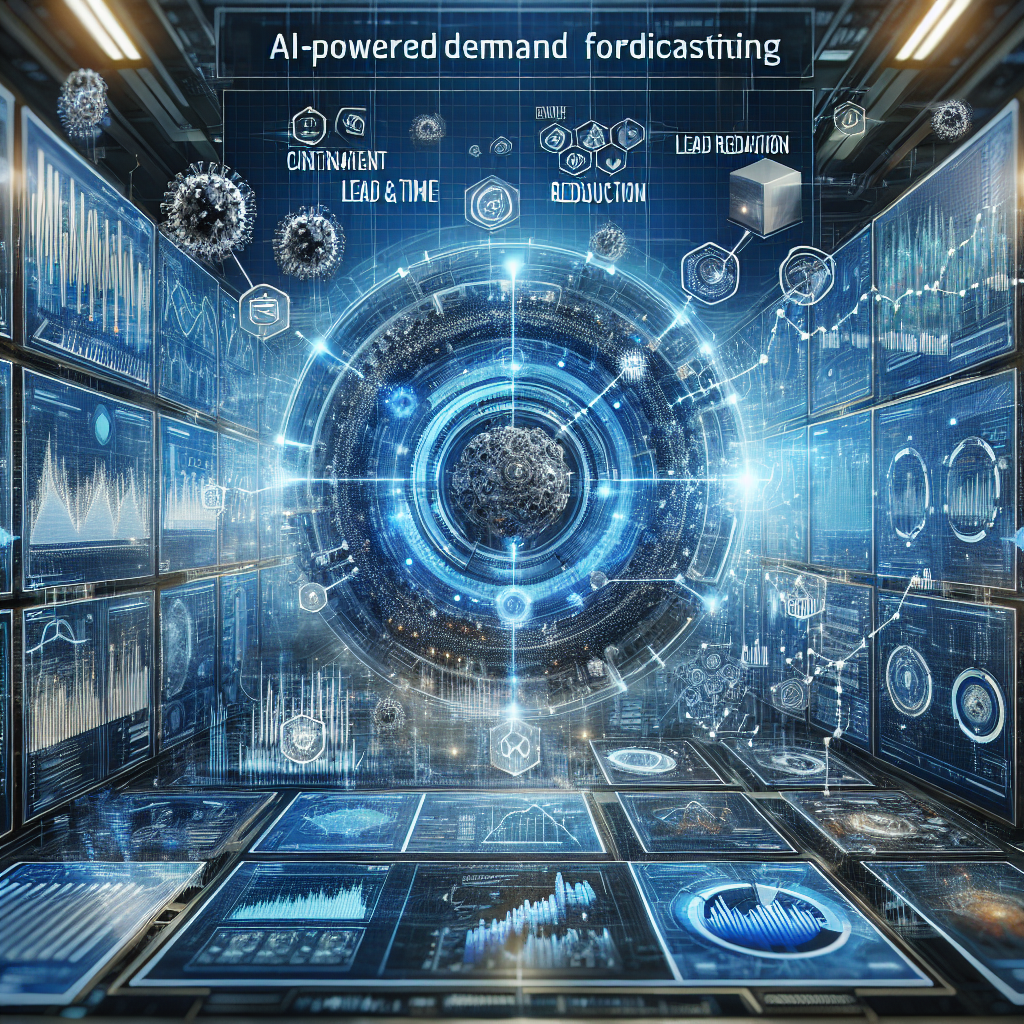
Traditional forecasting methods lean heavily on historical data and manual adjustments, which can leave planners reacting to disruptions rather than getting ahead of them. AI-powered demand forecasting changes the game by processing massive datasets — including weather patterns, social trends, economic signals, and supplier performance — in real time.
For example, a consumer electronics company might use machine learning models to detect a sudden spike in demand for a product category based on viral social media activity, adjusting purchase orders automatically before stockouts occur. According to McKinsey & Company, AI-driven forecasting can reduce forecasting errors by 20–50% compared to conventional approaches.
These improvements aren’t just theoretical — they translate directly into lower carrying costs, fewer emergency orders, and stronger customer satisfaction scores across the board.
● AI-powered demand forecasting processes real-time, multi-source data far beyond what spreadsheets can handle.
● Machine learning reduces forecasting errors by 20–50%, according to McKinsey research.
● Better forecasts mean fewer stockouts, less overstock, and happier customers.
Continuous S&OP Planning: Moving Beyond the Monthly Cycle
Traditional Sales and Operations Planning (S&OP) runs on a monthly cadence, which made sense when data moved slowly. But in today’s environment, a lot can change in 30 days — supplier delays, demand surges, or raw material shortages can all blindside teams locked into a static planning rhythm.
Continuous S&OP planning replaces that rigid cycle with an always-on, rolling process powered by live data feeds and AI analytics. Companies like Unilever and Procter & Gamble have invested heavily in continuous planning platforms that update supply-demand balances daily or even hourly, enabling faster decision-making at every level of the organization. This approach integrates directly with supply chain analytics platforms, giving finance, operations, and sales teams a shared, up-to-date picture of the business.
The result is a planning process that’s genuinely agile — one where teams spend less time preparing for meetings and more time acting on insights.
● Continuous S&OP planning shifts teams from reactive to proactive decision-making.
● Live data feeds replace static monthly reports with real-time visibility.
● Cross-functional alignment improves when everyone works from the same live data.
How Supply Chain Analytics Powers Smarter Decisions
Turning Data Into Action
Supply chain analytics isn’t just about dashboards and reports — it’s about turning raw information into decisions that move the needle. Advanced analytics platforms combine descriptive, predictive, and prescriptive capabilities, so planners don’t just see what happened but also what’s likely to happen and what they should do about it.
For instance, a retail distributor using prescriptive analytics might receive an automated recommendation to reroute a shipment through an alternate carrier when a port disruption is detected, avoiding delays before they even show up on a customer’s radar. Tools like o9 Solutions and Kinaxis are among the leading platforms helping businesses operationalize this kind of intelligence at scale.
When integrated with AI-powered demand forecasting, supply chain analytics creates a feedback loop that continuously improves the accuracy of future predictions.
● Descriptive, predictive, and prescriptive analytics each play a unique role in smarter planning.
● Prescriptive tools can automate responses to disruptions before they escalate.
● Integrating analytics with forecasting creates a self-improving planning ecosystem.
Lead Time Reduction: A Direct Benefit of Smarter Planning
Why Lead Times Matter More Than Ever
Lead time reduction is one of the most tangible outcomes businesses see when they adopt AI-driven planning tools. Shorter lead times mean faster response to demand shifts, reduced inventory buffers, and a leaner, more competitive supply chain overall.
A pharmaceutical company, for example, reduced its average procurement lead time from 14 days to 6 days by using AI to predict supplier capacity constraints weeks in advance and pre-position purchase orders accordingly. That kind of improvement has a cascading effect — it lowers safety stock requirements, frees up working capital, and makes the entire network more resilient to unexpected shocks.
Lead time reduction also strengthens customer relationships, since businesses can commit to faster and more reliable delivery windows with confidence. You can explore more about optimizing procurement timelines in our guide to supply chain management strategies at BestInSupplies.com.
● AI forecasting enables proactive procurement, directly cutting lead times.
● Shorter lead times reduce safety stock needs and free up working capital.
● Faster, more reliable delivery windows improve customer loyalty and retention.
Bringing It All Together: The Integrated Planning Advantage
The real power comes when demand forecasting, continuous S&OP planning, supply chain analytics, and lead time reduction work together as a unified system rather than isolated tools. This integrated approach gives businesses a connected view of demand signals, supply constraints, financial impacts, and operational capacity — all in one place.
Companies that have made this shift report not only cost savings but also faster innovation cycles, since planners spend less time firefighting and more time on strategic initiatives. A tightly integrated planning stack also makes it easier to model scenarios — like the impact of a tariff change or a new product launch — before committing resources.
The bottom line is that the companies winning in today’s market aren’t just investing in better tools — they’re rethinking how planning works at a fundamental level.
● Integrated planning connects demand, supply, finance, and operations in a single view.
● Scenario modeling becomes faster and more accurate with a connected planning stack.
● Strategic bandwidth increases when teams spend less time reacting and more time planning ahead.
Key Takeaways
AI-powered demand forecasting and continuous S&OP planning aren’t just buzzwords — they’re practical tools that are actively transforming supply chain analytics and delivering measurable results for businesses of every size.
● AI-powered demand forecasting reduces errors by 20–50% and enables proactive inventory management.
● Continuous S&OP planning replaces outdated monthly cycles with real-time, always-on decision-making.
● Supply chain analytics connects descriptive, predictive, and prescriptive insights for smarter action.
● Lead time reduction is a direct and financially significant benefit of AI-driven planning.
● Integrated planning platforms give businesses a competitive edge through speed, accuracy, and strategic agility.
Want to dive deeper into supply chain strategies that can help your business stay ahead? Visit BestInSupplies.com for expert guides, tools, and resources covering everything from procurement optimization to inventory management and beyond.