





Why Supply Chains Break (And What You Can Do About It)
If the past few years have taught business leaders anything, it’s that supply chain disruption is not a rare, once-in-a-generation event. It’s a recurring reality. From pandemic-era factory shutdowns to geopolitical conflicts and extreme weather events, companies across every industry have felt the sting of an unprepared supply chain. The good news? With the right approach to supply chain risk management, you can spot the cracks before they become crises — and build something genuinely resilient in their place.
Whether you’re running a small manufacturing operation or managing global procurement for a Fortune 500 company, this guide is for you. Let’s walk through how to identify your vulnerabilities, understand the most common failure points, and take practical steps toward true supply chain resilience.
Understanding Supply Chain Fragility
Before you can fix a problem, you need to understand it. Supply chain fragility doesn’t always look dramatic. It often hides in plain sight — in a single supplier you’ve trusted for years, a shipping route you’ve never had reason to question, or an inventory strategy built for efficiency rather than flexibility.
What Makes a Supply Chain Fragile?
Fragility typically comes from over-optimization. In the pursuit of lean operations and cost savings, many companies have stripped away the buffers — safety stock, redundant suppliers, diversified logistics routes — that would otherwise absorb shocks. When everything runs perfectly, this looks brilliant. When a supply chain shock hits, it can be catastrophic.
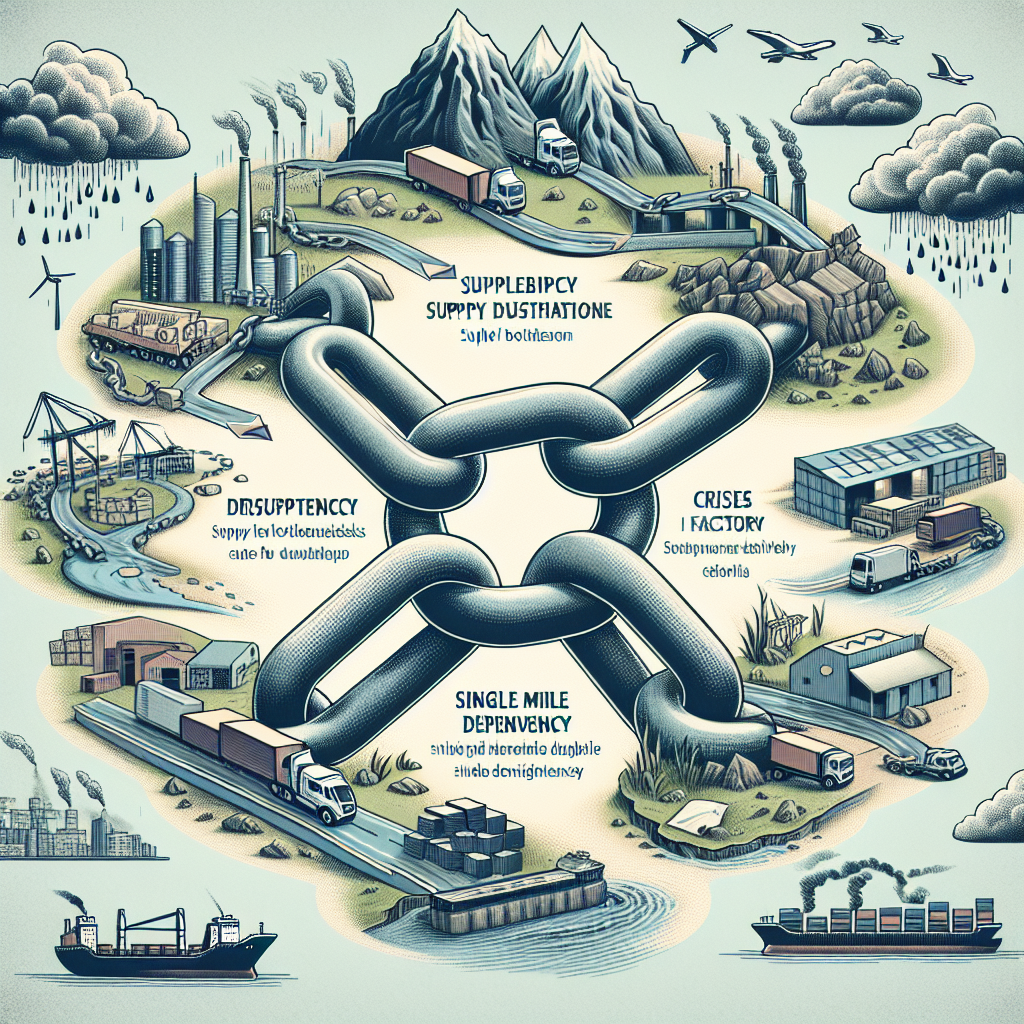
Single source dependency is one of the biggest culprits. When your entire production line depends on one supplier for a critical component, you’ve essentially handed that supplier the keys to your business continuity. It feels efficient and relationship-driven, until that supplier experiences a factory fire, a financial collapse, or a geopolitical barrier that cuts off your supply overnight.
Recognizing the Warning Signs Early
The early warning signs of supply chain vulnerability are often subtle. You might notice slightly longer lead times, a supplier that’s slower to respond to queries, or growing dependence on a single logistics provider. These aren’t just operational inconveniences — they’re signals that your supply chain is becoming brittle. Paying attention to these signals and building systems to track them is one of the most valuable investments you can make.
The Most Common Supply Chain Vulnerabilities
Every supply chain is different, but certain vulnerabilities come up again and again. Understanding these common failure points is the first step toward addressing them proactively rather than reactively.
Supplier Failure and Single Source Dependency
Supplier failure is one of the most immediate and painful forms of supply chain disruption. It can happen for countless reasons — financial instability, natural disasters, labor disputes, or regulatory issues. When you’re relying on a single source for a critical input, even a temporary disruption can halt your entire operation. Supply chain risk management best practices strongly recommend mapping your supplier tiers, not just Tier 1 suppliers but Tier 2 and Tier 3 as well, because that’s often where hidden dependencies lurk.
The solution isn’t always to find multiple suppliers for everything — that can be impractical and expensive. Instead, focus on identifying your most critical, hardest-to-replace inputs and ensuring you have backup options, safety stock strategies, or contractual protections in place for those specific items. A targeted approach to reducing single source dependency can dramatically lower your overall risk profile.
Raw Material Shortage and Resource Constraints
Raw material shortage has become a defining feature of modern supply chain crises. Whether it’s semiconductor chips, rare earth minerals, lumber, or agricultural commodities, the world has seen how quickly material availability can shift. These shortages are often driven by a combination of demand spikes, geopolitical tensions, environmental factors, and underinvestment in extraction and processing infrastructure.
Building resilience against raw material shortage requires a mix of strategies. Long-term purchasing agreements, material substitution planning, and investment in recycling or alternative sourcing can all help. It also requires honest conversations with your product development teams about designing products that use more readily available materials wherever possible — a shift in mindset that pays dividends during the next supply chain crisis.
Logistics Disruption and Transportation Bottlenecks
Even if your suppliers are fully operational and materials are available, getting them to where they need to be is its own challenge. Logistics disruption has proven to be a massive contributor to supply chain problems in recent years, and it takes many forms.
Port congestion became a household term during the COVID-19 pandemic, as goods piled up at major ports around the world and wait times stretched from days to weeks. Transportation bottlenecks on roads, railways, and waterways can similarly bring the movement of goods to a crawl. These issues are often interconnected — congestion at one point in the network creates ripple effects across the entire system.
Freight delays can be particularly damaging for businesses that rely on just-in-time inventory. When a shipment is delayed by two weeks, the cost isn’t just the late goods — it’s lost production time, disappointed customers, emergency air freight costs, and reputational damage. Building in buffer time for critical shipments and diversifying your carrier and routing options can provide meaningful protection against these disruptions.
Cold Chain Disruption
For businesses in food, pharmaceuticals, biotechnology, and certain specialty chemicals, cold chain disruption represents a uniquely high-stakes vulnerability. Temperature-sensitive products can be rendered completely worthless by a refrigeration failure, a delayed shipment in hot weather, or a breakdown in the tracking and monitoring of temperature conditions.
Cold chain resilience requires investment in robust monitoring technology, redundant refrigeration capacity, and contingency plans for when things go wrong. It also means building relationships with multiple cold chain logistics providers so that a single carrier’s failure doesn’t jeopardize your entire inventory. Given the potential for complete product loss, cold chain risk deserves its own dedicated focus within your broader supply chain risk management framework.
Last Mile Delivery Problems
Last mile delivery problems are the final frontier of supply chain disruption — and increasingly, they’re where customer experience is won or lost. The last mile is notoriously the most expensive and logistically complex part of the delivery journey, and it’s where delays, errors, and failures tend to pile up.
For e-commerce businesses and direct-to-consumer brands especially, last mile delivery failures translate directly into customer dissatisfaction, returns, and lost loyalty. Addressing these problems often requires a combination of technology investment, carrier diversification, local fulfillment strategies, and clearer customer communication when delays do occur. Building supply chain resilience at the last mile is not just an operational concern — it’s a competitive differentiator.
How to Identify Your Supply Chain Vulnerabilities
Knowing the common failure points is helpful, but every supply chain is unique. You need a systematic process for identifying where your specific vulnerabilities lie. Here’s a practical approach to getting that visibility.
Conduct a Supply Chain Mapping Exercise
You can’t manage what you can’t see. A thorough supply chain mapping exercise involves documenting every supplier, logistics partner, and distribution node in your network — along with their geographic locations, capacity constraints, and financial health. Many companies are surprised to discover during this process just how concentrated their dependencies are, or how little they know about their Tier 2 and Tier 3 suppliers.
Don’t let perfect be the enemy of good here. Start with your most critical product lines or highest-revenue SKUs. Even a partial map is infinitely more useful than no map at all, and it gives you a foundation to build on over time.