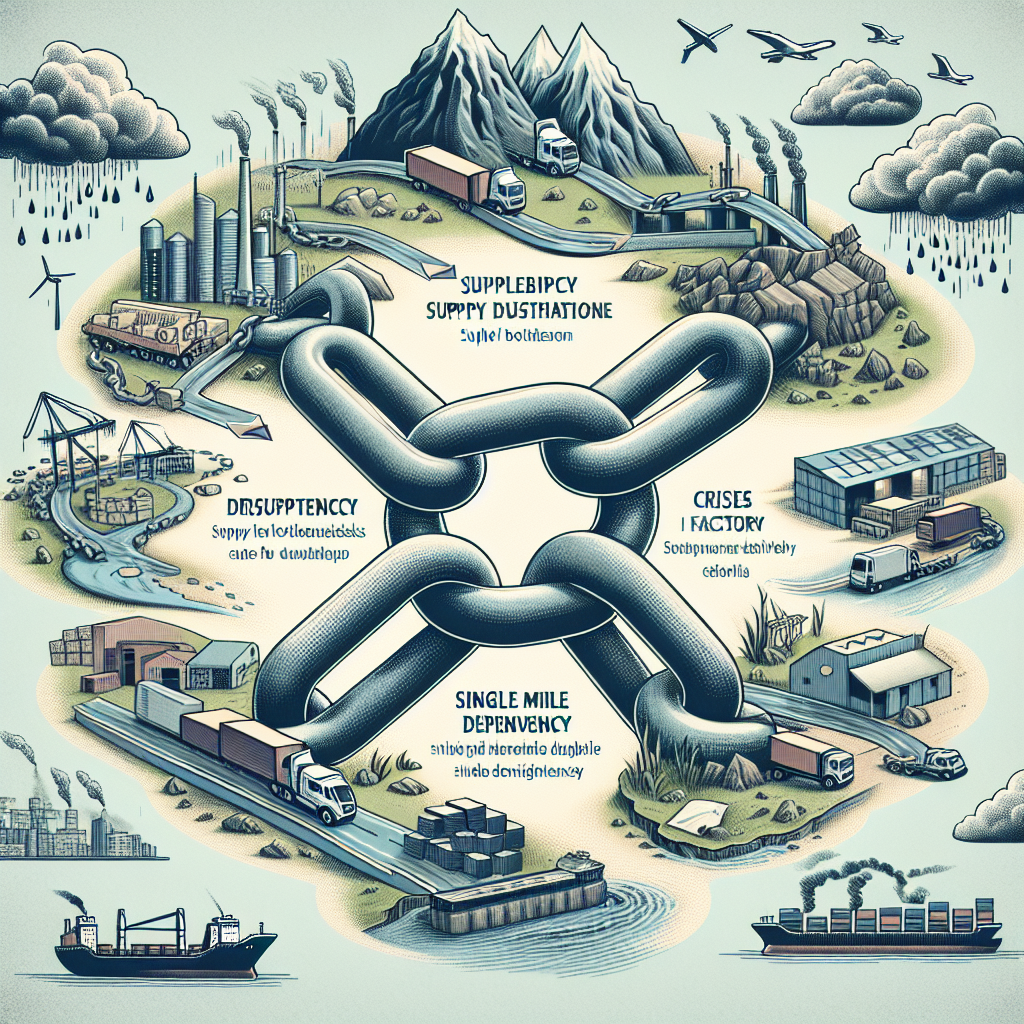









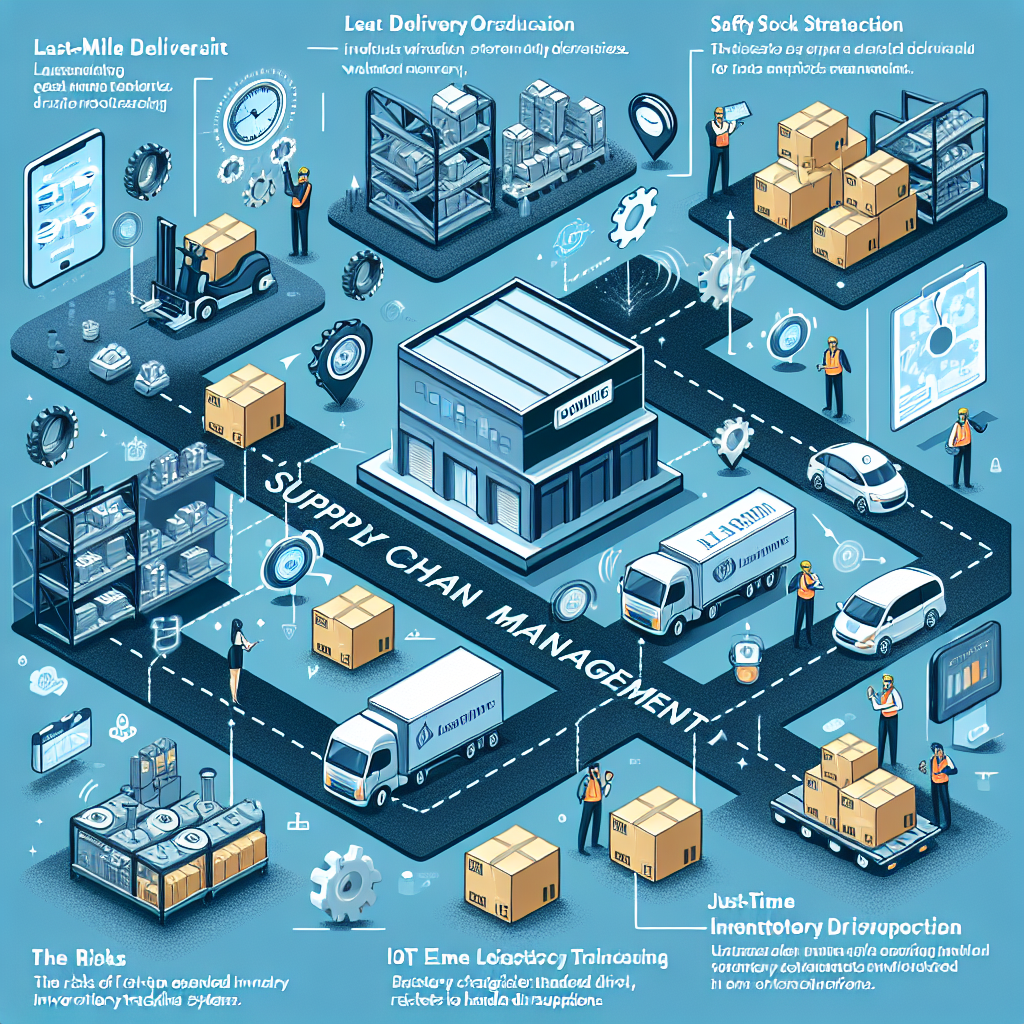
Global supply chains have never faced more simultaneous pressure points than they do today. From port congestion and geopolitical tensions to extreme weather events and labor strikes, shipping disruption has become a near-constant reality for businesses of all sizes. The companies that survive — and even thrive — are those investing in smarter inventory management and adaptive logistics strategies that turn volatility into competitive advantage.
The True Cost of Shipping and Logistics Disruption
A single shipping disruption can trigger a cascade of downstream consequences that go far beyond a delayed package. According to a McKinsey Global Institute report, companies can expect supply chain disruptions lasting one month or longer to occur every 3.7 years on average, costing nearly 45% of one year’s profits over a decade. That statistic alone should reframe how leadership views supply chain resilience — not as an operational detail, but as a financial imperative.
The ripple effects of logistics disruption include stockouts, customer churn, expedited freight surcharges, and damaged supplier relationships. For mid-sized manufacturers and retailers, these compounding losses can erode margins faster than any seasonal slowdown. Understanding the true financial exposure is the first step toward building a strategy that absorbs shocks instead of amplifying them.
● Disruptions lasting over 30 days can cost nearly half a year’s profit over a 10-year horizon
● Logistics disruption creates compounding losses across inventory, freight, and customer retention
● Treating supply chain resilience as a financial priority — not just an operational one — is essential
Rethinking Safety Stock Strategy in a Volatile Market
For years, lean operations prioritized cost reduction over buffer capacity, leaving many businesses dangerously exposed when disruptions hit. A robust safety stock strategy recalibrates that balance by calculating buffer inventory based on demand variability, supplier lead times, and acceptable service levels — not just historical averages. This data-driven approach ensures you hold enough stock to absorb delays without inflating carrying costs unnecessarily.
The COVID-19 pandemic exposed the fragility of purely lean models. Automotive manufacturers, for instance, faced billion-dollar production halts because they held near-zero buffer stock on semiconductor chips — components costing less than a dollar each. Had even a modest safety stock strategy been in place, many of those production lines could have continued operating through the supply crunch. The lesson is clear: strategic buffering is not waste, it is insurance.
● Safety stock should be calculated using demand variability and supplier lead time data
● The semiconductor shortage proved that even low-cost components require buffer planning
● Strategic buffering reduces exposure without significantly inflating carrying costs
The Hidden Risks of Just-in-Time Inventory
Just-in-time (JIT) inventory management revolutionized manufacturing efficiency, but the just-in-time inventory risks have become impossible to ignore in today’s fragmented logistics environment. JIT assumes predictable supplier performance and stable transit times — two conditions that can no longer be taken for granted. When a single supplier fails to deliver on schedule, the entire production or fulfillment operation can grind to a halt with no buffer in place.
A 2021 study by the Federal Reserve found that firms relying heavily on JIT models experienced 30% longer production delays during the pandemic than those maintaining moderate inventory buffers. This doesn’t mean abandoning lean principles entirely, but it does mean hybridizing JIT with dynamic safety stock and dual-sourcing strategies. The goal is agility, not rigidity.
● JIT assumes supplier reliability that global disruptions have repeatedly undermined
● Firms with JIT-heavy models experienced significantly longer delays during COVID-19
● A hybrid approach blending lean principles with dynamic buffering offers the best resilience
Inventory Management Software as a Strategic Defense
Modern inventory management software is no longer just a recordkeeping tool — it is a proactive decision-making engine. Platforms like NetSuite, Fishbowl, and Cin7 offer real-time visibility into stock levels, reorder triggers, and supplier performance metrics that allow procurement teams to act before a shortage becomes a crisis. When integrated with demand forecasting algorithms, these systems can dramatically reduce reactive purchasing and the costly expediting fees that follow.
For growing businesses, selecting the right inventory management software means evaluating not just current needs but scalability and integration capabilities. Connecting inventory systems with your ERP, e-commerce platform, and logistics partners creates a unified data environment where decisions are made on facts, not assumptions. BestInSupplies.com provides comprehensive guidance on selecting and implementing the right tools for your operational scale and industry.
● Advanced inventory software shifts teams from reactive to proactive supply chain management
● Integration with ERP and logistics platforms creates a single source of operational truth
● Scalability and compatibility should guide software selection decisions
Real-Time IoT Inventory Tracking: Visibility at Every Node
Real-time IoT inventory tracking has transformed warehouse and in-transit visibility from a periodic snapshot into a continuous, actionable data stream. IoT-enabled sensors attached to pallets, containers, and shelving units can transmit location, temperature, humidity, and movement data to centralized dashboards — giving logistics managers a live picture of inventory status across the entire supply chain. This level of visibility is particularly critical for industries handling perishable goods, pharmaceuticals, or high-value electronics.
Companies implementing real-time IoT inventory tracking have reported inventory accuracy improvements of up to 25% and reductions in shrinkage and misplacement losses averaging 15–20%, according to Gartner’s supply chain technology research. When IoT data is paired with inventory management software, alerts can be triggered automatically when stock dips below threshold levels or when a shipment deviates from its expected route. The result is faster response times and fewer costly surprises.
● IoT sensors provide live visibility into location, condition, and movement of inventory
● Businesses report up to 25% improvement in inventory accuracy after IoT implementation
● Pairing IoT data with inventory software enables automated alerts and faster responses
Lead Time Reduction: Compressing the Gap Between Order and Delivery
Lead time reduction is one of the highest-leverage strategies available to supply chain teams, directly improving customer satisfaction, working capital efficiency, and responsiveness to demand shifts. Reducing lead times requires a multi-front approach: qualifying backup suppliers, nearshoring critical components, streamlining purchase order workflows, and eliminating handoff delays between internal teams. Each incremental day removed from the fulfillment cycle translates into measurable financial and service-level gains.
One practical path to lead time reduction is investing in supplier collaboration portals that enable real-time communication, shared forecasting, and automated purchase order confirmations. When suppliers have visibility into your demand signals, they can pre-position materials and prioritize your orders during constrained periods. This collaborative model has helped companies in the consumer electronics sector reduce average procurement lead times by 18–22%, according to industry benchmarks from APICS (now ASCM).
● Lead time reduction requires simultaneous improvements across sourcing, processes, and communication
● Supplier collaboration portals enable shared forecasting and faster order fulfillment
● Nearshoring critical components is an increasingly effective tool for compressing lead times
Warehouse Management and the Modern Distribution Center
Effective warehouse management is the operational backbone that determines how well all upstream supply chain strategies translate into actual fulfillment performance. A well-organized warehouse using slotting optimization, pick-path efficiency, and cross-docking capabilities can process significantly higher order volumes without proportional increases in labor or space costs. These gains become especially valuable during disruption-driven demand spikes when throughput speed is critical.
Advanced warehouse management systems (WMS) now incorporate AI-driven labor forecasting, automated replenishment triggers, and integration with robotics platforms to further accelerate operations. Retailers like Amazon and Walmart have demonstrated at scale how intelligent warehouse infrastructure can serve as a competitive differentiator — but the same principles apply to regional distributors and 3PLs managing more modest operations. Explore best-practice warehouse strategies tailored to small and mid-sized businesses at BestInSupplies.com.
● Slotting optimization and pick-path efficiency drive throughput without adding overhead
● Modern WMS platforms integrate AI forecasting, robotics, and automated replenishment
● Smart warehouse infrastructure is a competitive differentiator at every business scale