






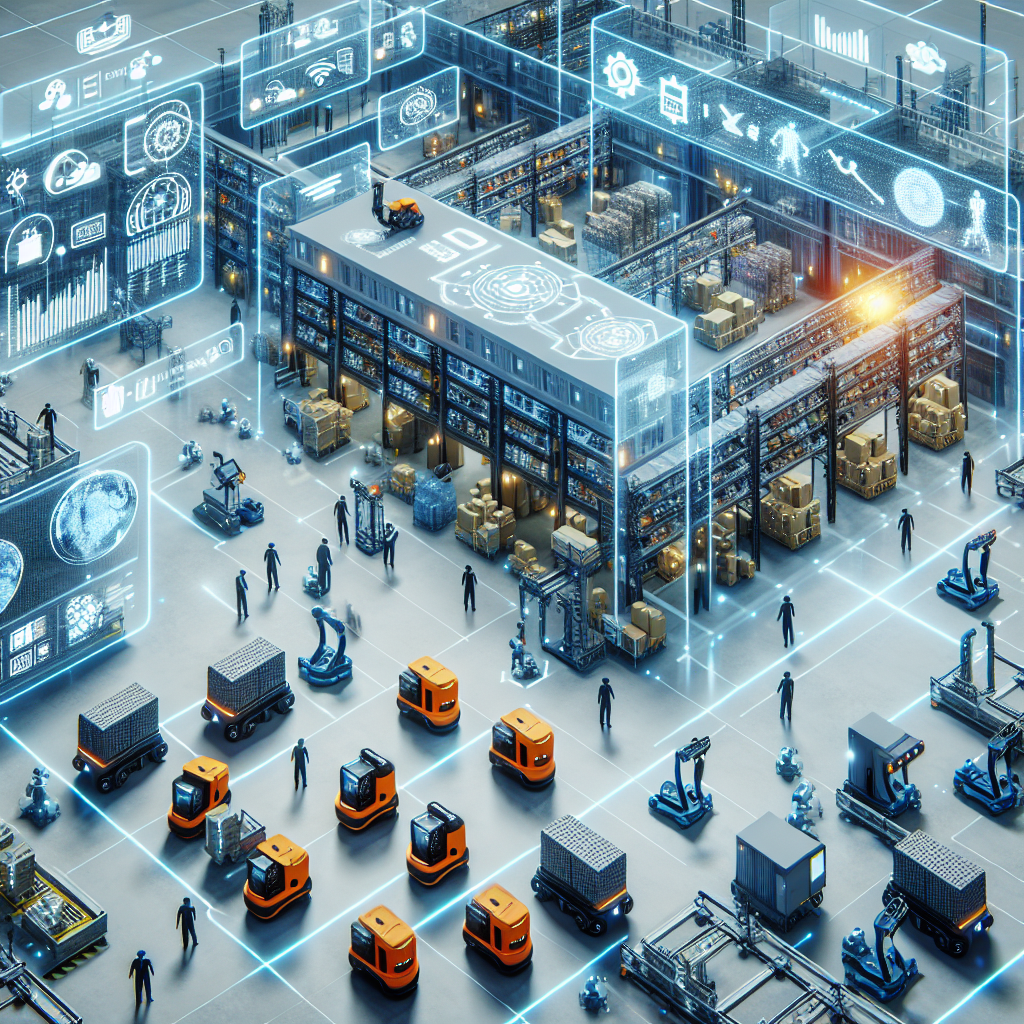
The factory floor is no longer a place of human-directed chaos—it’s becoming an intelligent, self-regulating ecosystem. Zero-touch logistics orchestration is rapidly emerging as the defining operational philosophy for forward-thinking manufacturers and distributors who need speed, accuracy, and scalability without proportional increases in labor costs. At the intersection of autonomous robotics, real-time data processing, and smart factory design, this approach is fundamentally changing how goods move from receiving dock to shipping bay.
What Is Zero-Touch Logistics Orchestration?
Zero-touch logistics orchestration refers to the end-to-end automation of material handling and supply chain workflows with minimal or no human intervention at the operational level. Rather than humans directing each step, intelligent systems—powered by AI, sensors, and interconnected software—make real-time decisions about routing, prioritization, and task execution.
This model depends on seamless communication between machines, software platforms, and enterprise systems such as Warehouse Management Systems (WMS) and Enterprise Resource Planning (ERP) tools. According to McKinsey & Company, warehouse automation can reduce operating costs by up to 65% when fully implemented across material handling functions.
● Zero-touch logistics orchestration eliminates manual decision-making at the operational level
● It integrates AI, sensors, and enterprise software for real-time workflow management
● McKinsey estimates up to 65% reduction in warehouse operating costs through full automation
The Role of Autonomous Mobile Robots (AMR) in Smart Factories
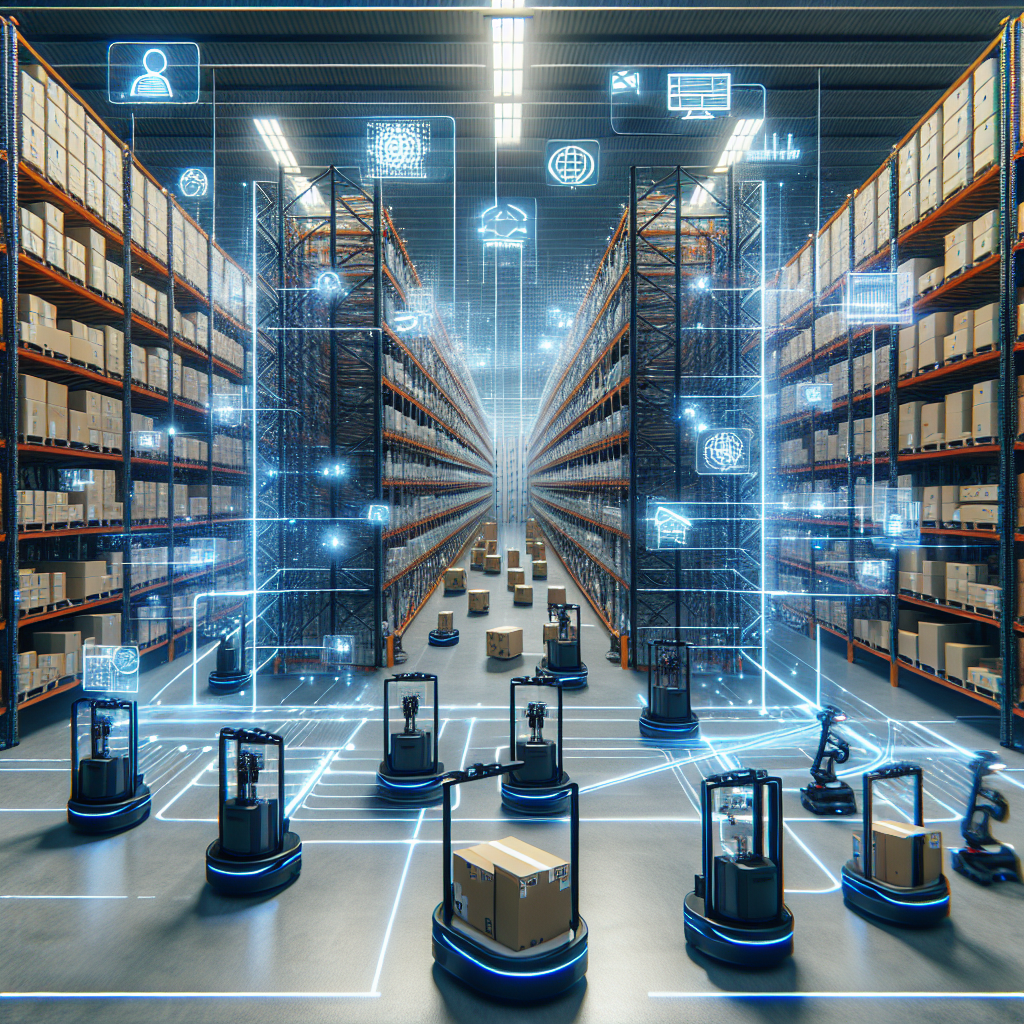
Autonomous mobile robots (AMR) are the physical backbone of zero-touch logistics, navigating dynamic environments using onboard sensors, LiDAR, and machine vision rather than fixed tracks or conveyors. Unlike their predecessors—Automated Guided Vehicles (AGVs)—AMRs reroute themselves in real time around obstacles, people, and changing inventory layouts, making them far more adaptable to the unpredictable rhythms of a live warehouse.
Major players like Amazon Robotics, Locus Robotics, and 6 River Systems have deployed AMR fleets that process thousands of picks per hour with error rates below 0.1%. In one documented deployment, a large fulfillment center using autonomous mobile robots AMR technology increased pick throughput by 300% while reducing worker walking distances by over 50%.
The scalability of AMRs is particularly compelling for Industry 4.0 smart factory integration. New robots can be onboarded to existing fleets in hours rather than weeks, allowing operations to flex rapidly during seasonal demand spikes or supply chain disruptions without significant capital expenditure cycles.
● AMRs use LiDAR and machine vision to navigate dynamically, unlike fixed-track AGVs
● Documented deployments show 300% throughput gains and error rates below 0.1%
● AMR fleets scale rapidly, supporting agile Industry 4.0 smart factory integration
Warehouse Edge Computing: The Intelligence Layer Powering Real-Time Decisions
No orchestration system can function at machine speed if it relies on round-trip communication with a distant cloud server. Warehouse edge computing solves this latency problem by processing data locally—at or near the point of action—enabling AMRs, conveyor systems, and sortation equipment to respond in milliseconds rather than seconds.
Edge nodes deployed throughout a facility collect and analyze data from hundreds of sensors simultaneously, feeding decisions back to robotic fleets faster than any centralized cloud architecture can match. According to Gartner, by 2025, 75% of enterprise-generated data will be processed at the edge rather than in traditional data centers—a statistic that underscores how critical warehouse edge computing infrastructure has become.
Practically speaking, edge computing allows a facility to maintain full operational continuity even during internet outages, because mission-critical logic runs locally. This resilience is a significant selling point for operations that cannot tolerate even minutes of downtime due to connectivity failure.
● Edge computing eliminates cloud-latency bottlenecks, enabling millisecond decision cycles
● Gartner projects 75% of enterprise data will be processed at the edge by 2025
● Local processing ensures operational continuity during internet or connectivity outages
Industry 4.0 Smart Factory Integration: Connecting Every Node
Achieving true zero-touch logistics orchestration requires more than individual smart devices—it demands a unified digital architecture where every system speaks the same language. Industry 4.0 smart factory integration ties together AMR fleets, edge nodes, WMS platforms, ERP systems, and IoT sensors into a single, coherent operational intelligence layer.
Standards like OPC-UA and MQTT are increasingly used to ensure interoperability between equipment from different vendors, reducing the proprietary lock-in that once made large-scale automation prohibitively complex. Companies like Siemens and Rockwell Automation offer integration frameworks specifically designed to bridge legacy equipment with modern autonomous systems, allowing manufacturers to modernize incrementally rather than requiring a full rip-and-replace approach.
When integration is executed correctly, supply chain events trigger cascading automated responses across the entire facility. A late inbound shipment, for example, can automatically trigger AMR rerouting, adjusted pick sequencing, and updated shipping manifests—all without a single human intervention, which is the true promise of zero-touch logistics orchestration.
● OPC-UA and MQTT standards enable cross-vendor interoperability in smart factory environments
● Incremental integration paths allow manufacturers to modernize without full system replacement
● Fully integrated systems trigger automated, cascading responses to supply chain events in real time
Security and Resilience in Automated Logistics Environments
As facilities become more connected, cybersecurity and system resilience move from IT concerns to operational imperatives. A compromised edge node or hijacked AMR fleet can halt production as effectively as a power outage, making security architecture a critical component of any zero-touch logistics deployment.
Best-practice deployments segment operational technology (OT) networks from IT networks, apply zero-trust security models, and maintain redundant edge nodes to prevent single points of failure. Organizations like the National Institute of Standards and Technology (NIST) provide cybersecurity frameworks that are increasingly being adapted for industrial and warehouse automation environments.
● OT and IT network segmentation is essential to protect autonomous logistics systems
● Zero-trust security models and redundant edge nodes prevent single points of failure
● NIST cybersecurity frameworks are being adapted specifically for industrial automation environments
Key Takeaways
Zero-touch logistics orchestration is not a distant concept—it is an operational reality being deployed by leading manufacturers and distributors right now. The convergence of autonomous mobile robots AMR, warehouse edge computing, and Industry 4.0 smart factory integration creates supply chain environments that are faster, more accurate, and significantly more resilient than traditional human-directed operations.
● Zero-touch logistics orchestration combines AI, AMRs, and edge computing to eliminate manual operational decisions
● Autonomous mobile robots AMR deliver measurable throughput gains, often exceeding 300% in documented deployments
● Warehouse edge computing enables millisecond decision cycles and operational continuity independent of cloud connectivity
● Industry 4.0 smart factory integration ties all systems into a unified architecture using open communication standards
● Security and resilience planning is as critical as hardware and software selection in any automation initiative
Ready to explore the tools and technologies that make smart factory automation possible? Visit BestInSupplies.com for expert guidance, product comparisons, and in-depth resources on warehouse automation, AMR solutions, and Industry 4.0 supply chain technology tailored for operations teams and procurement professionals alike.