






If you’ve been keeping an eye on global shipping lately, you already know that two of the world’s most critical maritime corridors — the Red Sea and the Strait of Hormuz — have been causing serious headaches for supply chain leaders. Between Houthi attacks on commercial vessels and escalating regional tensions, the pressure on logistics networks has been relentless. Let’s break down what’s actually happening, how it’s affecting costs and timelines, and what smart supply chain teams are doing to stay ahead of the chaos.
What's Driving Red Sea Shipping Disruptions?
The Red Sea connects the Suez Canal to global trade routes, handling roughly 12–15% of world trade volume at its peak. Since Houthi militants began targeting commercial vessels in late 2023, many major shipping lines — including Maersk, MSC, and CMA CGM — have rerouted ships around the Cape of Good Hope, adding 10–14 days and thousands of extra miles to each voyage.
Those detours aren’t cheap. Freight rates on key Asia-to-Europe lanes surged by over 200% during the height of the disruptions, according to data from the Freightos Baltic Index. That kind of price spike ripples across industries, from consumer electronics to automotive parts.
For a real-world example, look at IKEA — the furniture giant publicly acknowledged delays in product availability tied directly to Red Sea shipping disruptions, forcing them to reroute inventory and adjust delivery windows across European markets.
● Houthi attacks have pushed major carriers to avoid the Suez Canal route entirely
● Freight rates spiked over 200% on some Asia-Europe lanes
● Rerouting around the Cape of Good Hope adds up to two weeks of transit time
Strait of Hormuz Maritime Security: A Second Pressure Point
While the Red Sea grabs headlines, the Strait of Hormuz quietly remains one of the most strategically sensitive chokepoints on the planet. About 20% of global oil trade — roughly 17 million barrels per day — passes through this narrow passage between Iran and Oman. Any disruption here doesn’t just affect fuel prices; it triggers shockwaves across virtually every cost structure in global logistics.
Strait of Hormuz maritime security has been a growing concern, with Iran periodically seizing or harassing tankers in the region. In one notable incident, Iran seized the MSC Aries container ship in April 2024, sending insurance premiums for vessels operating in the area spiking almost overnight. Lloyd’s of London war risk premiums for vessels transiting the region have climbed significantly as a result.
The dual threat from both chokepoints means supply chain leaders can no longer treat these as isolated, one-off disruptions. They’re structural vulnerabilities that require ongoing monitoring and adaptive planning strategies.
● The Strait of Hormuz handles roughly 20% of global oil trade daily
● Ship seizures and harassment have driven war risk insurance premiums sharply higher
● Both chokepoints operating under stress simultaneously is an unprecedented modern challenge
Tariff Impact Analysis: Hidden Costs Stacking Up
How Rerouting Affects Total Landed Cost
Beyond the obvious freight rate increases, a thorough tariff impact analysis reveals a more complex picture. Longer transit times mean higher fuel surcharges, additional port fees, and increased inventory carrying costs — all of which quietly erode margin before a product ever hits a shelf.
Some importers are also running into unexpected tariff complications when rerouting through alternative ports. Goods that transit through different jurisdictions can sometimes trigger additional duty classifications or compliance checks, particularly for shipments moving between Asia, Europe, and North America.
Sector-Specific Cost Pressures
The automotive sector has been especially hard hit. Just-in-time manufacturing models, which rely on parts arriving within narrow time windows, have been severely strained. Companies like Tesla and Volvo temporarily paused production lines due to component shortages linked directly to Red Sea shipping disruptions.
Retailers with seasonal inventory cycles face a different kind of pain — missing a holiday window because your goods are circling Africa isn’t just an inconvenience; it’s a revenue hit that no amount of markdown pricing can fully recover.
● Rerouting adds fuel surcharges, port fees, and inventory carrying costs on top of higher base freight rates
● Just-in-time manufacturers are among the hardest hit due to their narrow delivery tolerances
● Tariff classification risks can emerge when shipments transit through alternate jurisdictions
Geopolitical Risk Mitigation in Logistics: What Leaders Are Actually Doing
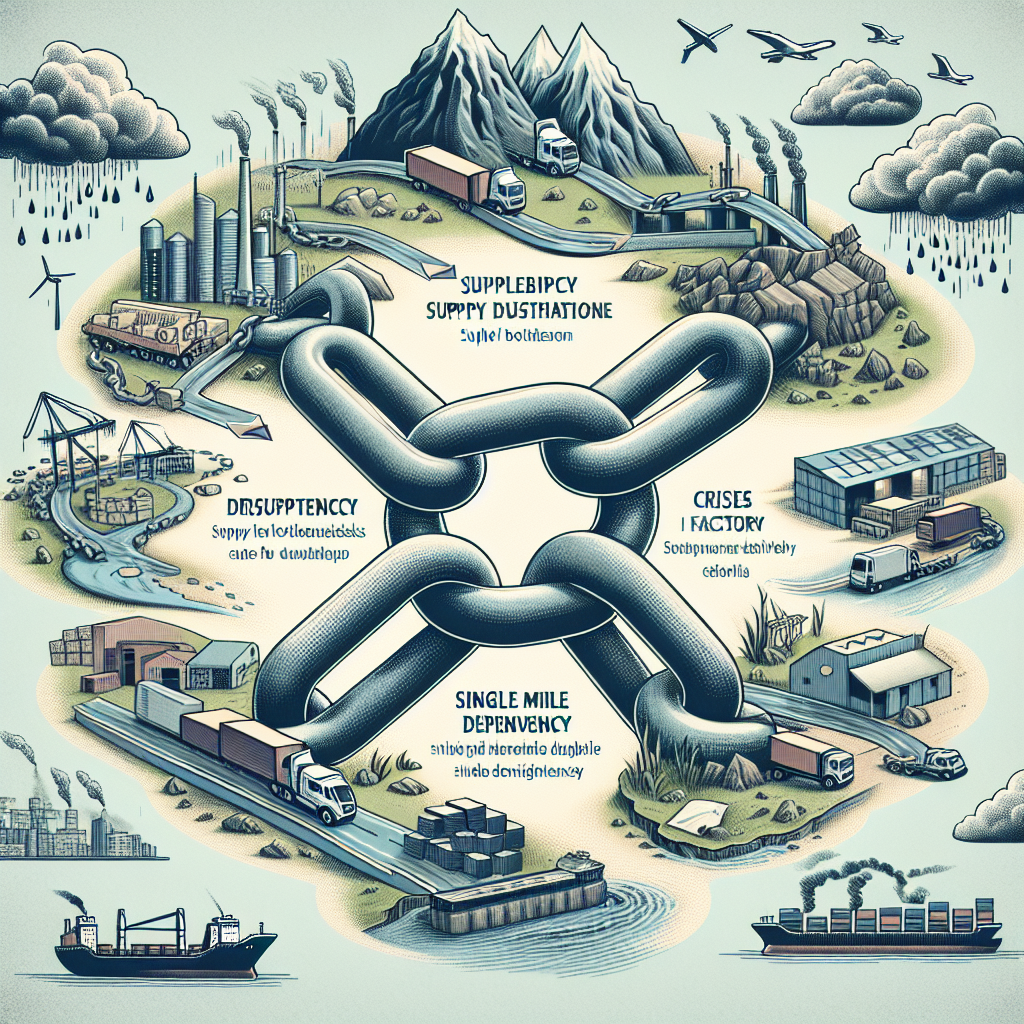
The best supply chain teams aren’t just reacting — they’re restructuring. Geopolitical risk mitigation in logistics has moved from a theoretical boardroom topic to a genuine operational priority. Companies are diversifying carrier relationships, building larger safety stock buffers, and revisiting single-source supplier dependencies that leave them exposed.
Nearshoring and friendshoring strategies have accelerated noticeably. By shifting production or sourcing closer to end markets — think Mexico for North American supply chains or Eastern Europe for EU-focused operations — companies reduce their exposure to long-haul maritime choke points altogether. SupplyChainBrain has covered several compelling case studies on this trend worth exploring.
Some organizations are also revisiting their contracts with freight forwarders to include more flexible rerouting clauses and force majeure provisions that explicitly address geopolitical disruption scenarios — something that wasn’t standard language even a few years ago.
● Safety stock buffers and dual-sourcing strategies are becoming the new baseline for resilient supply chains
● Nearshoring reduces dependence on vulnerable long-haul maritime corridors
● Contract language is evolving to explicitly address geopolitical disruption scenarios
Real-Time Chokepoint Tracking: The Technology Edge
Why Visibility Is Now a Competitive Advantage
One of the most significant shifts happening right now is the adoption of real-time chokepoint tracking tools. Platforms like Windward AI and MarineTraffic give logistics teams live vessel positioning data, risk scoring for specific maritime zones, and early warning signals when tension spikes in sensitive corridors.
This kind of visibility used to be reserved for large enterprise shippers with dedicated risk management teams. Increasingly, mid-market companies are accessing the same intelligence through integrated supply chain platforms and freight management systems.
Turning Data Into Action
Having the data is only half the battle — the real value comes from building decision workflows around it. Forward-thinking supply chain leaders are pre-negotiating alternate routing agreements with their carriers so that when a chokepoint alert fires, execution can happen within hours rather than days.
Combining real-time chokepoint tracking with scenario planning models allows teams to run “what-if” simulations — for example, modeling the cost and timeline impact of a full Strait of Hormuz closure before it happens, not after.
● Real-time vessel tracking platforms provide live risk scoring for maritime chokepoints
● Pre-negotiated alternate routing agreements dramatically cut response time during disruptions
● Scenario planning combined with live data enables proactive rather than reactive decision-making
Key Takeaways
Navigating today’s maritime disruption landscape requires a combination of real-time intelligence, strategic flexibility, and honest tariff impact analysis. The companies coming out ahead aren’t the ones with the most ships — they’re the ones with the best information and the most adaptable playbooks.
● Red Sea shipping disruptions and Strait of Hormuz maritime security concerns are structural, ongoing risks — not temporary blips
● Rerouting costs go well beyond freight rates and require full landed cost analysis to understand the true impact
● Geopolitical risk mitigation in logistics is now a core operational function, not just a planning exercise
● Real-time chokepoint tracking tools are increasingly accessible and provide a meaningful competitive edge
● Nearshoring, dual-sourcing, and flexible contracts are the building blocks of a disruption-resilient supply chain
Want to go deeper on supply chain resilience strategies, sourcing intelligence, and logistics risk management? Head over to BestInSupplies.com for more resources, guides, and expert insights to help you stay ahead of the curve.