
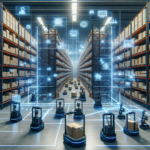
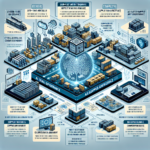





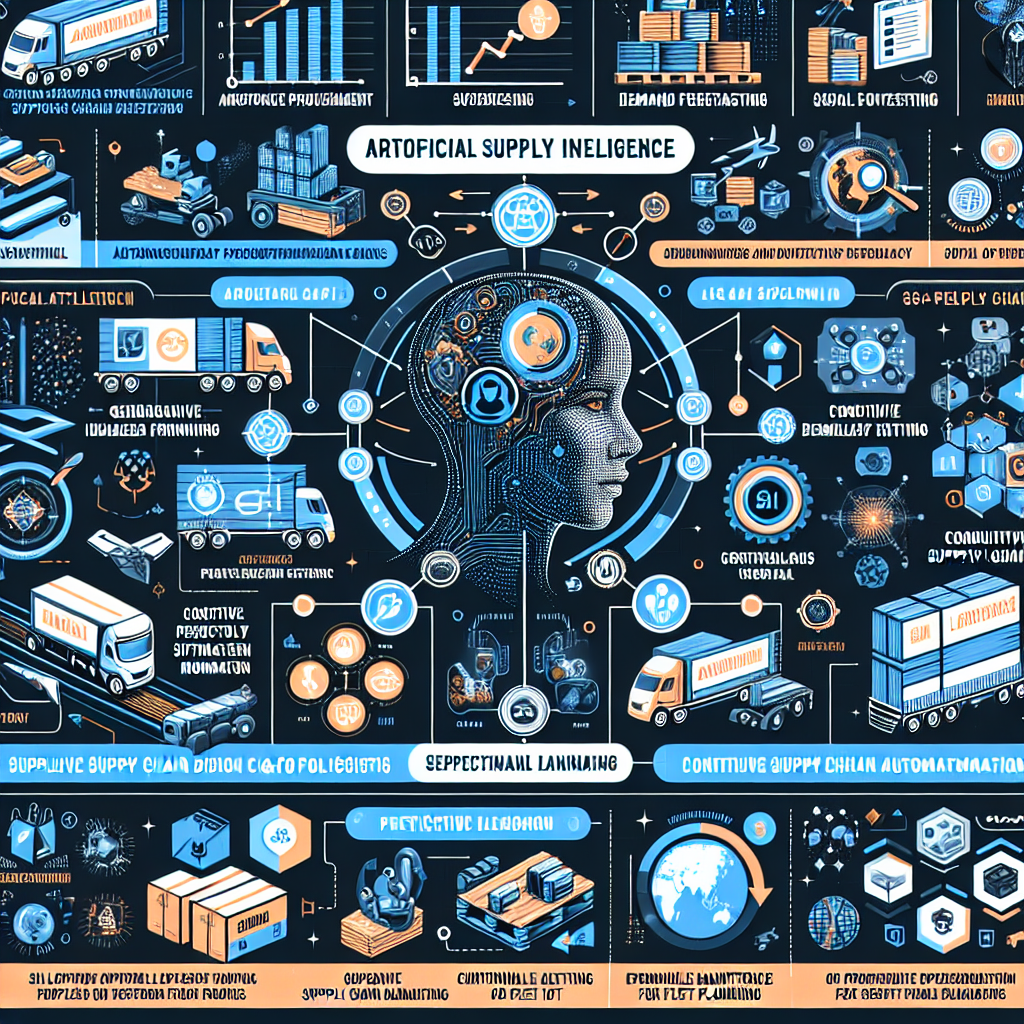
The supply chain industry is undergoing a seismic transformation, driven by the rapid rise of agentic AI in supply chain operations. Unlike traditional automation tools that execute fixed rules, autonomous AI agents perceive their environment, make decisions, and take actions — continuously — without waiting for human instruction. For procurement leaders, logistics managers, and supply chain strategists, understanding this shift isn’t optional; it’s a competitive imperative.
What Is Agentic AI and Why Does It Matter for Supply Chains?
Agentic AI refers to systems capable of goal-directed, autonomous decision-making across complex, dynamic environments. In the context of AI in supply chain management, these agents don’t just analyze data — they act on it, coordinating across suppliers, warehouses, carriers, and demand signals in real time.
Traditional supply chain software required human intervention at nearly every decision point. Agentic AI changes this by enabling multi-agent systems that collaborate, negotiate, and adapt — compressing response times from days to seconds and dramatically reducing costly errors in procurement and fulfillment.
● Agentic AI goes beyond automation by enabling autonomous, goal-directed decision-making
● Multi-agent systems can coordinate across entire supply chain ecosystems in real time
● This technology compresses human decision cycles from days to seconds
Autonomous Procurement Agents: Redefining Sourcing and Vendor Management
Autonomous procurement agents are among the most immediately impactful applications of agentic AI. These agents continuously monitor supplier performance, market pricing, lead times, and risk signals — then autonomously execute purchase orders, renegotiate contracts, or switch suppliers when predefined thresholds are breached.
For example, a global electronics manufacturer deploying autonomous procurement agents can automatically redirect component orders from a disrupted Southeast Asian supplier to a pre-qualified alternative within minutes of detecting a geopolitical risk signal — something that previously took procurement teams days to execute manually. According to McKinsey & Company, companies with AI-enabled procurement functions reduce supply disruption costs by up to 35%.
● Autonomous agents monitor supplier risk in real time and execute sourcing decisions without human delay
● AI-driven procurement can reduce supply disruption costs by up to 35% (McKinsey)
● These agents are programmable with business rules, risk tolerances, and compliance guardrails
AI-Powered Demand Forecasting: From Reactive to Predictive Planning
AI-powered demand forecasting is reshaping how organizations plan inventory, production, and logistics capacity. Modern forecasting agents ingest thousands of variables — historical sales, weather patterns, social media sentiment, macroeconomic indicators, and real-time POS data — to generate highly accurate, dynamically updated demand signals.
Retail giant Walmart has publicly credited advanced AI forecasting with reducing out-of-stock incidents by over 30% and decreasing excess inventory carrying costs significantly. These outcomes are achievable because AI models continuously retrain on new data, detecting demand shifts weeks before they appear in traditional ERP reports. Explore more about supply chain technology solutions at BestInSupplies.com to understand how these forecasting tools integrate with existing platforms.
● AI demand forecasting ingests hundreds of external signals beyond historical sales data
● Continuous model retraining enables earlier detection of demand shifts
● Leading retailers report 30%+ reductions in out-of-stock incidents using AI forecasting
Continuous S&OP Planning Powered by Cognitive Supply Chain Automation
Continuous S&OP planning — enabled by cognitive supply chain automation — replaces the traditional monthly Sales and Operations Planning cycle with a perpetually updated, AI-orchestrated planning environment. Cognitive agents synthesize supply constraints, demand forecasts, financial targets, and operational capacity simultaneously, surfacing trade-off recommendations to human planners in near real time.
This approach eliminates the information latency that plagues monthly S&OP cycles, where decisions are often made on data that is already weeks stale. Companies adopting continuous planning report 20–40% improvements in forecast accuracy and faster executive alignment, according to research by Gartner. The cognitive layer also handles exception management autonomously, escalating only the decisions that genuinely require human judgment.
● Continuous S&OP replaces static monthly cycles with real-time AI-orchestrated planning
● Cognitive automation handles routine exception management, freeing planners for strategic decisions
● Organizations report 20–40% forecast accuracy improvements with continuous planning models
Supply Chain Digital Twins and Generative AI for Logistics Optimization
Supply chain digital twins create a live, virtual replica of an organization’s entire logistics network — from supplier facilities and transportation lanes to warehouse layouts and customer delivery points. When paired with generative AI for logistics, these twins become dynamic simulation engines capable of stress-testing hundreds of disruption scenarios and generating optimized response strategies autonomously.
A leading automotive OEM, for instance, uses a digital twin integrated with generative AI to simulate the network impact of port closures, fuel cost spikes, or sudden demand surges — generating prioritized response playbooks in under five minutes. This capability, which once required weeks of analyst work, enables supply chain leaders to practice proactive resilience rather than reactive crisis management. Learn more about logistics optimization tools featured at BestInSupplies.com to see how digital twins are being deployed today.
● Digital twins provide a live virtual replica of the entire supply chain network for simulation and optimization
● Generative AI enables rapid scenario modeling, compressing weeks of analysis into minutes
● Proactive resilience planning replaces reactive crisis response with AI-generated playbooks
Predictive Maintenance for Fleet and IoT Integration in Modern Logistics
Predictive maintenance for fleet assets, powered by IoT for supply chain sensor networks, is eliminating unplanned downtime that disrupts delivery schedules and inflates logistics costs. AI agents continuously analyze vibration, temperature, fuel efficiency, and engine diagnostics data from connected vehicles and warehouse equipment, predicting component failures before they occur.
DHL has deployed IoT-enabled predictive maintenance across portions of its fleet, reporting a 25% reduction in unplanned vehicle downtime and significant savings in emergency repair costs. These systems not only predict failure windows but autonomously schedule maintenance appointments, reroute affected deliveries, and notify customers — all without dispatcher involvement. According to IDC Research, organizations investing in IoT-driven predictive maintenance achieve an average ROI of 25–30% within the first two years of deployment.
● IoT sensor networks feed real-time asset health data to AI predictive maintenance agents
● DHL reports 25% reductions in unplanned fleet downtime using predictive maintenance systems
● Autonomous agents handle maintenance scheduling and delivery rerouting without dispatcher intervention
Key Takeaways
Agentic AI is fundamentally rewriting the operational playbook for supply chain management — shifting organizations from reactive, human-paced decision cycles to continuous, autonomous intelligence. The technologies discussed here are not theoretical; they are being deployed today by leading enterprises to drive measurable competitive advantage. Supply chain leaders who invest strategically in these capabilities now will be best positioned to lead in an increasingly volatile global market.
● Agentic AI enables autonomous, real-time decision-making across procurement, logistics, and planning functions
● AI-powered demand forecasting and continuous S&OP planning dramatically improve forecast accuracy and organizational agility
● Supply chain digital twins combined with generative AI create proactive resilience capabilities that compress scenario analysis from weeks to minutes
● Predictive maintenance for fleet assets, enabled by IoT integration, reduces unplanned downtime and delivers 25–30% ROI within two years
● Organizations that adopt cognitive supply chain automation today are building durable competitive advantages that will be difficult to replicate
Ready to explore the tools, technologies, and strategies shaping the future of supply chain excellence? Visit BestInSupplies.com for in-depth reviews, expert comparisons, and the latest insights on AI in supply chain management, autonomous procurement solutions, and logistics innovation.