







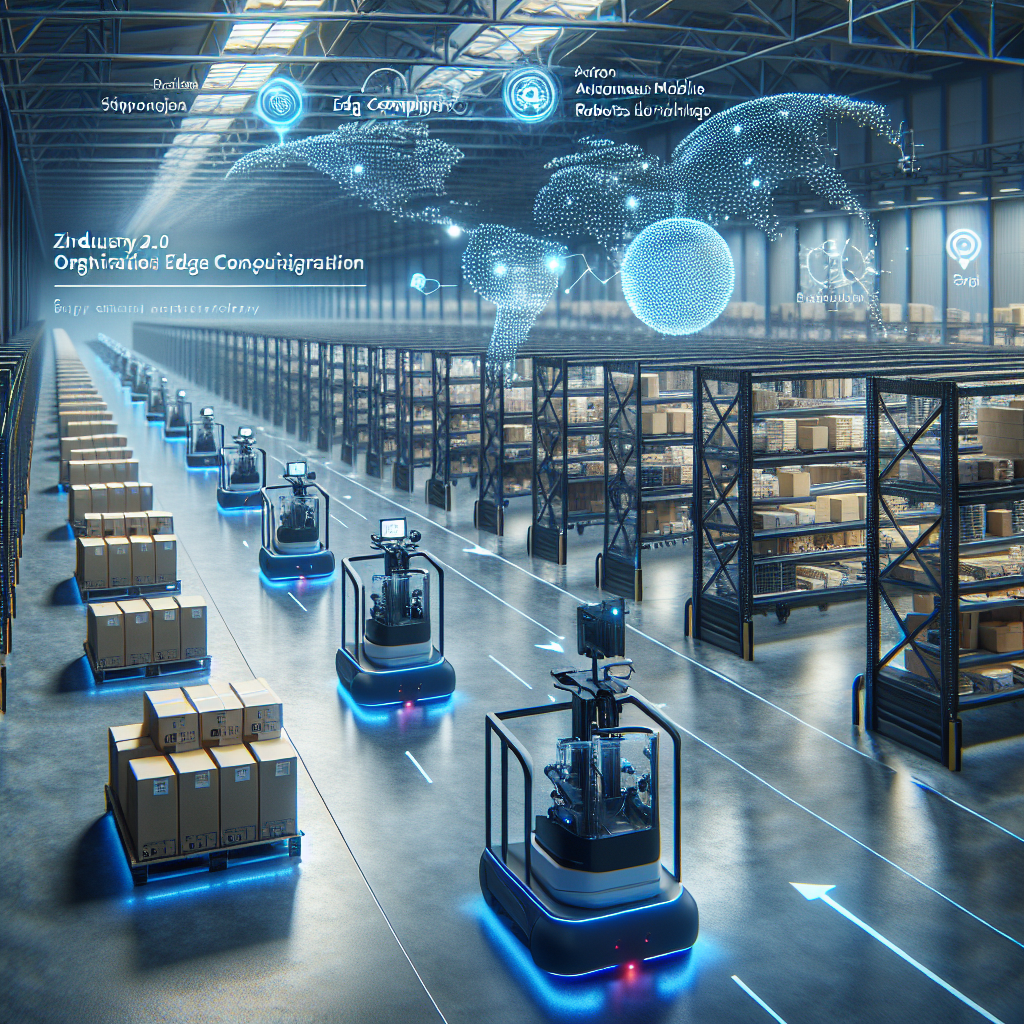
The factory floor is undergoing a quiet revolution — one driven not by human hands but by intelligent machines that communicate, decide, and act in milliseconds. Zero-touch logistics orchestration is emerging as the backbone of next-generation manufacturing, combining autonomous mobile robots (AMRs) with warehouse edge computing to eliminate manual intervention from supply chain workflows. As Industry 4.0 smart factory integration accelerates globally, understanding this convergence is critical for operations managers, procurement leaders, and supply chain professionals.
What Is Zero-Touch Logistics Orchestration?
Zero-touch logistics orchestration refers to the automated coordination of material flow, inventory management, and order fulfillment without requiring human input at each process step. It relies on a tightly integrated stack of hardware, software, and real-time data to make autonomous decisions across the supply chain. This model dramatically reduces error rates, labor costs, and cycle times compared to traditional warehouse operations.
According to a McKinsey report on warehouse automation, facilities that implement end-to-end orchestration platforms can reduce operational costs by up to 40% while improving throughput by 25% or more. The key differentiator is not individual automation tools but the seamless orchestration layer that ties them together. When every robot, sensor, and conveyor speaks the same data language, logistics essentially runs itself.
● Zero-touch logistics eliminates manual touchpoints across receiving, storage, picking, and shipping
● Integrated orchestration layers unify hardware and software into a single decision-making ecosystem
● Cost reductions of up to 40% are achievable with full orchestration deployment
The Role of Autonomous Mobile Robots in Smart Factory Supplies
How AMRs Transform Material Handling
Autonomous mobile robots (AMRs) are self-navigating machines capable of transporting goods across warehouse floors without fixed tracks or human guidance. Unlike older automated guided vehicles (AGVs), AMRs use onboard sensors, LiDAR, and AI-powered path planning to dynamically avoid obstacles and optimize routes in real time. Companies like 6 River Systems and Boston Dynamics have demonstrated that AMR fleets can process thousands of picks per day with near-zero error rates.
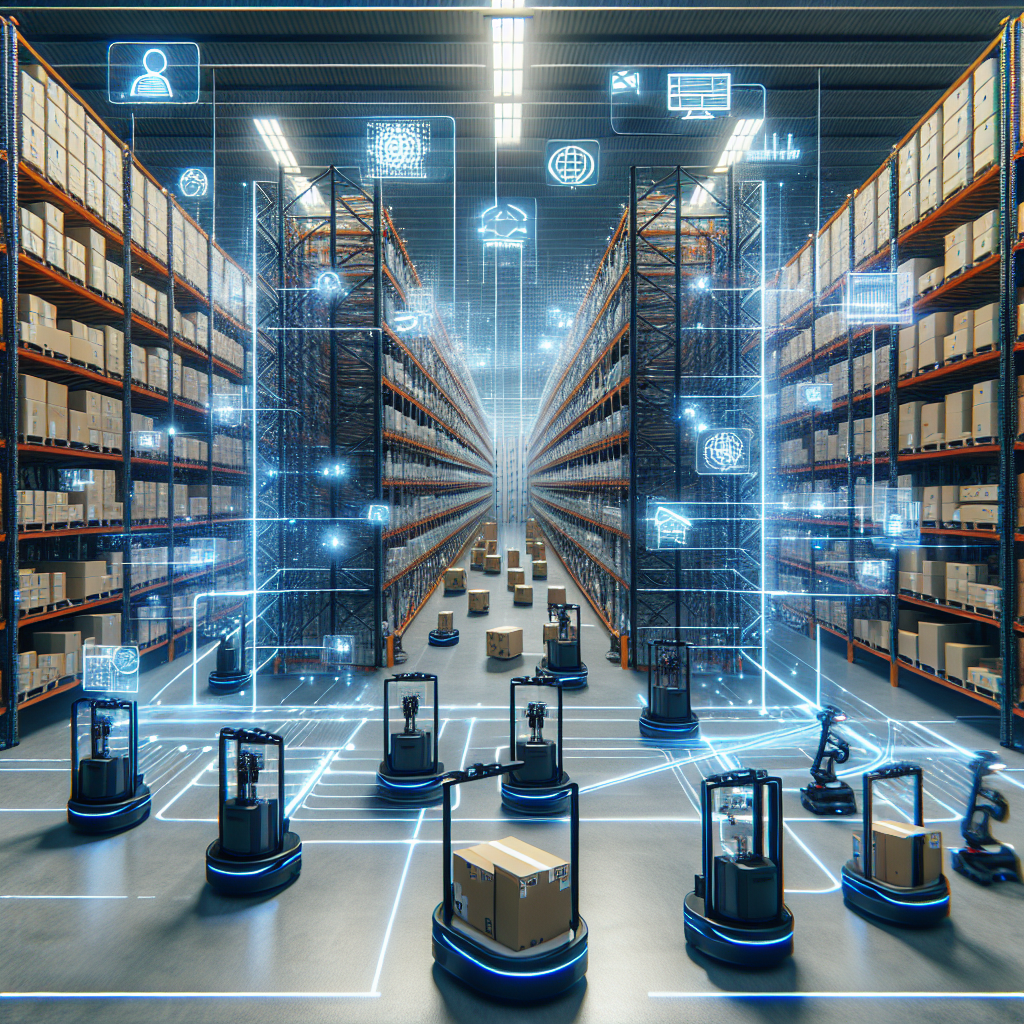
In a concrete Industry 4.0 smart factory integration scenario, AMRs are deployed to shuttle raw materials from receiving docks to production cells, replenish assembly stations on demand, and return finished goods to staging areas — all without a single manual cart push. DHL’s large-scale AMR deployment across North American fulfillment centers resulted in a 30% reduction in travel time and a measurable improvement in on-time delivery rates. This kind of result exemplifies why AMRs are now considered foundational to zero-touch logistics orchestration strategies.
● AMRs use LiDAR and AI to navigate dynamically, unlike older fixed-path AGVs
● Real-world deployments show up to 30% reductions in material travel time
● AMRs integrate directly into orchestration platforms to receive and execute tasks autonomously
Warehouse Edge Computing: The Intelligence Layer That Makes It Possible
Processing Data Where It Matters Most
Warehouse edge computing brings data processing power physically close to the source of data generation — sensors, robots, conveyor systems, and RFID readers — rather than routing everything through a distant cloud server. This proximity reduces latency from hundreds of milliseconds to single-digit milliseconds, which is critical when an AMR needs to react to a sudden obstacle or when an inventory discrepancy must be reconciled before a pick order is executed. Edge nodes essentially act as the nervous system of a zero-touch logistics environment.
A practical example is Amazon’s fulfillment network, which uses distributed edge computing nodes throughout its warehouse infrastructure to enable real-time coordination between its Kiva robot fleet and warehouse management systems. According to IDC research, over 50% of enterprise-generated data will be processed at the edge by 2025, with manufacturing and logistics leading adoption. For smart factory supplies managers at BestInSupplies.com, this means edge infrastructure is no longer optional — it is the prerequisite for any serious Industry 4.0 smart factory integration initiative.
● Edge computing reduces decision latency to single-digit milliseconds, enabling real-time robot coordination
● Over 50% of enterprise data will be processed at the edge by 2025, per IDC
● Edge nodes serve as the local intelligence layer that powers zero-touch logistics orchestration
Industry 4.0 Smart Factory Integration: Connecting the Dots
Building a Unified Orchestration Architecture
Achieving true zero-touch logistics orchestration requires more than deploying AMRs and edge servers in isolation — it demands a unified architecture that integrates warehouse management systems (WMS), enterprise resource planning (ERP) platforms, and IoT sensor networks into a single operational fabric. Industry 4.0 smart factory integration frameworks, such as those defined by the Industrial Internet Consortium, provide standards and reference architectures that guide this integration. Without this connective layer, even the most advanced hardware investments underperform.
For example, a Tier 1 automotive supplier that integrates its SAP ERP with an AMR fleet management platform and warehouse edge computing nodes can automatically trigger material replenishment at production cells the moment inventory dips below a defined threshold — with zero human intervention. This closed-loop system is the practical definition of zero-touch logistics orchestration in action. The result is a factory that is not just automated but genuinely self-managing at the supply layer.
● Unified integration of WMS, ERP, and IoT is essential for true zero-touch orchestration
● Industry consortiums provide standards that simplify and de-risk smart factory integration efforts
● Closed-loop systems enable fully autonomous replenishment triggered by real-time inventory data
Key Takeaways
Zero-touch logistics orchestration is not a distant future concept — it is actively reshaping how smart factories manage materials, inventory, and fulfillment today. By combining autonomous mobile robots (AMRs), warehouse edge computing, and Industry 4.0 smart factory integration, manufacturers and distributors can achieve unprecedented levels of efficiency, accuracy, and responsiveness. The organizations that move decisively on this convergence will define the competitive benchmarks for the next decade of industrial supply chain performance.
● Zero-touch logistics orchestration eliminates manual intervention by automating every step of material flow
● AMRs are the physical execution layer, navigating dynamically and integrating with orchestration platforms
● Warehouse edge computing provides the real-time intelligence needed for millisecond-level decision making
● Industry 4.0 smart factory integration connects WMS, ERP, and IoT into a unified, self-managing system
● Early adopters of full orchestration architectures are achieving cost reductions up to 40% and throughput gains of 25% or more
Want to explore the tools, components, and systems that power smart factory supply chains? Visit BestInSupplies.com for expert guidance, product comparisons, and the latest insights on autonomous material handling, edge infrastructure, and Industry 4.0 integration solutions built for modern manufacturing environments.