





The supply chain industry is undergoing a fundamental transformation, and at the center of this shift is Agentic AI in supply chain operations. Unlike traditional automation tools that follow rigid scripts, autonomous AI agents can perceive conditions, reason through options, and take action — all without waiting for human input. For procurement leaders, logistics managers, and supply planners, understanding this shift isn’t optional; it’s a competitive imperative.
What Is Agentic AI and Why Does It Matter for Supply Chains?
Agentic AI refers to artificial intelligence systems capable of setting goals, making decisions, and executing multi-step tasks autonomously within dynamic environments. In the context of AI in supply chain management, these agents operate across procurement, logistics, inventory, and planning functions simultaneously. According to Gartner, by 2028, at least 15% of day-to-day work decisions will be made autonomously by AI agents — up from nearly 0% in 2024.
What separates agentic systems from earlier AI tools is their ability to act on incomplete information and adapt in real time. A traditional rule-based system might flag a supplier delay; an autonomous agent will reroute the shipment, notify affected stakeholders, and update the demand plan — all within seconds. This level of responsiveness is rewriting operational expectations across the entire supply chain.
● Agentic AI acts autonomously across multi-step supply chain workflows
● It adapts to incomplete or changing data without human intervention
● Gartner projects significant AI-driven decision-making growth by 2028
Autonomous Procurement Agents: Smarter Sourcing at Scale
Autonomous procurement agents are among the most impactful early applications of agentic AI. These systems continuously monitor supplier performance, contract terms, and market pricing to make sourcing recommendations — or in some cases, execute purchases — without manual oversight. Companies like Coupa and SAP Ariba are already integrating agentic capabilities that handle everything from purchase order creation to supplier risk scoring.
The economic case is compelling. McKinsey estimates that AI-driven procurement can reduce sourcing cycle times by up to 40% and cut procurement costs by 10–15% through better negotiation intelligence and spend visibility. Cognitive supply chain automation at the procurement layer also reduces maverick spending by ensuring every transaction is policy-compliant and strategically aligned.
● Autonomous agents handle sourcing, PO creation, and supplier risk monitoring
● AI-driven procurement can cut costs by 10–15% according to McKinsey
● Cognitive automation enforces compliance without manual auditing
AI-Powered Demand Forecasting and Continuous S&OP Planning
AI-powered demand forecasting has evolved well beyond statistical models. Modern agentic systems ingest real-time signals — point-of-sale data, weather patterns, social sentiment, and macroeconomic indicators — to generate rolling forecasts that update continuously. This enables continuous S&OP planning, where sales and operations plans are no longer static monthly documents but living strategies that evolve with market conditions.
One concrete example is how consumer goods company Unilever has used AI-enhanced forecasting to reduce forecasting errors by over 20% and improve service levels across its global distribution network. By connecting demand signals directly to procurement and logistics agents, the system can automatically adjust safety stock levels, trigger replenishment orders, and re-sequence production schedules — all in a closed-loop, autonomous fashion.
● AI demand forecasting uses real-time multi-source data for rolling predictions
● Continuous S&OP replaces static monthly cycles with dynamic planning
● Unilever achieved 20%+ forecasting error reduction using AI-enhanced models
Generative AI for Logistics and Intelligent Route Optimization
Generative AI for logistics is unlocking new capabilities in route planning, carrier communication, and documentation management. Large language models can now draft shipping instructions, interpret complex customs regulations, generate carrier RFPs, and synthesize logistics performance reports — tasks that previously consumed significant analyst time. Platforms like FourKites and project44 are embedding generative AI to surface actionable insights from vast freight data streams.
Beyond documentation, generative AI is being paired with optimization engines to simulate thousands of routing scenarios under variable constraints — fuel prices, port congestion, weather disruptions, and regulatory changes. This combination of simulation and generation allows logistics teams to evaluate trade-offs faster and with greater confidence, making it a critical capability for resilient, cost-efficient freight operations.
● Generative AI automates carrier communications, RFPs, and customs documentation
● Combined with optimization engines, it simulates complex routing trade-offs
● Platforms like FourKites embed generative AI for real-time freight intelligence
Supply Chain Digital Twins and IoT-Driven Predictive Intelligence
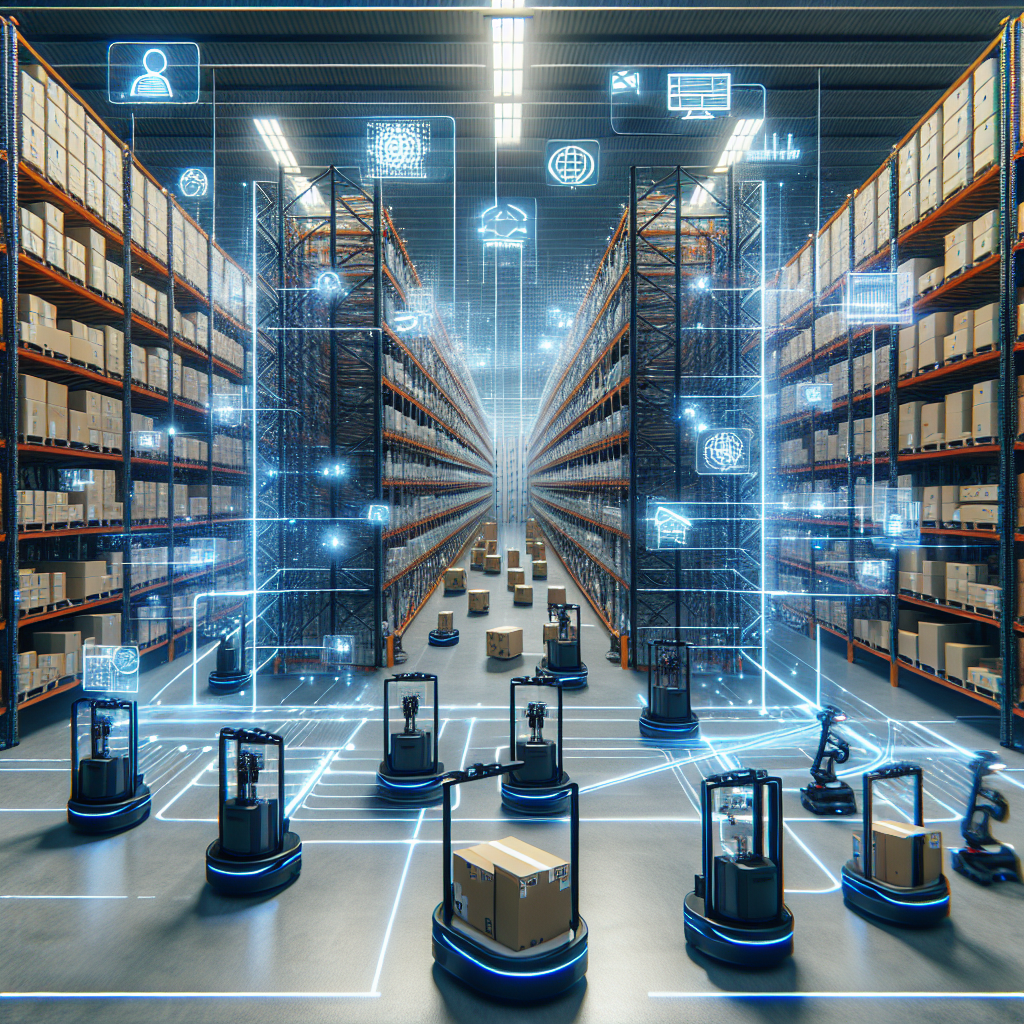
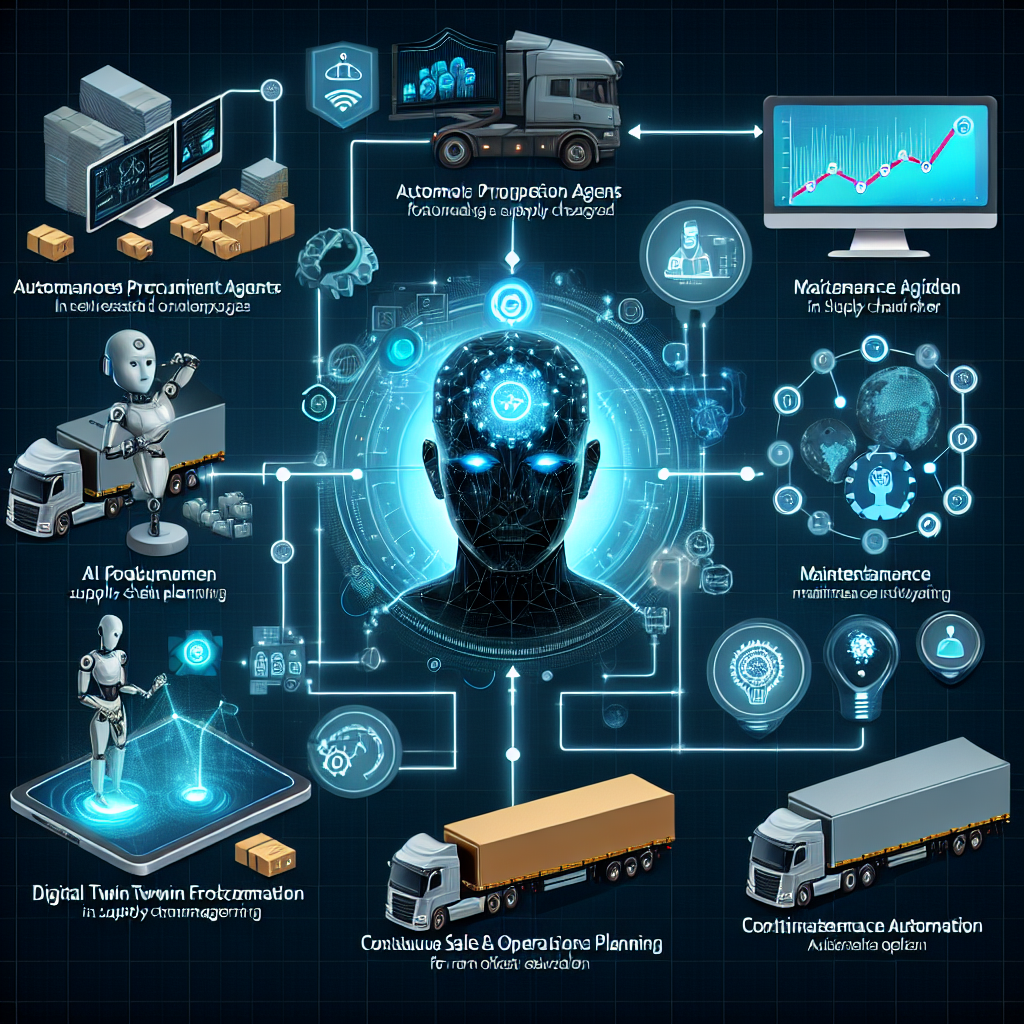
Supply chain digital twins create virtual replicas of physical supply chain networks, enabling companies to simulate disruptions, test policy changes, and optimize flows before committing real resources. When integrated with IoT for supply chain infrastructure — sensors on warehouse shelving, GPS trackers on fleets, RFID on pallets — digital twins become real-time mirrors of physical operations. Companies like Siemens and Amazon have deployed digital twin environments that reduce planning cycle times and improve asset utilization by double-digit percentages.
Predictive maintenance for fleet operations represents one of the highest-ROI IoT applications within the agentic AI framework. By feeding real-time telemetry data — engine temperature, brake wear, tire pressure, fuel consumption — into machine learning models, autonomous agents can predict component failures days or weeks in advance. UPS, for example, uses predictive maintenance across its delivery fleet to reduce unplanned downtime and save millions annually in repair and delay costs.
● Digital twins simulate disruptions and optimize flows before real-world execution
● IoT integration gives digital twins real-time fidelity across warehouses and fleets
● Predictive fleet maintenance reduces unplanned downtime and lowers repair costs
Challenges and Considerations for Deploying Agentic AI
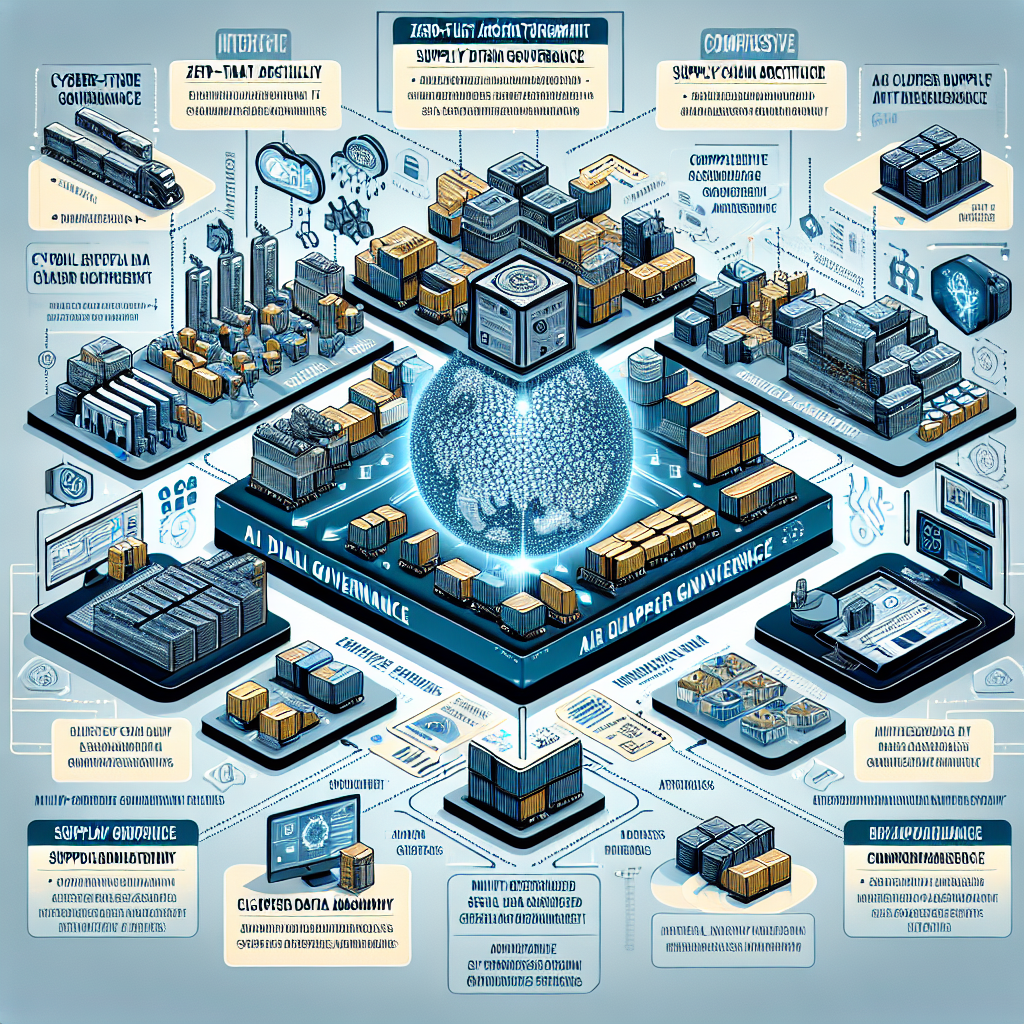
Despite its promise, deploying agentic AI in supply chain environments comes with meaningful challenges. Data quality remains a foundational barrier — autonomous agents are only as reliable as the data they consume, and many enterprises still struggle with siloed, inconsistent data across ERP, WMS, and TMS platforms. Organizations should prioritize data governance and integration infrastructure before scaling agentic deployments.
Trust and explainability are equally critical. Supply chain professionals need to understand why an agent took a particular action, especially in high-stakes scenarios like emergency sourcing or carrier selection. Leading vendors are addressing this through human-in-the-loop design frameworks, where agents propose actions and humans retain override authority — balancing autonomy with accountability. For guidance on evaluating supply chain technology vendors, the Gartner Supply Chain Research hub offers comprehensive analyst perspectives.
● Data quality and system integration are foundational prerequisites
● Explainability and human-in-the-loop design build operational trust
● Governance frameworks are essential before scaling autonomous deployments
Key Takeaways
Agentic AI is not a distant future concept — it is actively reshaping procurement, logistics, forecasting, and planning operations today. Organizations that invest in the enabling infrastructure and begin piloting autonomous agents now will build significant competitive advantages in cost, speed, and resilience. Here are the essential points to carry forward:
● Agentic AI enables autonomous, multi-step decision-making across all supply chain functions
● Autonomous procurement agents and AI-powered demand forecasting deliver measurable ROI through cost reduction and accuracy gains
● Generative AI for logistics accelerates documentation, routing, and carrier management workflows
● Supply chain digital twins combined with IoT and predictive maintenance create a real-time, self-optimizing operational environment
● Success requires strong data governance, explainability design, and a phased implementation approach
Ready to explore the tools and technologies powering the next generation of supply chain performance? Visit BestInSupplies.com for expert reviews, buyer’s guides, and in-depth resources on AI in supply chain management, procurement technology, logistics software, and more. Whether you’re evaluating your first autonomous agent deployment or scaling an existing digital supply chain strategy, BestInSupplies.com has the insights to help you move forward with confidence.