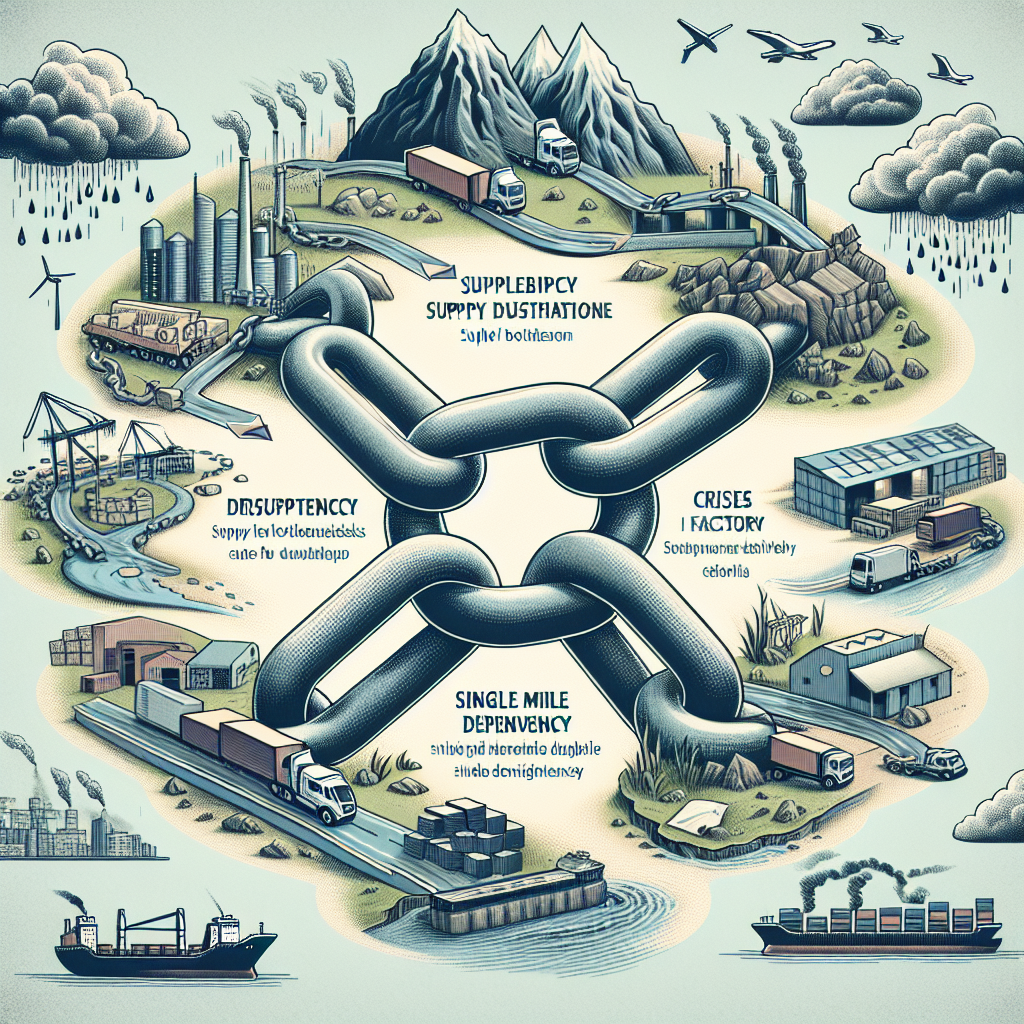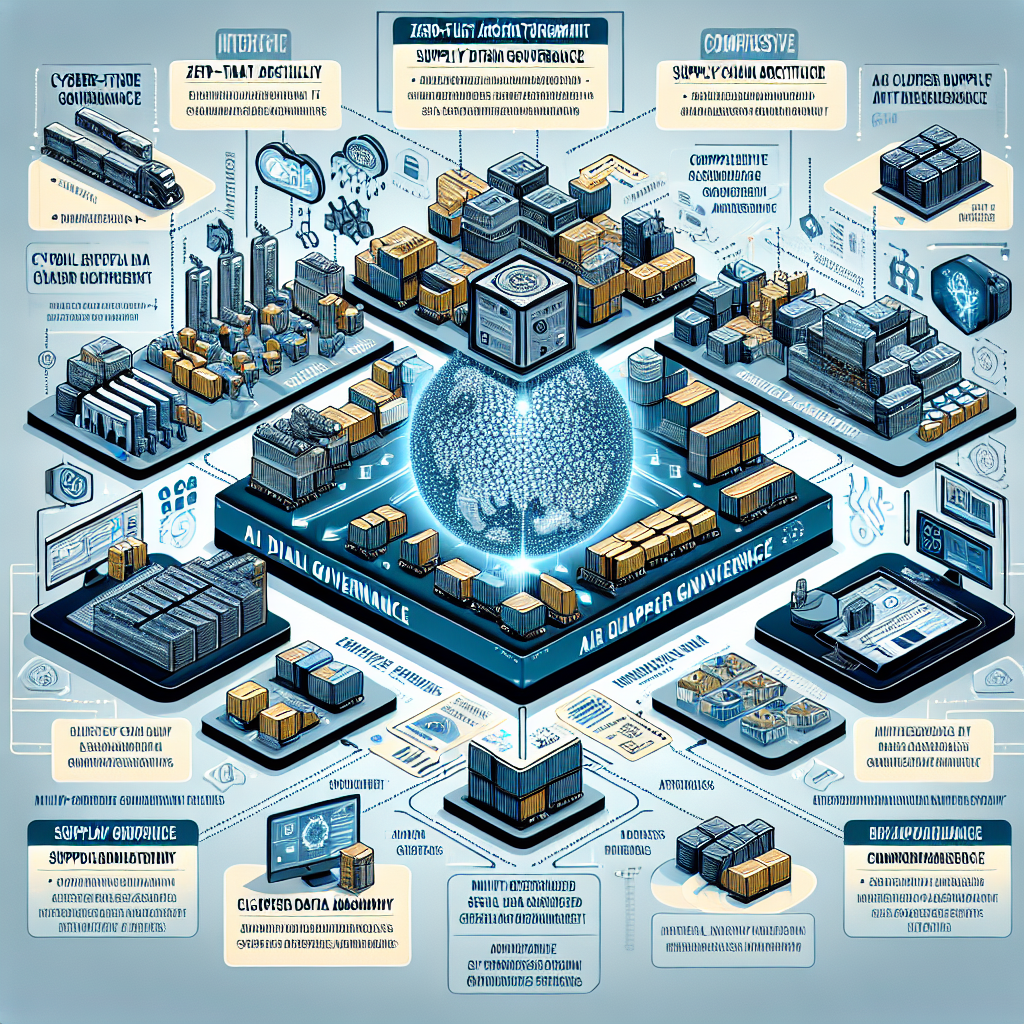










The modern supply chain is no longer a linear sequence of transactions — it’s a sprawling, interconnected digital ecosystem spanning continents, cloud platforms, and countless third-party systems. As enterprises accelerate digital transformation, the stakes for robust AI governance in supply chain operations and zero-trust supply chain architecture have never been higher. Without deliberate frameworks for data integrity, access control, and compliance, organizations face cascading vulnerabilities that can disrupt operations, erode trust, and invite regulatory penalties. This post explores how forward-thinking enterprises are designing resilient digital supply chains built on principled governance and adaptive security.
Why AI Governance in Supply Chain Can No Longer Be an Afterthought
Artificial intelligence is now embedded across procurement, demand forecasting, logistics optimization, and supplier risk scoring. Yet the speed of AI adoption has outpaced governance maturity in many organizations, creating blind spots around model accountability, data provenance, and algorithmic bias. According to a 2023 Gartner report, fewer than 30% of supply chain organizations have implemented formal AI governance policies, leaving critical decision-making processes unaudited and ungoverned.
Effective supply chain IT governance requires organizations to define clear ownership of AI models, establish audit trails for automated decisions, and align AI outputs with broader enterprise risk tolerance. For example, a global retailer using AI-driven replenishment must be able to explain why specific purchase orders were generated — not just for internal review, but to satisfy supplier agreements and regulatory inquiries. This demands tight integration between AI systems and data lineage in supply chain systems, ensuring every decision can be traced back to its source data and logic.
A mature supply chain compliance framework for AI should also address model drift, bias monitoring, and change management protocols when algorithms are updated. Without these safeguards, AI can systematically introduce errors into procurement cycles or misclassify supplier risk — with consequences that ripple across the entire value chain.
● Fewer than 30% of supply chain organizations have formal AI governance policies in place.
● Data lineage and auditability are foundational to defensible AI-driven supply chain decisions.
● Governance frameworks must evolve alongside AI model updates to prevent drift and compliance gaps.
Zero-Trust Supply Chain Architecture: Redefining Trust in a Multi-Enterprise World
The traditional perimeter-based security model is functionally obsolete in today’s multi-enterprise supply chain networks, where data flows freely between manufacturers, 3PLs, distributors, and retailers across shared platforms. Zero-trust principles — “never trust, always verify” — offer a more practical foundation for cyber-resilience in logistics by requiring continuous authentication and least-privilege access for every user, device, and application attempting to interact with supply chain systems.
Implementing supply chain identity and access management (IAM) under a zero-trust model means that a supplier logging into a procurement portal must verify their identity contextually — based on device posture, location, and behavior — not just a static password. Companies like Microsoft and Palo Alto Networks have published zero-trust frameworks that supply chain architects can adapt to govern supplier portals, EDI integrations, and IoT-connected logistics assets. NIST’s Zero Trust Architecture (SP 800-207) provides an authoritative technical baseline for these implementations.
Beyond access control, zero-trust principles extend to secure data sharing in supply chain environments by enforcing encryption in transit and at rest, microsegmenting network access, and logging all data interactions for forensic review. For global supply chains handling sensitive product specifications, pricing data, or customer information, this level of rigor is increasingly required by enterprise procurement policies and emerging data protection regulations.
● Zero-trust architecture replaces perimeter-based security with continuous, context-aware verification.
● NIST SP 800-207 provides a technical framework adaptable to multi-enterprise supply chain environments.
● Microsegmentation and encrypted data sharing are critical components of zero-trust logistics security.
Supply Chain Data Governance: Master Data, Standardization, and Interoperability
Inconsistent data is one of the most underestimated threats to supply chain performance. Master data management in supply chain — encompassing item master records, supplier profiles, location hierarchies, and unit-of-measure standards — forms the authoritative foundation upon which all planning, procurement, and fulfillment decisions rest. Without a governed, single source of truth, organizations routinely experience duplicate orders, misrouted shipments, and inaccurate demand signals.
Supply chain data standardization efforts, such as adopting GS1 standards for product identification or UN/CEFACT formats for electronic trade documents, dramatically improve interoperability in supply chain systems by giving every trading partner a shared data language. For instance, a manufacturer implementing GS1 barcodes and Electronic Product Code Information Services (EPCIS) can share real-time location data with retail partners without custom integrations — reducing onboarding time and error rates. Learn more about GS1 standards at GS1.org.
Supplier data governance policies should define how third-party entities submit, update, and validate master data — and who within the enterprise holds approval authority. These policies reduce the risk of outdated supplier banking details, expired certifications, or incorrect Harmonized System (HS) codes causing compliance failures at customs. A well-governed supplier data governance program also accelerates supplier onboarding and improves the accuracy of spend analytics.
● Master data management is the backbone of reliable supply chain planning and execution.
● GS1 and UN/CEFACT standards enable interoperability without costly custom integrations.
● Supplier data governance policies reduce compliance risk and accelerate partner onboarding.
Digital Supply Chain Architecture: Cloud, APIs, and Platform Design
Modern digital supply chain architecture has shifted decisively toward cloud-native, API-driven designs that replace monolithic ERP integrations with flexible, composable capabilities. Cloud supply chain architecture enables elastic scalability — critical during demand surges — while reducing infrastructure management burden and accelerating deployment of new capabilities. Platforms like SAP BTP, Oracle SCM Cloud, and Blue Yonder operate as orchestration layers connecting planning, procurement, warehousing, and transportation in real time.
API-driven supply chain integration allows enterprises to connect best-of-breed solutions — such as a specialized freight audit tool alongside a TMS and an ERP — without being locked into a single vendor’s ecosystem. RESTful and event-driven APIs enable real-time data exchange between systems, supporting use cases like dynamic carrier selection, live inventory visibility, and automated compliance checks at customs. The OpenAPI Initiative provides open standards that supply chain technology teams can leverage to design consistent, well-documented integration interfaces.
When designing enterprise supply chain architecture, governance must be embedded at the platform level — not bolted on after deployment. This means defining data ownership policies within the platform, enforcing role-based access controls across integrated applications, and building supply chain auditability into every data flow so that regulators, auditors, and internal stakeholders can reconstruct the history of any transaction or decision.
● Cloud-native, API-driven architectures replace rigid ERP integrations with composable, scalable capabilities.
● OpenAPI standards support consistent, interoperable integration design across supply chain platforms.
● Governance and auditability must be embedded into platform architecture from the outset.
Regulatory Compliance and Risk Governance in Global Supply Chains
Global supply chains operate under an increasingly complex web of regulatory obligations — from the EU’s Corporate Sustainability Due Diligence Directive (CSDDD) and the U.S. Uyghur Forced Labor Prevention Act (UFLPA) to GDPR data handling requirements and customs trade partnership programs like C-TPAT. Effective regulatory compliance in global supply chains demands systems that can capture, store, and produce evidence of compliance at every tier of the supply chain — not just at the first-tier supplier level.
Risk governance frameworks in logistics should incorporate supplier risk scoring, continuous monitoring of geopolitical and financial signals, and defined escalation protocols when risk thresholds are breached. For example, a sourcing organization with suppliers in conflict-prone regions should have automated alerts tied to government watchlists, combined with documented remediation workflows that satisfy auditor and regulatory requirements. Solutions like Resilinc, riskmethods, and Dun & Bradstreet Supply Chain Intelligence provide data feeds and workflow tools to support these governance programs.
Achieving supply chain auditability in regulated industries also requires immutable audit logs, version-controlled documentation, and clear data retention policies aligned with jurisdictional requirements. For pharmaceutical, aerospace, and food supply chains in particular, the ability to conduct rapid end-to-end traceability — from raw material origin to final delivery — is both a regulatory mandate and a competitive differentiator. Building this capability into resilient supply chain architecture design from the start is far more cost-effective than retrofitting it under regulatory pressure.
● Regulatory complexity — CSDDD, UFLPA, GDPR — demands multi-tier supplier compliance visibility.
● Risk governance frameworks must include automated monitoring, scoring, and escalation workflows.
● Immutable audit logs and traceability capabilities are essential for regulated industry supply chains.