
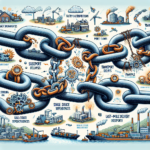


The supply chain industry is undergoing a seismic shift, and at the center of it is Agentic AI in supply chain — a new class of autonomous, goal-driven systems that don’t just analyze data, but act on it. Unlike traditional AI tools that surface insights for human review, agentic AI systems make decisions, trigger workflows, and coordinate across complex networks with minimal human intervention. For procurement leaders, logistics managers, and supply chain planners, this isn’t a distant future — it’s a competitive reality reshaping operations right now.
What Is Agentic AI and Why Does It Matter for Supply Chains?
Agentic AI refers to artificial intelligence systems capable of autonomous decision-making, goal-setting, and multi-step task execution without continuous human prompting. In the context of AI in supply chain management, these agents can monitor supplier performance, reroute shipments, adjust purchase orders, and escalate exceptions — all within a single orchestrated workflow.
What makes agentic systems different from conventional automation is their ability to reason, adapt, and collaborate with other agents or systems in real time. According to Gartner, by 2028, 15% of day-to-day work decisions will be made autonomously by agentic AI systems, up from nearly zero in 2024 — a trajectory that supply chain organizations simply cannot ignore.
● Agentic AI acts on data autonomously, not just reporting insights but executing decisions
● These systems are distinct from RPA or traditional ML in their goal-driven adaptability
● Gartner forecasts rapid adoption, making early investment a strategic priority
Autonomous Procurement Agents: Redefining Sourcing and Supplier Management
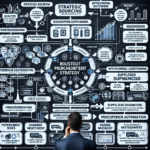
Autonomous procurement agents are among the most impactful early deployments of agentic AI. These agents can continuously scan supplier catalogs, monitor contract compliance, evaluate risk signals from news and financial data, and even negotiate pricing within pre-approved parameters — all without waiting for a buyer’s manual review cycle.
A compelling real-world example is Siemens, which has piloted AI-driven procurement systems that automatically identify alternative suppliers when disruptions are detected, reducing sourcing response time by over 60%. Similarly, platforms like Coupa and SAP Ariba are integrating agentic layers that allow procurement workflows to self-optimize based on spend analytics and market conditions. For a deeper look at how procurement tools are evolving, explore our procurement technology resources at BestInSupplies.com.
● Autonomous agents reduce procurement cycle times by automating supplier evaluation and negotiation
● Real deployments at companies like Siemens show 60%+ improvements in sourcing response time
● Leading platforms such as SAP Ariba and Coupa are embedding agentic capabilities into their workflows
AI-Powered Demand Forecasting and Continuous S&OP Planning
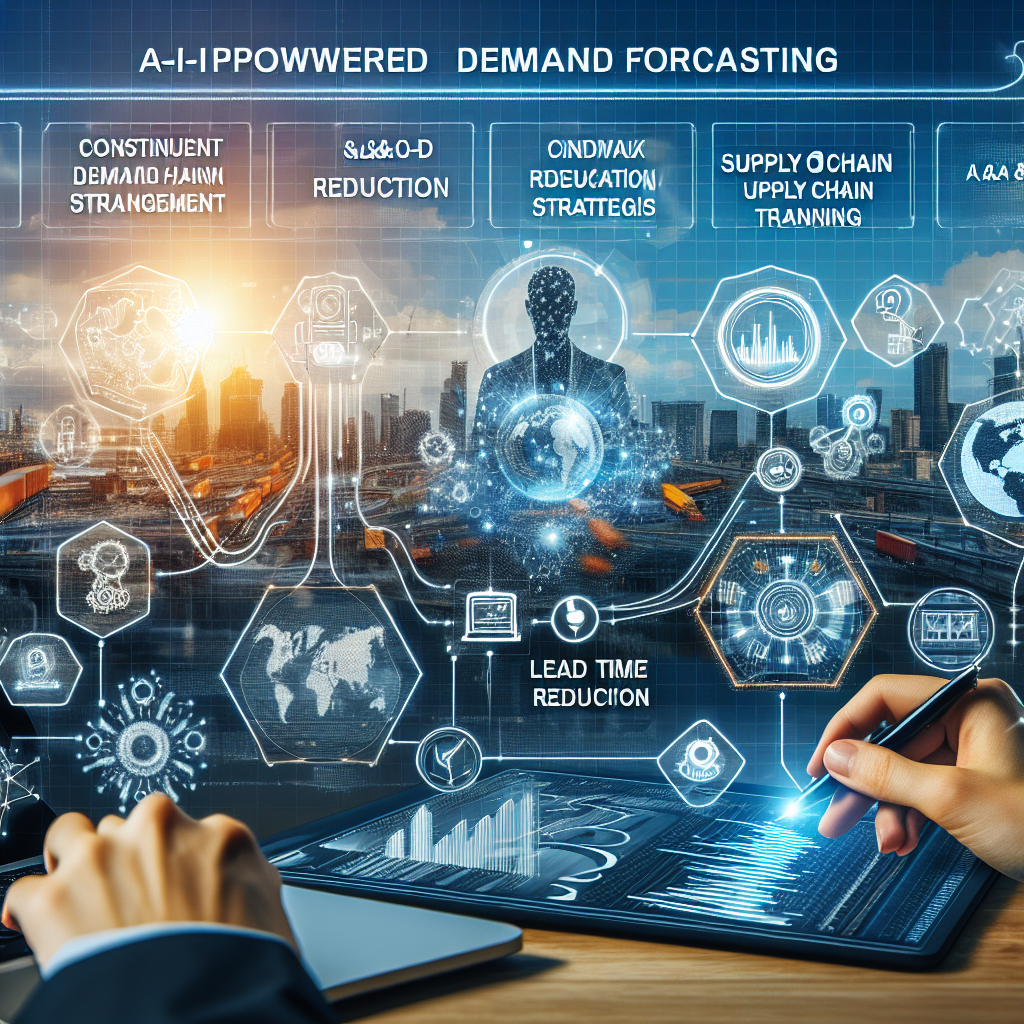
AI-powered demand forecasting has evolved far beyond statistical models and Excel-based projections. Today’s agentic systems ingest real-time signals — including POS data, social sentiment, weather patterns, and macroeconomic indicators — to generate rolling, probabilistic forecasts that continuously update as new data arrives.
This capability is directly enabling continuous S&OP planning, shifting the traditional monthly review cycle into an always-on process. Rather than waiting for the next planning meeting, agentic AI systems can trigger inventory repositioning, adjust production schedules, and notify stakeholders of emerging demand shifts within hours. According to McKinsey, companies that adopt AI-driven forecasting reduce forecast errors by 20–50% and decrease lost sales due to stockouts by up to 65%. Learn more about advanced planning systems on Gartner’s Supply Chain research hub.
● AI forecasting integrates dozens of real-time data signals for dramatically improved accuracy
● Continuous S&OP replaces static monthly cycles with always-on, adaptive planning
● McKinsey data shows 20–50% reduction in forecast errors with AI-driven planning models
Generative AI for Logistics and Cognitive Supply Chain Automation
Generative AI for logistics is unlocking a new layer of intelligence across transportation, warehousing, and last-mile delivery. Large language models (LLMs) are being used to synthesize carrier contracts, generate optimized routing narratives, draft exception handling procedures, and even communicate delays to customers in natural language — capabilities that previously required significant manual effort.
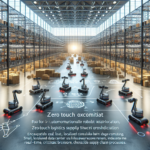
Paired with cognitive supply chain automation, generative AI enables systems that don’t just execute tasks but understand context. For instance, DHL has implemented AI-driven warehouse orchestration that dynamically reassigns picking paths and labor resources based on real-time order priority and facility constraints, improving throughput by up to 25%. These systems blend computer vision, NLP, and agentic decision-making into a cohesive operational intelligence layer. Explore related logistics automation topics in our logistics automation section at BestInSupplies.com.
● Generative AI handles logistics communication, contract analysis, and routing optimization autonomously
● DHL’s AI orchestration system demonstrates 25% throughput gains through cognitive automation
● Combining LLMs with agentic decision layers creates context-aware operational intelligence
Supply Chain Digital Twins and IoT-Driven Predictive Maintenance
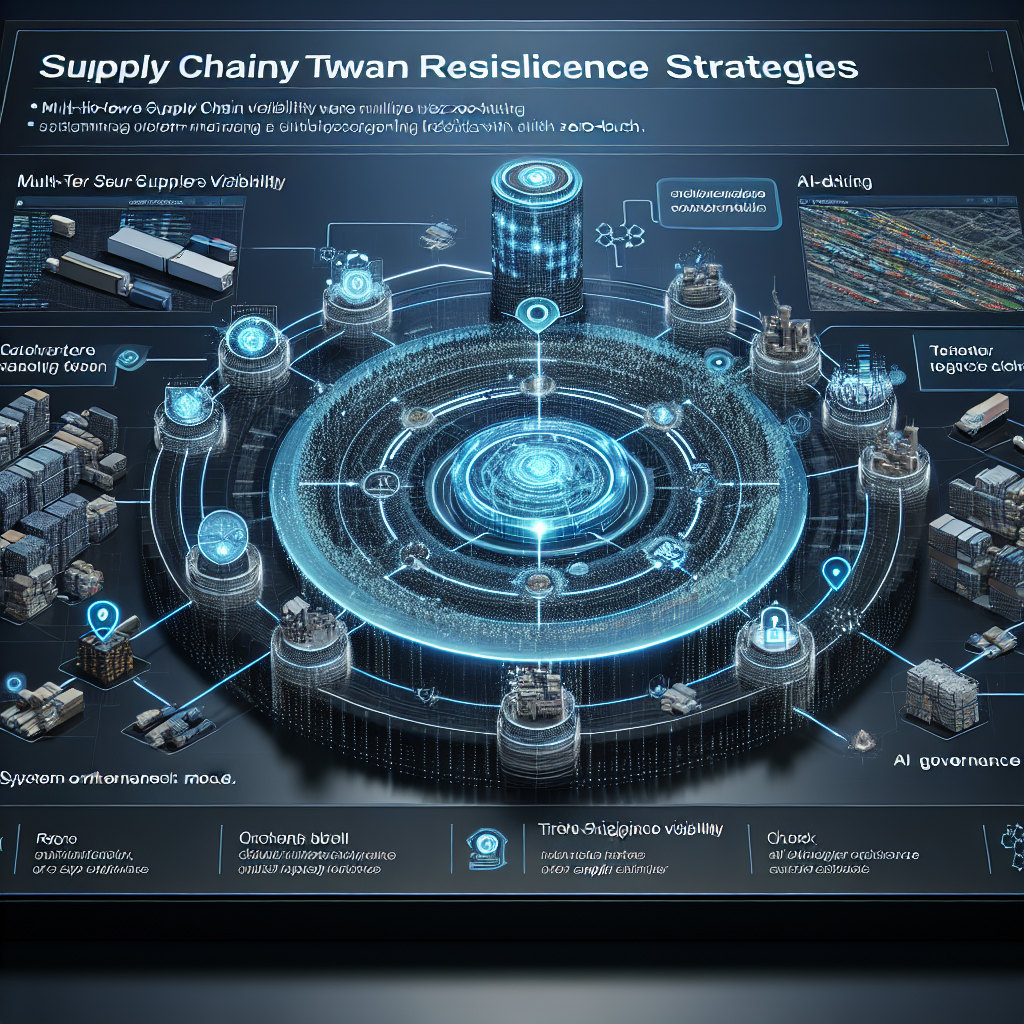
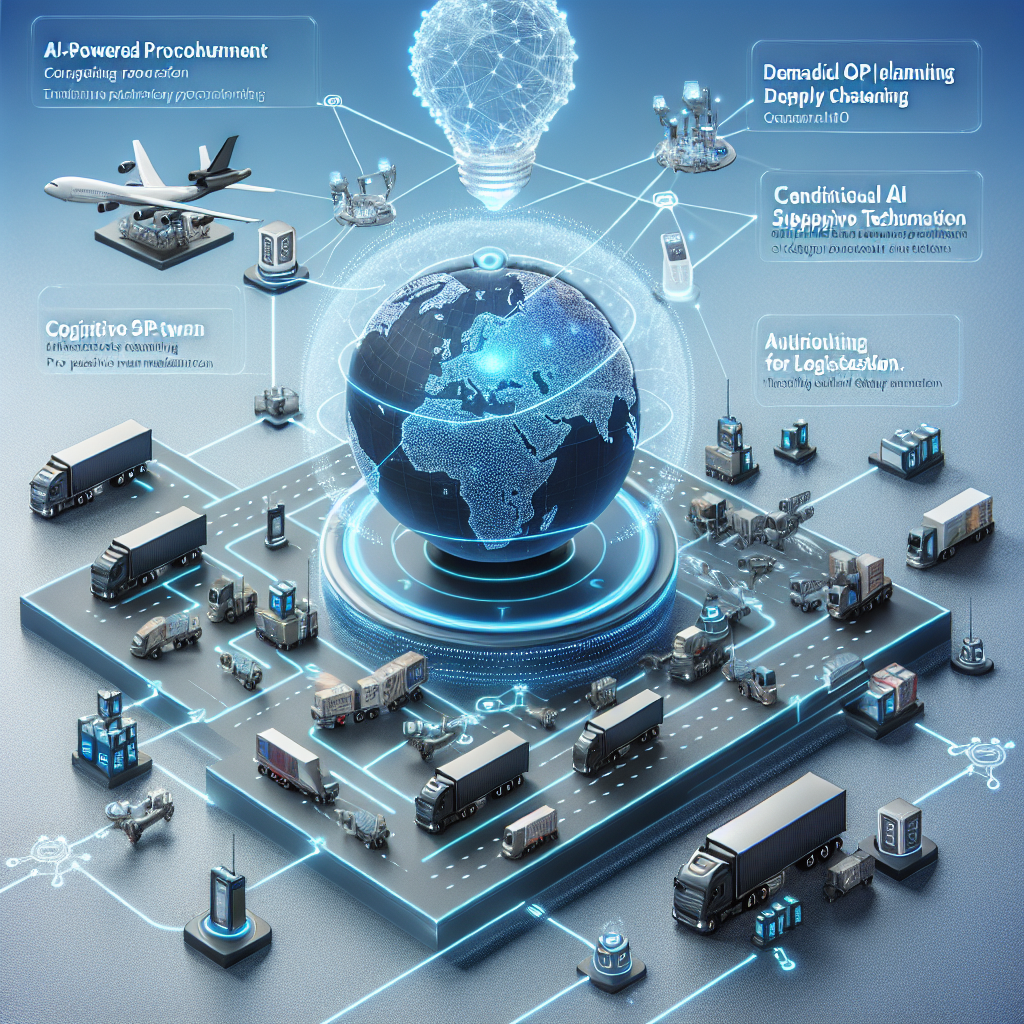
Supply chain digital twins — virtual replicas of physical supply chain networks — are becoming the operational backbone for agentic AI deployments. By mirroring everything from supplier nodes and transportation lanes to warehouse layouts and inventory positions, digital twins allow AI agents to simulate disruption scenarios, test response strategies, and execute optimal decisions before committing resources in the real world.
Integrated with IoT for predictive maintenance for fleet and infrastructure assets, digital twins provide a continuously updated picture of physical asset health. Companies like Amazon and Maersk are using IoT sensor data combined with digital twin models to predict vehicle breakdowns, port congestion bottlenecks, and equipment failures days in advance — dramatically reducing unplanned downtime and maintenance costs. According to McKinsey Operations research, predictive maintenance enabled by IoT and AI can reduce maintenance costs by 10–25% and increase equipment uptime by 10–20%.
● Digital twins give AI agents a safe environment to simulate and optimize decisions before execution
● IoT-powered predictive maintenance reduces unplanned fleet downtime and costly emergency repairs
● Leaders like Amazon and Maersk are already realizing measurable gains from integrated twin-IoT architectures
Key Takeaways
Agentic AI is fundamentally changing what’s possible in supply chain management — not by assisting human decisions, but by making and executing many of them autonomously. Organizations that invest in these capabilities today are building compounding competitive advantages in cost, resilience, and speed. Here are the critical points to carry forward:
● Agentic AI in supply chain is a strategic imperative, not a future trend — early movers are already outperforming
● Autonomous procurement agents are compressing sourcing cycles and improving supplier resilience dramatically
● AI-powered demand forecasting and continuous S&OP are eliminating costly planning lags and stockout events
● Generative AI for logistics and cognitive automation are creating context-aware, self-optimizing operations
● Supply chain digital twins paired with IoT enable proactive, predictive decision-making across the entire network
Ready to go deeper? Visit BestInSupplies.com for expert resources, product guides, and the latest insights on supply chain technology, procurement tools, and logistics innovation — all curated to help you make smarter supply chain decisions.