






If you’ve been watching the evolution of modern manufacturing and distribution, you’ve probably noticed that things are moving fast—really fast. The concept of zero-touch logistics orchestration is no longer a futuristic buzzword; it’s becoming the operational backbone of leading smart factories around the world. By combining autonomous robotics, real-time edge processing, and intelligent software layers, companies are building supply chains that practically run themselves.
What Is Zero-Touch Logistics Orchestration?
Zero-touch logistics orchestration refers to the seamless, automated coordination of goods movement, inventory management, and fulfillment workflows with minimal or no human intervention. Think of it as the nervous system of a smart factory—constantly sensing, deciding, and acting without waiting for a human to push a button.
At its core, the approach relies on tightly integrated systems: robotics, sensors, cloud platforms, and edge computing nodes that work in concert. When one part of the supply chain shifts—say, a supplier delays a shipment—the entire system recalibrates automatically, rerouting tasks and adjusting priorities in real time.
● Zero-touch logistics reduces human error and speeds up response times dramatically
● It depends on deep system integration across hardware and software layers
● Real-time recalibration is what separates it from older automated systems
The Role of Autonomous Mobile Robots in Modern Warehouses
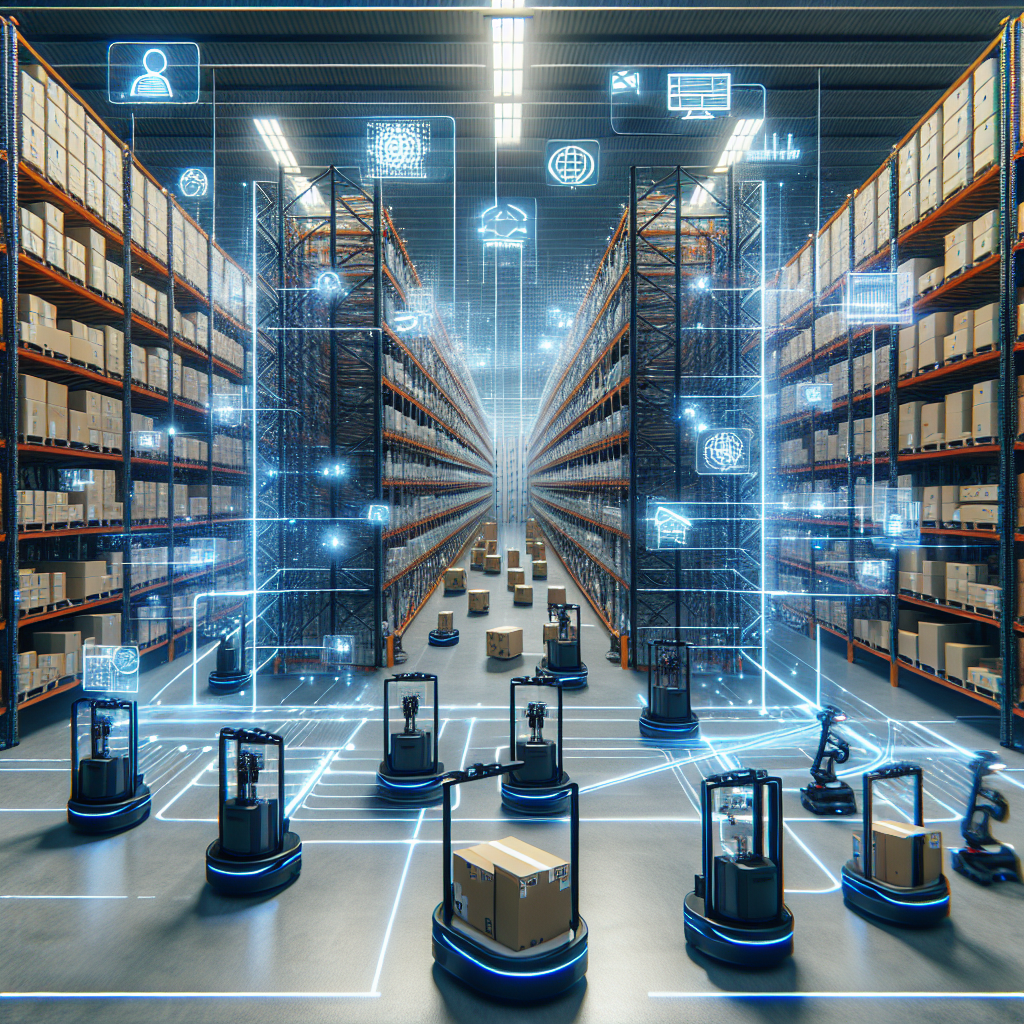
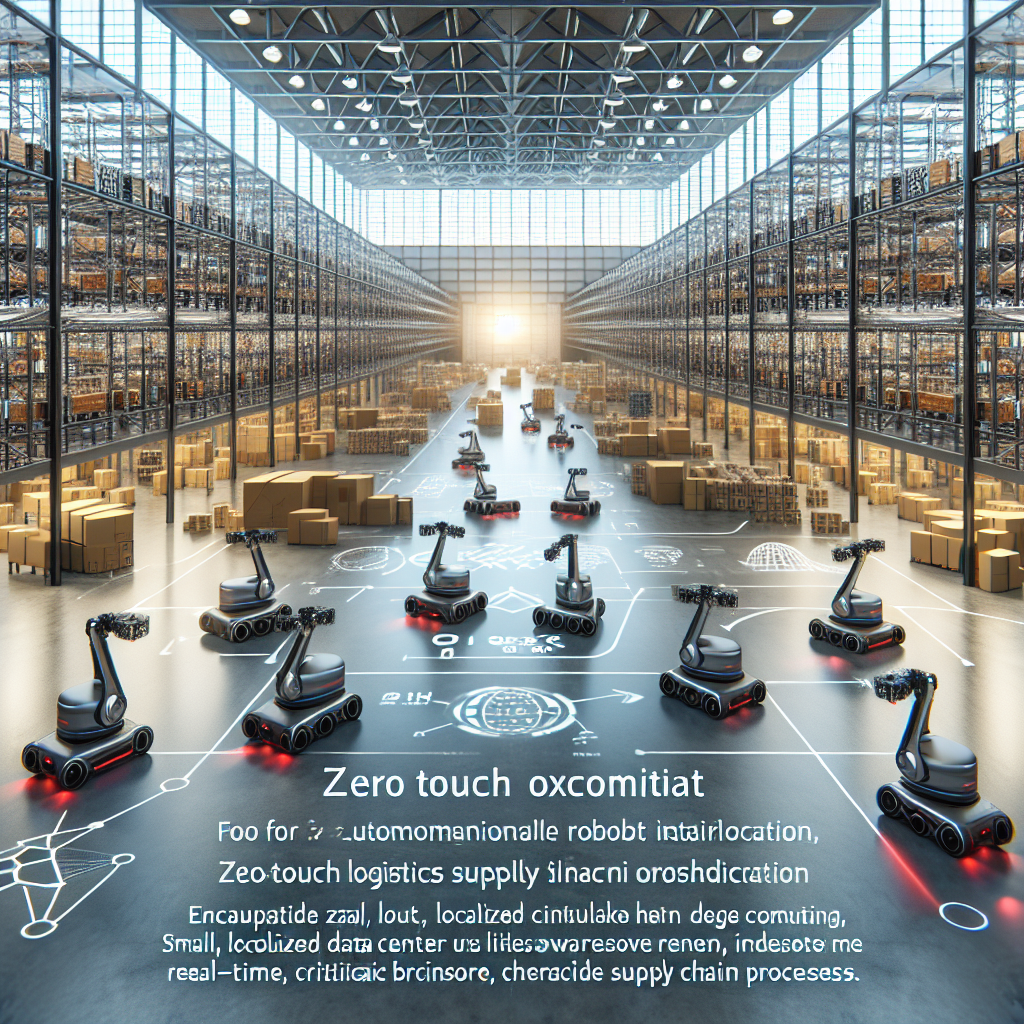
Autonomous mobile robots (AMR) are the workhorses of zero-touch logistics, and they’ve come a long way from the simple conveyor belts of yesterday. Unlike their predecessors—automated guided vehicles (AGVs) that followed fixed magnetic tracks—AMRs use onboard sensors, LiDAR, and AI-driven navigation to move fluidly through dynamic warehouse environments.
Amazon’s fulfillment centers offer one of the most well-known examples, deploying over 750,000 robotic units globally to handle sorting, picking, and transport tasks. But it’s not just the giants benefiting; mid-sized distributors using platforms like 6 River Systems’ Chuck robots have reported pick-rate improvements of up to 2-3x compared to purely manual operations. These autonomous mobile robots (AMR) don’t just move stuff—they learn, adapt, and optimize their own routes continuously.
What makes AMRs particularly powerful in an Industry 4.0 smart factory integration context is their ability to communicate with other systems in real time. An AMR can receive a task from a warehouse management system (WMS), confirm completion, update inventory records, and flag anomalies—all without a single human touchpoint in the loop.
● AMRs navigate dynamically, unlike older fixed-path automated vehicles
● Integration with WMS platforms enables fully autonomous task cycles
● Real-world deployments show significant productivity gains across warehouse sizes
Why Warehouse Edge Computing Changes Everything
Warehouse edge computing is the unsung hero of the zero-touch revolution. Rather than sending every sensor reading, camera frame, and robot status update to a distant cloud server, edge computing processes that data locally—right on the warehouse floor or in an on-premise server rack nearby.
This matters enormously for latency-sensitive operations. Consider a scenario where 50 AMRs are navigating a busy fulfillment center simultaneously. If each robot had to ping a cloud server before making a navigation decision, the milliseconds of delay would add up fast, creating bottlenecks and collision risks. With warehouse edge computing, those decisions happen in under 10 milliseconds locally, keeping operations smooth and safe. Companies like Intel and NVIDIA have developed purpose-built edge AI chips specifically optimized for these kinds of high-throughput warehouse environments.
Edge computing also enhances resilience. If a cloud connection goes down, a factory running on edge infrastructure keeps humming along because its critical decision-making lives closer to the action. That kind of uptime reliability is non-negotiable in high-volume distribution environments.
● Edge computing slashes latency from seconds to milliseconds for real-time decisions
● Local processing keeps operations running even during cloud outages
● Purpose-built edge AI hardware is making deployment faster and more cost-effective
Industry 4.0 Smart Factory Integration: Connecting All the Dots
Industry 4.0 smart factory integration is what ties AMRs, edge nodes, sensors, and enterprise software into one coherent, intelligent system. It’s not enough to have great robots if they can’t talk to your ERP, your WMS, or your supplier portals in real time.
A concrete example of this in action is Bosch’s smart factory in Blaichach, Germany, where the company integrated IoT sensors, autonomous vehicles, and predictive analytics into a unified platform. The result? A reported 25% reduction in production downtime and a significant improvement in on-time delivery rates. That’s the kind of tangible ROI that makes the Industry 4.0 smart factory integration investment conversation a lot easier for operations leaders.
Platforms like PTC ThingWorx and Siemens’ MindSphere provide the middleware glue that connects disparate systems, enabling the orchestration layer to have full visibility and control across the supply chain. You can explore more about smart factory tools and solutions over at BestInSupplies.com.
● True smart factory integration requires seamless connectivity across all software layers
● Real-world deployments like Bosch’s demonstrate measurable operational improvements
● Middleware platforms are critical enablers of end-to-end orchestration
Challenges and Considerations Before You Deploy
Of course, rolling out a zero-touch logistics orchestration system isn’t as simple as flipping a switch. There are real infrastructure challenges, including network reliability, cybersecurity vulnerabilities at edge nodes, and the need for interoperability between legacy systems and new platforms.
Change management is another factor that often gets underestimated. Workers need to be retrained, workflows need to be redesigned, and stakeholders need to align on what “success” actually looks like post-deployment. The technology is mature enough to deliver results, but the human side of the equation still needs careful attention.
● Cybersecurity at the edge is a growing and often overlooked risk area
● Legacy system compatibility requires careful planning and phased rollouts
● Workforce transformation is as important as the technology itself
Key Takeaways
Zero-touch logistics orchestration is reshaping how smart factories and distribution centers operate, driven by the convergence of AMRs, edge computing, and deep system integration. Here’s what to keep in mind as you evaluate your own supply chain strategy:
● Zero-touch logistics orchestration reduces human intervention by automating coordination across the entire supply chain
● Autonomous mobile robots (AMR) are more intelligent and adaptable than ever, delivering proven productivity gains in real-world deployments
● Warehouse edge computing enables low-latency, resilient decision-making that cloud-only architectures simply can’t match
● Industry 4.0 smart factory integration is the connective tissue that turns individual technologies into a unified, intelligent operation
● Successful deployment requires balancing technology investment with cybersecurity planning and workforce readiness
Want to dive deeper into smart factory technologies, supply chain automation tools, and the latest in industrial innovation? Head over to BestInSupplies.com for more expert guides, product comparisons, and industry insights designed to help you build smarter operations.