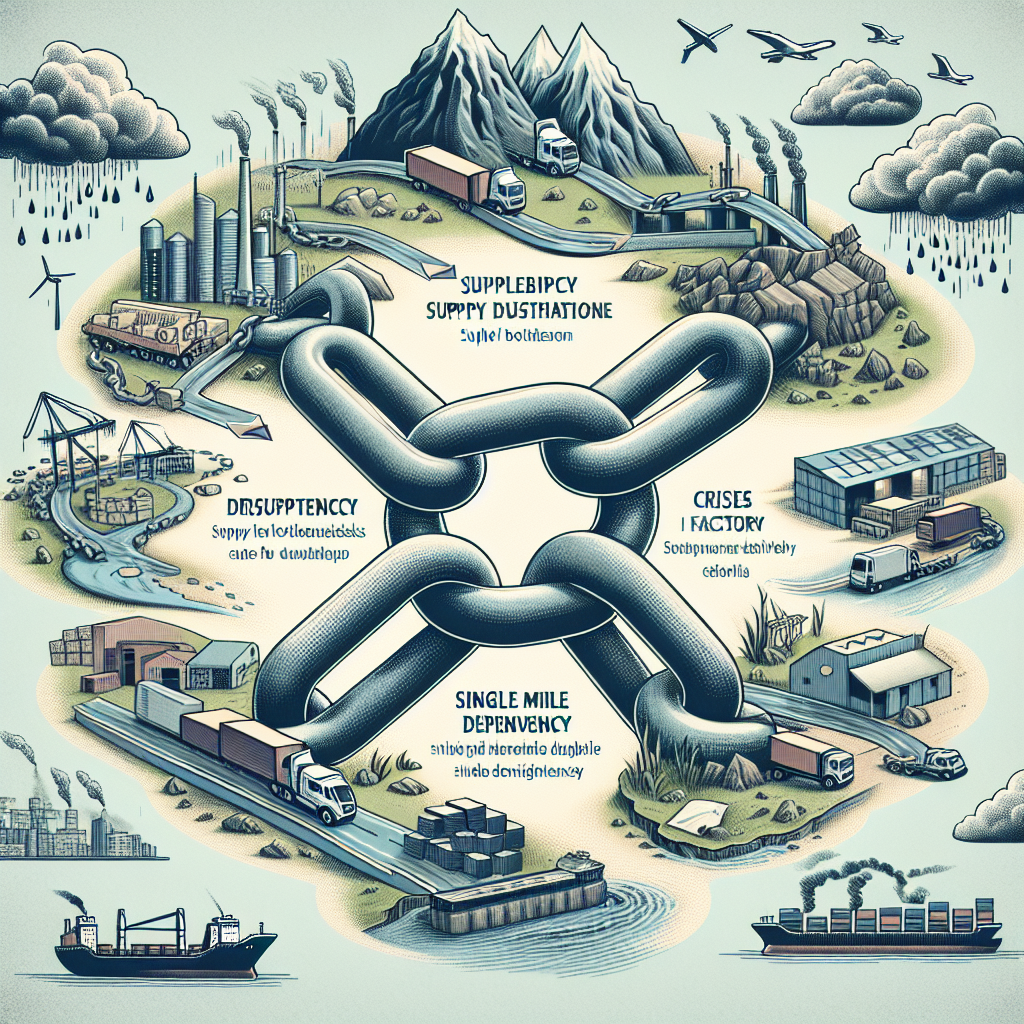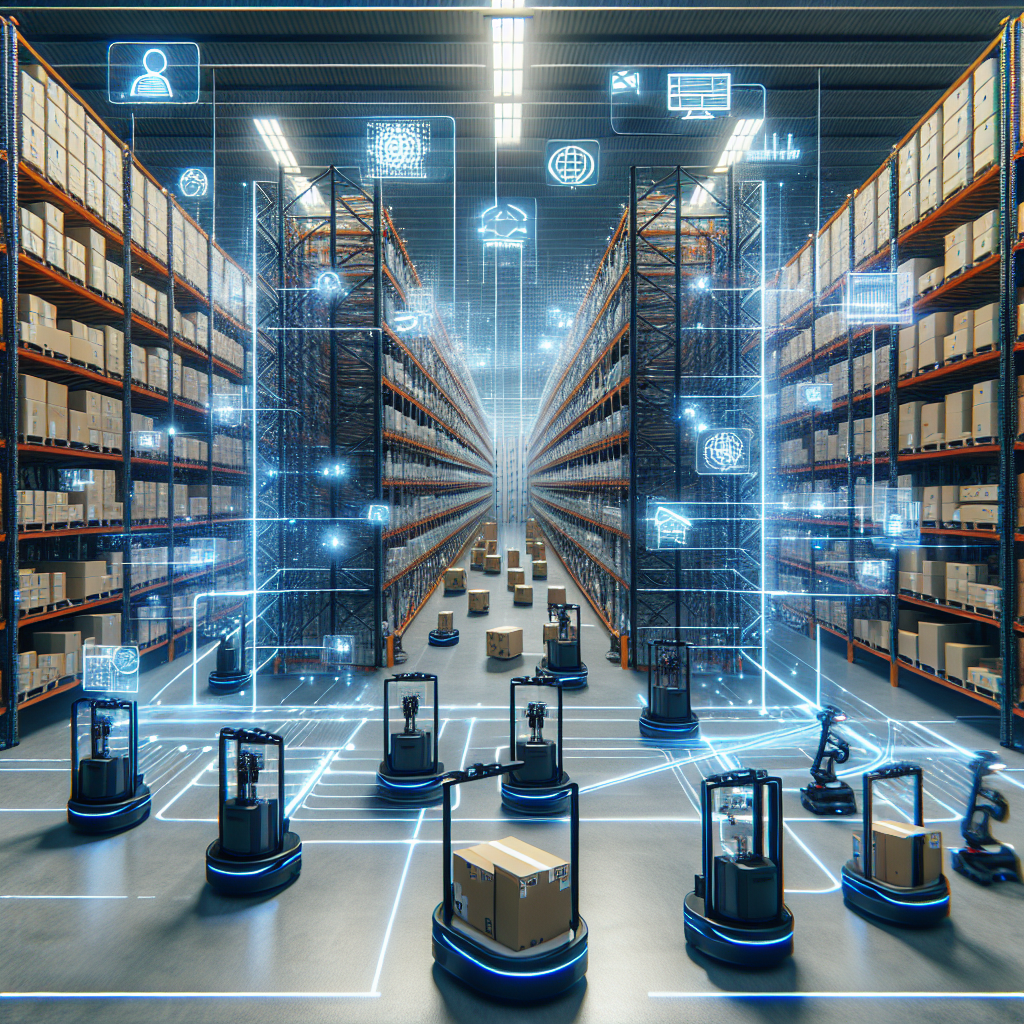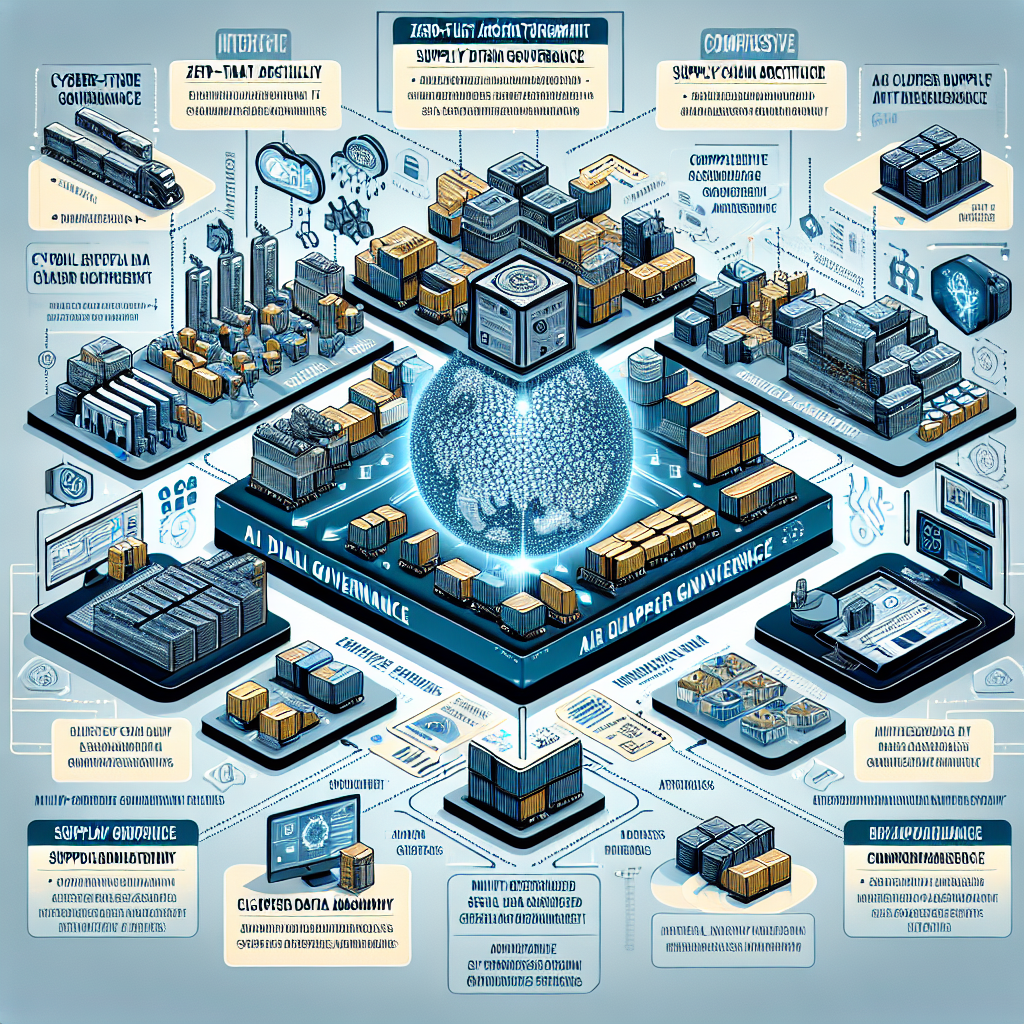








Modern supply chains are no longer just logistical pipelines — they are complex, interconnected digital ecosystems involving hundreds of suppliers, cloud platforms, and real-time data exchanges. As enterprises scale their digital supply chain architecture, the need for robust governance, security, and compliance has never been more critical. This post explores how organizations can build a secure, resilient supply chain by integrating AI governance, zero-trust principles, and enterprise-grade compliance frameworks.
Why AI Governance in Supply Chain Is No Longer Optional
The rapid adoption of machine learning and predictive analytics across logistics and procurement has introduced powerful efficiencies — but also significant risks. AI governance in supply chain ensures that automated decision-making systems remain transparent, auditable, and aligned with regulatory obligations. Without it, organizations risk biased demand forecasting, opaque sourcing decisions, and liability exposure under emerging AI regulations like the EU AI Act.
A concrete example: a global retailer using AI-driven supplier selection must document model inputs, outputs, and decision rationale to satisfy auditors and regulators. This is where data lineage in supply chain systems becomes essential — tracking how data flows from raw ingestion through transformation to final AI-driven action. Tools like Collibra and Informatica are widely used to establish this traceability at enterprise scale.
Effective AI governance also intersects with supply chain auditability — the ability to reconstruct decisions, identify errors, and demonstrate compliance upon request. Governance frameworks should define roles for model ownership, validation cycles, and incident response procedures specific to AI-driven supply chain functions.
Key Points
- AI governance frameworks must include model transparency, auditability, and alignment with regulations like the EU AI Act.
- Data lineage tools are critical for tracing AI decision inputs across complex supply chain data flows.
- Governance roles and incident response procedures must be defined specifically for AI-driven supply chain processes.
Zero-Trust Supply Chain Architecture: A New Security Baseline
Traditional perimeter-based security is fundamentally incompatible with the realities of multi-enterprise supply chain networks, where data moves constantly between internal systems, third-party portals, and cloud environments. Zero-trust supply chain architecture operates on the principle of “never trust, always verify” — requiring continuous authentication and least-privilege access for every user, device, and application, regardless of network location.
The 2020 SolarWinds attack remains a sobering case study: threat actors exploited trusted supplier relationships to compromise thousands of downstream organizations. Implementing zero-trust principles — including micro-segmentation, multi-factor authentication, and strict supply chain identity and access management (IAM) policies — can dramatically reduce the blast radius of such intrusions. Platforms like Microsoft Zero Trust and Zscaler provide enterprise-grade frameworks for phased implementation.
Zero-trust also reinforces cyber-resilience in logistics by ensuring that even if one supplier node is compromised, lateral movement is prevented. This is particularly important in cloud supply chain architecture environments, where shared infrastructure introduces cross-tenant risk that traditional controls cannot adequately address.
Key Points
- Zero-trust architecture is essential for securing multi-enterprise supply networks against supplier-side intrusions.
- Supply chain IAM policies must enforce least-privilege access and continuous verification across all endpoints.
- Cloud supply chain environments require zero-trust controls to prevent cross-tenant lateral movement.
Supply Chain Data Governance and Compliance Frameworks
Effective supply chain data governance is the foundation upon which compliance, interoperability, and operational trust are built. It encompasses policies for master data management in supply chain operations — ensuring that product, supplier, and location records are accurate, deduplicated, and consistently defined across all enterprise systems. According to Gartner, poor data quality costs organizations an average of $12.9 million annually, making data governance a direct financial imperative.
A well-designed supply chain compliance framework must address both internal data standards and external regulatory obligations, including GDPR, the U.S. Customs Trade Partnership Against Terrorism (C-TPAT), and sector-specific mandates like DSCSA for pharmaceuticals. Supply chain data standardization — using common schemas such as GS1, EDIFACT, or industry-specific ontologies — enables interoperability in supply chain systems and reduces costly data transformation overhead. Organizations such as GS1 provide globally recognized standards that support both compliance and operational efficiency.
For organizations operating globally, regulatory compliance in global supply chains also requires robust supplier data governance programs that validate and monitor third-party data quality, consent, and contractual obligations. Embedding compliance checks into API-driven supply chain integration workflows — rather than treating them as post-process audits — significantly reduces regulatory exposure and accelerates response to compliance inquiries.
Key Points
- Master data management is critical for maintaining accurate supplier, product, and location records across enterprise systems.
- Data standardization using GS1 or EDIFACT schemas enables regulatory compliance and system interoperability.
- Embedding compliance checks into API-driven integration workflows reduces regulatory exposure in real time.
Enterprise Supply Chain Architecture: Integrating Security, Governance, and Resilience
A truly resilient enterprise supply chain architecture is one that integrates security controls, data governance policies, and risk frameworks into a unified, scalable design — not as bolt-on additions. Supply chain platform architecture should be designed with modularity in mind, enabling organizations to swap vendors, onboard new partners, or adapt to regulatory changes without destabilizing core operations. Leading frameworks such as the NIST Cybersecurity Framework provide a structured baseline for aligning technical architecture with governance objectives.
Secure data sharing in supply chain environments requires more than encryption — it demands federated identity management, data classification policies, and contractual data-use agreements with all supply chain partners. Supply chain IT governance must define ownership of shared data assets, escalation paths for data incidents, and periodic reviews of access entitlements across the partner ecosystem. This is especially important in risk governance frameworks in logistics, where third-party exposure is a primary attack vector.
Organizations that invest in resilient supply chain architecture design typically combine these elements through a layered approach: a secure cloud foundation, zero-trust network controls, AI governance policies, and a compliance layer that spans supplier onboarding to contract closeout. This architecture not only reduces risk but builds the digital trust required to compete in an increasingly compliance-driven global market.