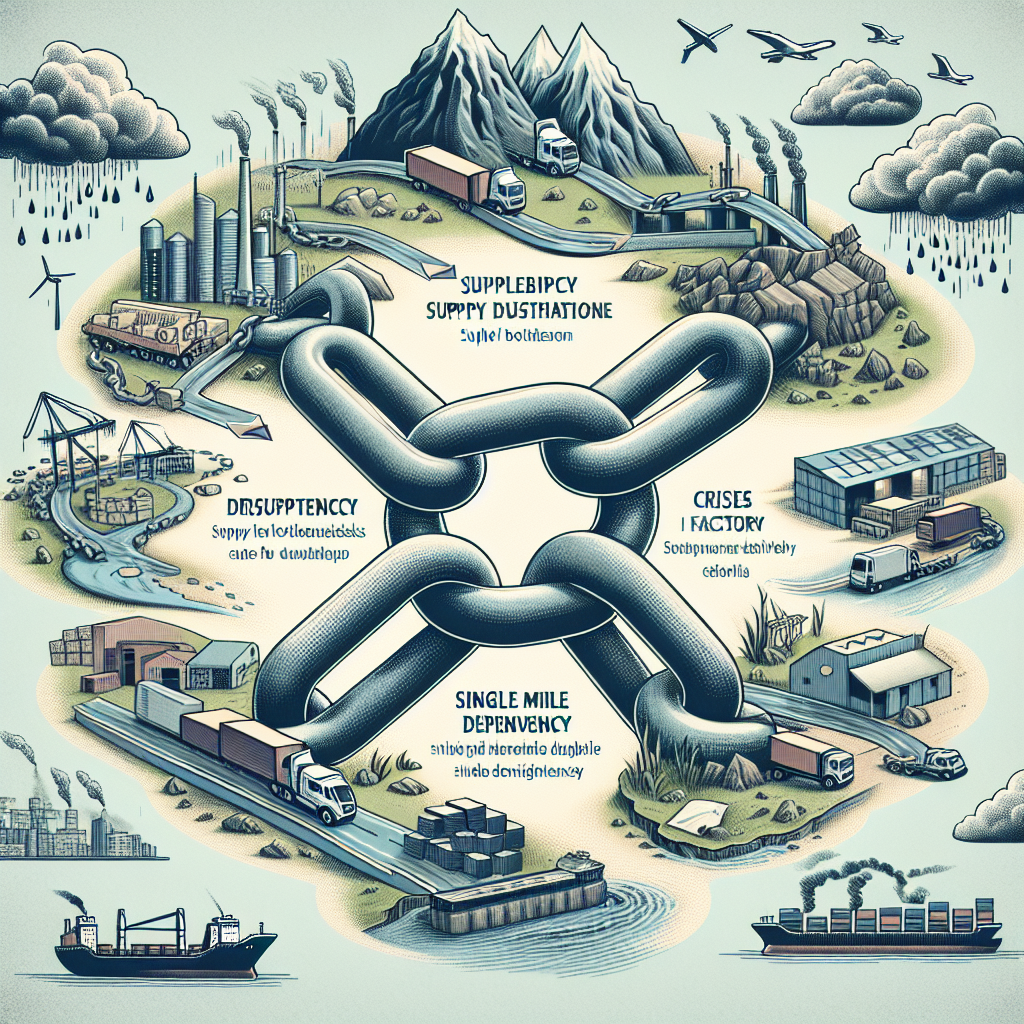









Shipping disruption is no longer an occasional inconvenience — it has become a defining challenge for businesses of every size. From port congestion and geopolitical tensions to extreme weather events and labor shortages, the modern supply chain faces threats from every direction. Companies that invest in smart inventory and logistics frameworks are not just surviving these disruptions — they are turning resilience into a competitive advantage.
- Global supply chain disruptions cost businesses an estimated $4 trillion annually in lost revenue and recovery expenses.
- Proactive logistics planning reduces operational downtime and protects customer satisfaction.
- Technology-driven strategies are now essential, not optional, for supply chain stability.
Understanding the Scope of Logistics Disruption
Logistics disruption ripples across every layer of a business, from procurement to final delivery. The World Bank’s Logistics Performance Index consistently highlights that countries and businesses with weaker logistics infrastructure suffer disproportionately during global crises. The COVID-19 pandemic alone exposed critical vulnerabilities in single-source supply chains and lean inventory models that had previously seemed efficient.
Consider the 2021 Suez Canal blockage, where a single grounded vessel halted an estimated $9.6 billion worth of trade per day for six days. Companies without alternative routing plans or sufficient safety stock faced severe stockouts and customer churn. This event served as a global wake-up call about the fragility of hyper-optimized supply chains lacking redundancy.
Businesses that had diversified their supplier base and maintained buffer inventory weathered the crisis far better than those relying on a single logistics corridor. This underscores a critical truth: flexibility and redundancy are not inefficiencies — they are investments in long-term stability.
- Single-source dependencies amplify the impact of any logistics disruption.
- Geopolitical and environmental events can halt global trade without warning.
- Supplier diversification is one of the most effective risk mitigation strategies available.
Rethinking Inventory Management Software for Modern Challenges
The foundation of a disruption-resistant supply chain is accurate, real-time inventory visibility, and modern inventory management software delivers exactly that. Platforms like NetSuite Inventory Management and comparable enterprise solutions provide live dashboards, automated reorder triggers, and demand forecasting powered by machine learning. These tools eliminate the guesswork that leads to costly stockouts or overstock situations.
Advanced inventory management software integrates seamlessly with warehouse management systems, ERP platforms, and supplier portals, creating a unified data ecosystem. This integration allows procurement teams to respond to supply signals in minutes rather than days, a critical advantage when disruption strikes. Businesses using automated inventory platforms report up to a 30% reduction in carrying costs and significantly faster replenishment cycles according to industry research from Gartner.
- Real-time inventory visibility eliminates reactive decision-making during crises.
- Automated reorder triggers prevent stockouts without inflating carrying costs.
- Integrated platforms create a connected data ecosystem across the entire supply chain.
Building a Smarter Safety Stock Strategy
A well-calibrated safety stock strategy is one of the most straightforward yet underutilized defenses against supply chain disruption. Safety stock is the buffer inventory a business holds above its baseline demand forecast to absorb unexpected spikes in demand or delays from suppliers. The key is calculating this buffer intelligently — holding too little leaves you exposed, while holding too much ties up working capital unnecessarily.
The optimal safety stock formula accounts for average demand variability, supplier lead time variability, and the desired service level. For example, a retailer with a 95% desired service level, average weekly demand of 500 units, and a lead time standard deviation of two days would calculate a very different safety stock than one with a 99% service level target. Tools embedded in modern inventory management software can automate these calculations continuously as market conditions evolve, removing the manual burden from inventory planners.
Explore more about optimizing your inventory buffers with BestInSupplies.com, where you can find resources tailored to businesses navigating today’s volatile supply environment.