







Zero-touch logistics orchestration is no longer a concept reserved for futuristic supply chain roadmaps — it is actively reshaping how modern warehouses and distribution centers operate today. By combining autonomous mobile robots (AMRs) with warehouse edge computing, manufacturers and logistics operators are achieving unprecedented levels of speed, accuracy, and operational continuity.
This convergence is at the core of Industry 4.0 smart factory integration, where physical automation and real-time data intelligence work in lockstep to eliminate manual intervention at nearly every stage of the fulfillment process.
- Zero-touch logistics reduces human touchpoints across inbound, storage, and outbound workflows.
- AMRs and edge computing form the operational backbone of next-generation smart facilities.
- Industry 4.0 integration connects these technologies into a cohesive, self-optimizing system.
What Is Zero-Touch Logistics Orchestration?
Zero-touch logistics orchestration refers to the end-to-end automation of warehouse and supply chain workflows with minimal or no human intervention required during routine operations. It encompasses everything from automated receiving and putaway to order picking, packing, and shipment dispatch — all coordinated by intelligent software platforms.
According to a McKinsey & Company report, warehouses that deploy advanced automation can reduce operational costs by up to 40% while simultaneously improving order accuracy rates above 99.9%. These numbers underscore why logistics orchestration has become a top strategic priority for supply chain leaders globally.
- Orchestration platforms coordinate robots, conveyors, sorters, and software in real time.
- Cost reductions of up to 40% are achievable with full automation deployment.
- Order accuracy improvements directly impact customer satisfaction and return rates.
The Role of Autonomous Mobile Robots in Smart Warehousing
How AMRs Enable Flexible, Scalable Fulfillment
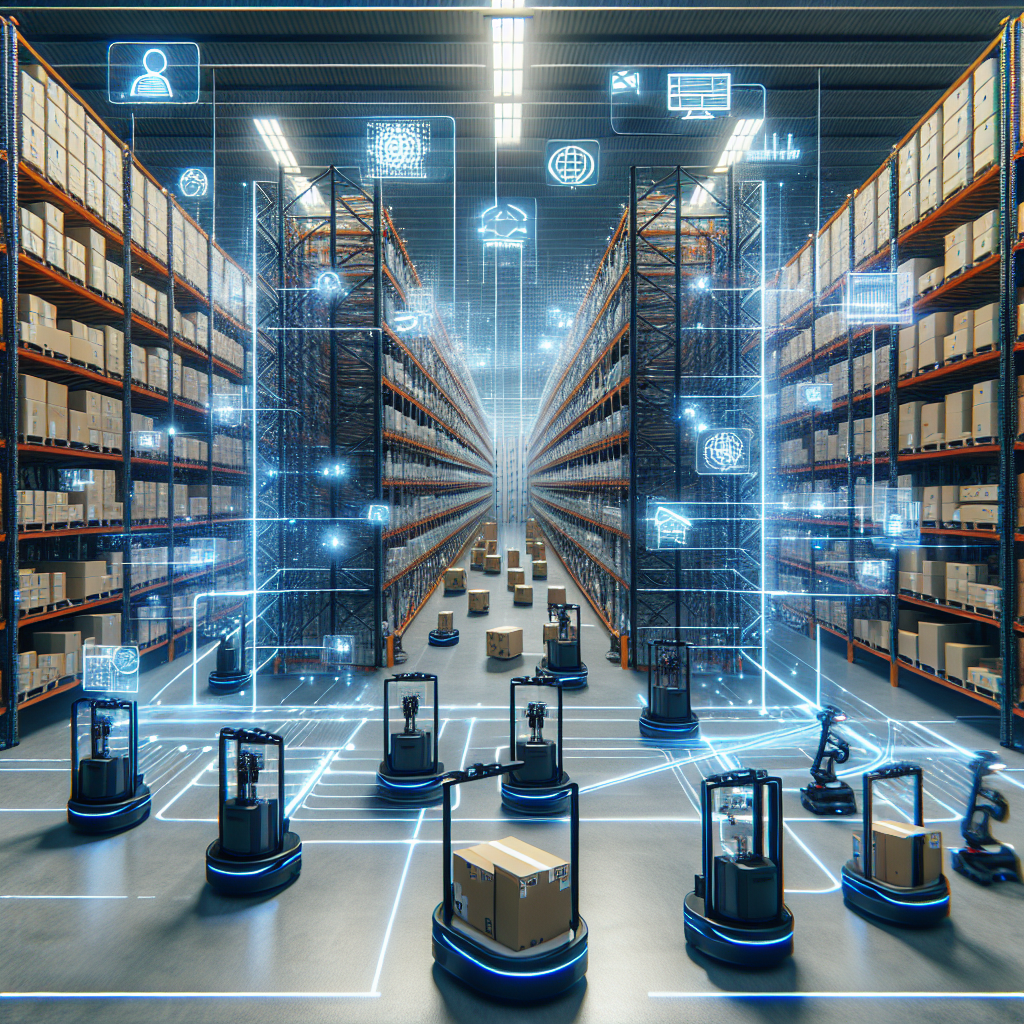
Autonomous mobile robots (AMRs) are a foundational pillar of zero-touch logistics orchestration because they provide dynamic, scalable movement of goods across warehouse floors without fixed infrastructure requirements. Unlike traditional automated guided vehicles (AGVs), AMRs use onboard sensors, AI-driven navigation, and real-time mapping to adapt to changing environments and traffic conditions.
Companies like 6 River Systems and Omron Mobile Robotics have demonstrated that deploying fleets of AMRs can reduce pick-path travel times by 50–70%, a critical efficiency gain in high-SKU environments. For example, a major third-party logistics (3PL) provider deploying 200 AMRs across a 500,000-square-foot facility reported a 3x throughput increase within the first six months of operation
- AMRs reduce pick-path travel times by 50–70% compared to manual operations.
- They require no fixed floor infrastructure, enabling rapid redeployment across zones.
- Fleet management software scales AMR coordination from dozens to hundreds of units.
Warehouse Edge Computing: The Intelligence Layer Behind Automation
Processing Data at the Source for Real-Time Decision Making
Warehouse edge computing places processing power physically close to where data is generated — on the warehouse floor, at conveyor nodes, or embedded within robotic systems — rather than routing everything through a centralized cloud server. This architecture dramatically reduces latency, which is critical when AMRs, vision systems, and sortation equipment must make split-second routing decisions.
Industry research from Gartner projects that by 2025, over 75% of enterprise-generated data will be processed at the edge rather than in centralized data centers — up from less than 10% in 2018. In a warehouse context, this means that robotic coordination, inventory tracking, and exception management can operate at millisecond response times, supporting true zero-touch logistics orchestration even during network disruptions.
- Edge computing reduces command latency from seconds to milliseconds in warehouse environments.
- Systems remain operational and autonomous even during cloud connectivity interruptions.
- Real-time data processing enables predictive maintenance and dynamic task reallocation.
Industry 4.0 Smart Factory Integration: Connecting the Ecosystem
Unifying Robots, Data, and Business Systems
Industry 4.0 smart factory integration goes beyond deploying individual automation technologies — it creates a unified digital ecosystem where ERP systems, warehouse management systems (WMS), AMR fleets, IoT sensors, and edge computing nodes all communicate seamlessly. This interoperability is what transforms a collection of automated tools into a truly intelligent, self-optimizing facility.
A compelling real-world example is BMW’s smart factory in Regensburg, Germany, where Industry 4.0 integration connects over 3,000 IoT devices, autonomous transport systems, and AI-driven quality inspection into a single operational framework. The result is a production environment where logistics orchestration happens automatically, with the system self-correcting supply flows, rerouting materials, and flagging anomalies without human escalation.
For supply chain professionals exploring warehouse automation solutions at BestInSupplies.com, understanding how these layers interconnect is essential to building a scalable roadmap toward fully autonomous operations.
- Smart factory integration connects WMS, ERP, robotics, and IoT into one unified system.
- Interoperability enables automatic self-correction and dynamic resource reallocation.
- Industry 4.0 frameworks support scalability from pilot deployments to enterprise-wide rollouts.
Key Takeaways
- Zero-touch logistics orchestration automates end-to-end warehouse workflows, reducing costs by up to 40% and pushing order accuracy above 99.9%.
- Autonomous mobile robots (AMRs) deliver 50–70% reductions in pick-path travel times and scale dynamically without requiring fixed infrastructure changes.
- Warehouse edge computing eliminates latency barriers, enabling millisecond decision-making and ensuring operational continuity independent of cloud connectivity.
- Industry 4.0 smart factory integration unifies robots, IoT sensors, ERP, and WMS platforms into a cohesive, self-optimizing logistics ecosystem.
- Organizations that align these technologies under a single orchestration strategy are best positioned to achieve sustained competitive advantage in modern supply chains.
Ready to explore the tools and technologies powering zero-touch logistics and Industry 4.0 smart factory transformation? Visit BestInSupplies.com.