







Supply chains have never operated in a more volatile environment — demand swings, geopolitical disruptions, and rising customer expectations are pushing traditional planning models to their limits. Agentic AI in supply chain management is emerging as a transformative answer, moving beyond passive analytics to deploy autonomous agents that sense, decide, and act in real time. At BestInSupplies.com, we explore how these intelligent systems are redefining procurement, logistics, and end-to-end operations for businesses ready to compete in the next era of supply chain excellence.
What Is Agentic AI and Why Does It Matter for Supply Chains?
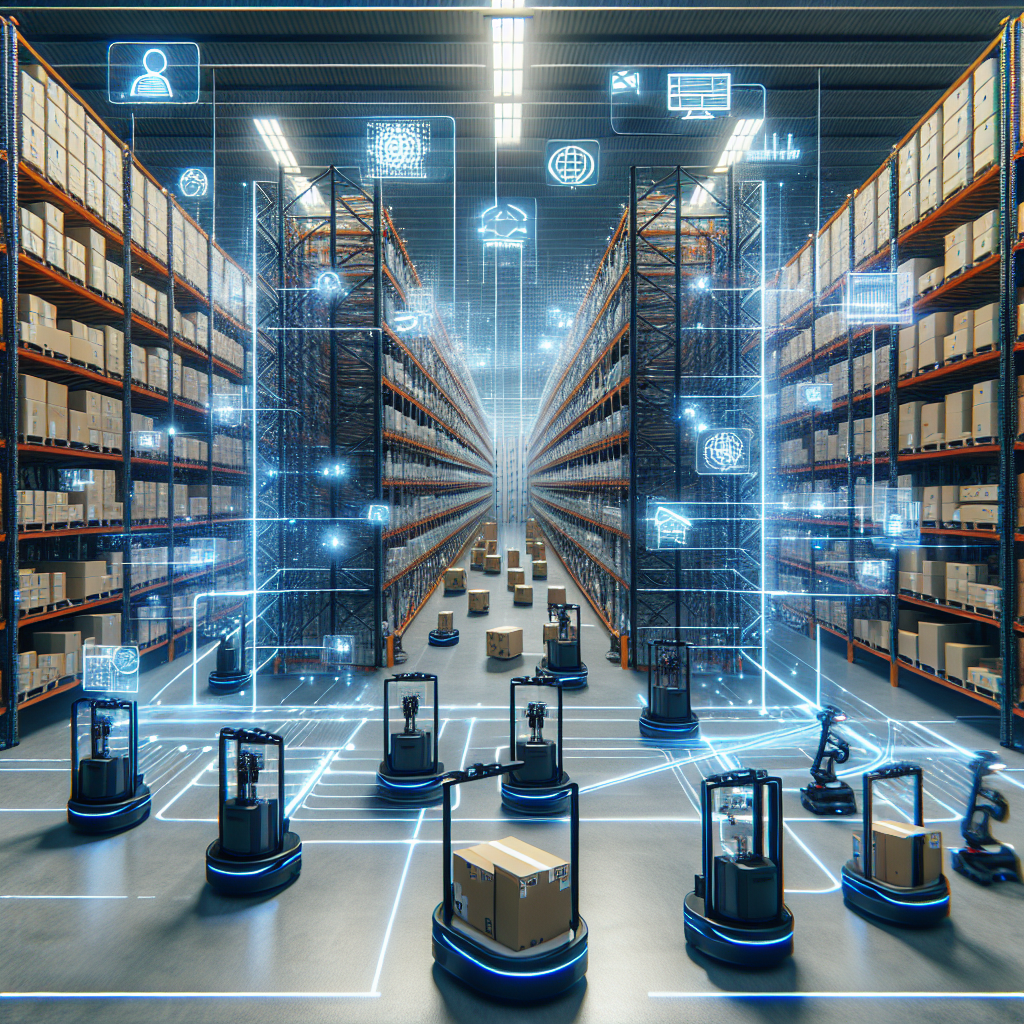
Agentic AI refers to artificial intelligence systems capable of autonomous goal-directed behavior — planning multi-step tasks, executing decisions, and self-correcting without constant human input. Unlike traditional AI tools that surface insights for humans to act on, agentic systems in supply chain management can negotiate with suppliers, reroute shipments, or adjust purchase orders entirely on their own.
This distinction matters enormously in a supply chain context, where milliseconds and micro-decisions compound into millions of dollars of value or waste. According to a McKinsey report on supply chain digitization, companies that deploy advanced AI in supply chain management can reduce logistics costs by up to 15% and improve service levels by as much as 65%.
● Agentic AI acts autonomously across multi-step workflows, not just providing recommendations
● It is distinct from traditional automation by incorporating reasoning, planning, and self-correction
● McKinsey estimates AI-driven supply chains can cut logistics costs by up to 15%
Autonomous Procurement Agents: Redefining How Businesses Buy
One of the most immediate applications of agentic AI in supply chain operations is in procurement. Autonomous procurement agents can monitor inventory thresholds, evaluate supplier performance data, issue RFQs, compare bids, and execute purchase orders — all without human intervention during routine cycles.
A concrete example comes from Siemens, which has deployed AI-powered procurement tools that reduced source-to-contract cycle times by over 40%. These systems continuously scan market pricing signals and supplier risk databases, dynamically shifting sourcing strategies when disruptions are detected — a capability no manual process can replicate at scale.
Beyond efficiency, autonomous procurement agents improve compliance by enforcing policy guardrails automatically. Every transaction is logged, auditable, and benchmarked against pre-approved criteria, reducing maverick spend and strengthening supplier relationship governance.
● Autonomous procurement agents handle sourcing, bidding, and PO execution without manual triggers
● Siemens reported over 40% reduction in source-to-contract cycle times using AI procurement tools
● Automated compliance enforcement reduces maverick spend and improves audit readiness
AI-Powered Demand Forecasting and Continuous S&OP Planning
Moving Beyond Static Spreadsheets
Traditional Sales and Operations Planning relies on monthly or weekly cycles that are already outdated by the time decisions are made. AI-powered demand forecasting transforms this into a continuous S&OP planning process where signals from POS data, weather patterns, social sentiment, and macroeconomic indicators are ingested and reconciled in real time.
Companies like Unilever have implemented AI-driven demand sensing that reduces forecast error by 20–30% compared to statistical baselines. This accuracy cascades downstream — better forecasts mean leaner safety stock, fewer emergency replenishments, and higher fill rates, directly improving both cost structure and customer satisfaction.
Integrating Cognitive Supply Chain Automation
Cognitive supply chain automation layers natural language understanding and machine reasoning on top of forecasting engines, enabling systems to explain why a forecast changed and recommend specific responses. This transparency is critical for planner buy-in and regulatory environments where decision rationale must be documented.
When integrated with ERP and supply chain control towers, these capabilities allow planners to shift from data entry to strategic exception management — focusing human attention where it adds the most value while agents handle the high-volume, rule-based decisions automatically.
● Continuous S&OP planning replaces slow periodic cycles with real-time multi-signal demand sensing
● Unilever achieved 20–30% forecast error reduction with AI-driven demand forecasting
● Cognitive automation explains decisions and frees planners for high-value exception management
Generative AI for Logistics: Smarter Routing, Documentation, and Carrier Management
Generative AI for logistics is unlocking capabilities that go far beyond route optimization. Large language model-based agents can now draft carrier contracts, generate customs documentation, interpret regulatory changes across jurisdictions, and proactively communicate delay notifications to customers — all autonomously.
DHL has piloted generative AI tools that auto-generate freight audit reports and dispute resolutions, cutting invoice reconciliation time by over 60%. In a global logistics operation processing hundreds of thousands of shipments daily, that efficiency translates directly into working capital improvements and stronger carrier relationships.
Generative AI is also accelerating last-mile delivery optimization by synthesizing real-time traffic, weather, and delivery preference data to dynamically re-sequence routes mid-dispatch. This capability is particularly valuable for e-commerce fulfillment, where on-time delivery is a core competitive differentiator.
● Generative AI automates carrier contracts, customs documents, and regulatory interpretation
● DHL’s AI pilots reduced invoice reconciliation time by over 60% through automated freight auditing
● Real-time generative AI re-sequencing improves last-mile delivery outcomes for e-commerce operations
Supply Chain Digital Twins and IoT-Driven Predictive Maintenance
Building a Living Mirror of Your Supply Network
Supply chain digital twins create dynamic virtual replicas of physical supply networks, enabling organizations to simulate disruptions, test sourcing alternatives, and model the financial impact of operational decisions before committing resources. When powered by agentic AI, these twins become proactive — identifying vulnerabilities and initiating mitigation actions automatically.
Gartner predicts that by 2026, over 50% of large global companies will use supply chain digital twins as a core planning infrastructure component. Early adopters like Procter & Gamble have demonstrated that digital twin-driven scenario planning reduces crisis response time by up to 50%, a critical advantage in an era of persistent disruption.
Predictive Maintenance for Fleet and IoT Integration
Predictive maintenance for fleet management powered by IoT sensor data is transforming how logistics companies manage assets. Real-time telemetry from vehicle sensors — engine temperature, brake wear, fuel consumption anomalies — feeds AI models that predict failures days or weeks in advance, scheduling maintenance before breakdowns occur.
According to IDC research, organizations implementing IoT-powered predictive maintenance for fleet operations reduce unplanned downtime by 30–50% and extend asset lifespan by 20–40%. For a company running hundreds of trucks, that impact directly reduces capital expenditure and improves delivery reliability for customers.
● Supply chain digital twins enable proactive disruption simulation and automated mitigation
● Gartner projects 50%+ of large global companies will use digital twins as core planning infrastructure by 2026
● IoT-driven predictive maintenance for fleet reduces unplanned downtime by 30–50% per IDC research
Overcoming Implementation Challenges
Despite its transformative potential, deploying agentic AI in supply chain environments comes with real challenges: data quality gaps, legacy system integration, change management resistance, and governance concerns around autonomous decision-making. Organizations must invest in clean, unified data foundations before autonomous agents can perform reliably at scale.
A phased implementation approach — starting with high-volume, low-risk use cases like purchase order generation or carrier selection — allows teams to build confidence in AI decision quality before expanding agent autonomy into more complex domains like multi-tier supplier risk management or dynamic network redesign.
● Data quality and legacy integration are the most common barriers to agentic AI deployment
● Phased rollouts starting with lower-risk use cases build organizational trust and AI performance track records
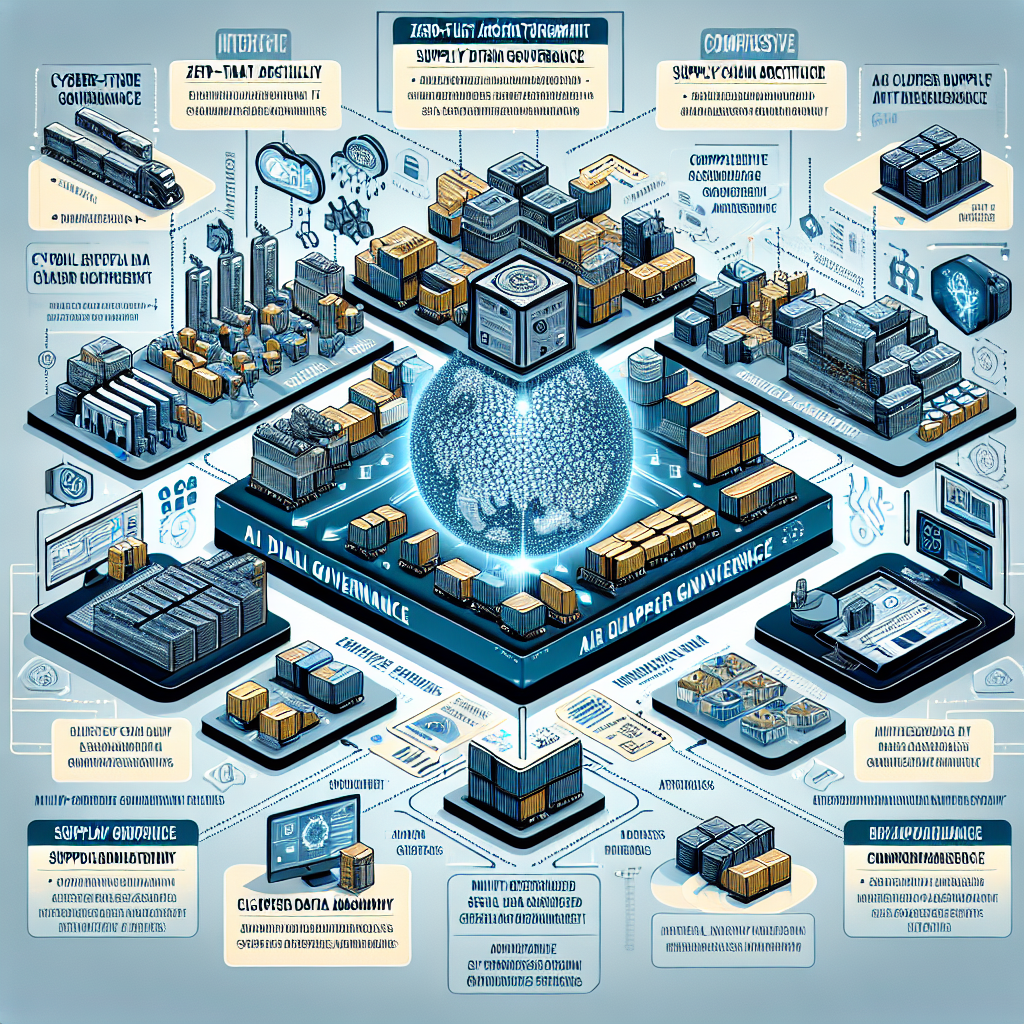
● Governance frameworks must define clear boundaries for autonomous agent decision authority
Key Takeaways
Agentic AI in supply chain management is not a distant concept — it is actively reshaping how leading organizations procure, plan, move, and maintain goods across global networks. From autonomous procurement agents to generative AI for logistics and IoT-powered predictive maintenance for fleet operations, the building blocks of the autonomous supply chain are available today. Organizations that invest in the right data infrastructure, governance frameworks, and phased deployment strategies will be best positioned to capture competitive advantage in an increasingly automated supply chain landscape.
● Agentic AI autonomously executes multi-step supply chain workflows, far beyond traditional analytics
● AI-powered demand forecasting and continuous S&OP planning significantly reduce forecast error and inventory costs
● Generative AI for logistics automates documentation, carrier management, and last-mile optimization
● Supply chain digital twins combined with IoT for predictive fleet maintenance reduce downtime and improve resilience
● A phased, governance-first approach to agentic AI deployment reduces risk and accelerates ROI
Ready to discover the tools and technologies powering the next generation of supply chain performance? Visit Best in Supplies today.