







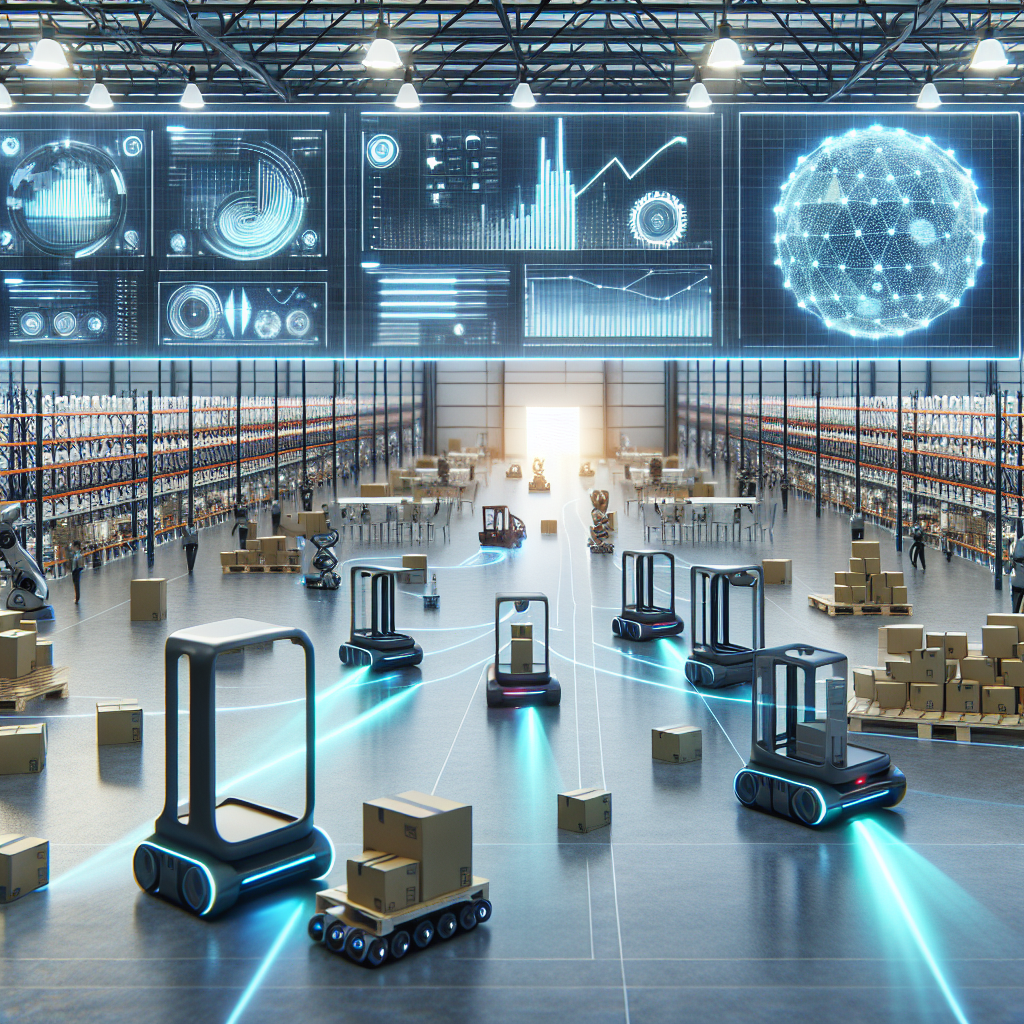
The factory floor of the future is already here, and it runs itself. Across global manufacturing and distribution hubs, zero-touch logistics orchestration is emerging as the defining operational model of the decade — one where goods move, decisions are made, and supply chains self-correct with minimal human intervention. Powered by autonomous mobile robots (AMR), real-time warehouse edge computing, and deep Industry 4.0 smart factory integration, this shift is not incremental — it’s architectural.
What Is Zero-Touch Logistics Orchestration?
Zero-touch logistics orchestration refers to the end-to-end automation of supply chain workflows — from inbound receiving to outbound shipping — without requiring direct human involvement at each decision point. Instead of humans managing tasks, intelligent systems coordinate robots, sensors, software, and data streams to execute operations autonomously.
This model emerged from the convergence of several mature technologies: AI-driven warehouse management systems (WMS), machine vision, 5G connectivity, and AMR fleets capable of dynamic path-planning. According to Gartner, by 2027, over 75% of large enterprises will have deployed some form of autonomous supply chain execution — up from fewer than 25% in 2023.
The practical result is a supply chain that reacts in milliseconds, scales without headcount, and continuously optimizes itself against real-time demand signals and inventory data.
● Zero-touch orchestration removes manual decision bottlenecks across the full logistics workflow
● It depends on the tight integration of robotics, AI software, and real-time data infrastructure
● Adoption is accelerating rapidly, with enterprise deployment projected to triple by 2027
Autonomous Mobile Robots: The Physical Backbone of Smart Logistics
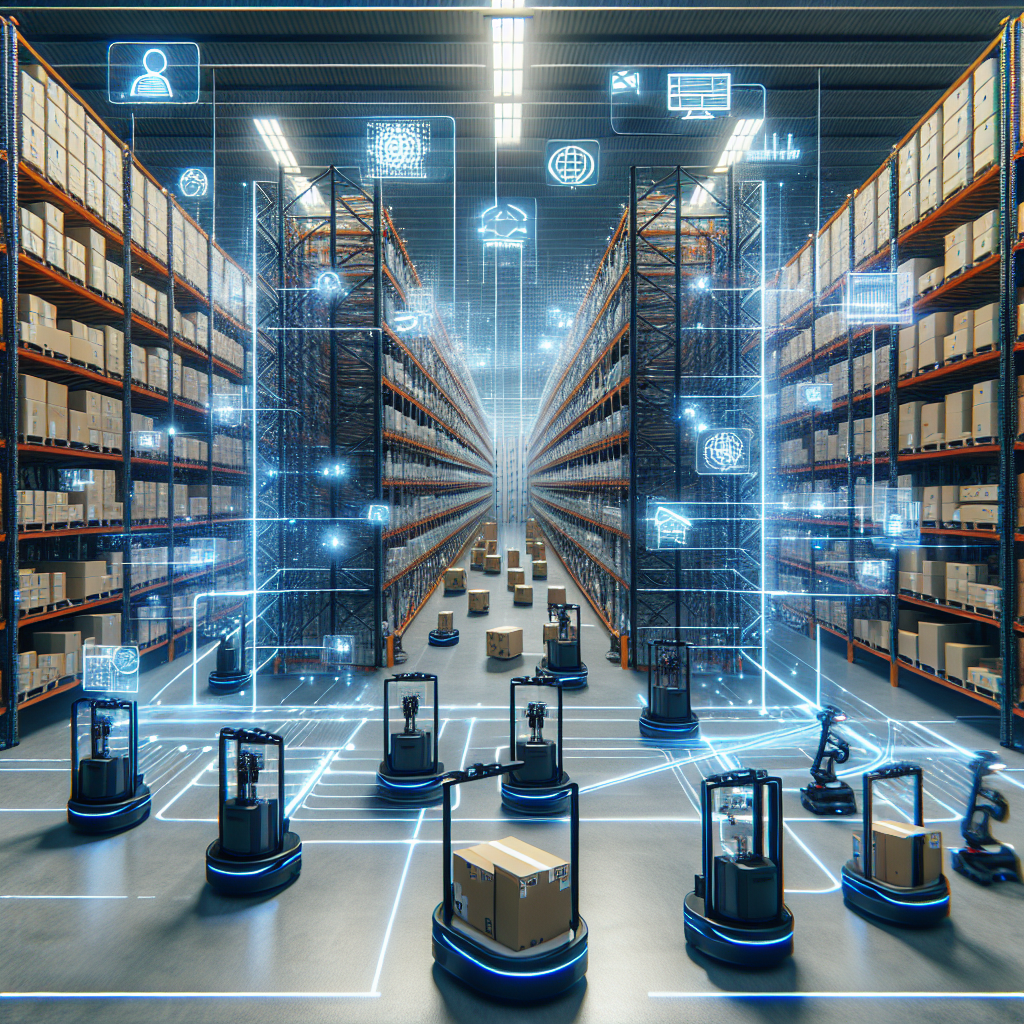
Autonomous mobile robots (AMR) are the kinetic layer of zero-touch logistics — the physical agents that translate digital instructions into real-world movement. Unlike older automated guided vehicles (AGVs), AMRs use onboard sensors, LiDAR, and AI to navigate dynamically, avoiding obstacles and adapting routes in real time without fixed infrastructure like tracks or magnetic tape.
Amazon Robotics, one of the most studied AMR deployments globally, operates over 750,000 robots across its fulfillment network. These units handle picking, sorting, and transport tasks that previously required thousands of manual labor hours per shift. More telling is the efficiency gain: Amazon reported a 40% improvement in order processing speed in robotics-enabled fulfillment centers compared to traditional ones.
Beyond speed, AMRs in an Industry 4.0 smart factory integration context communicate directly with ERP and WMS platforms, receiving task assignments, reporting completion status, and flagging anomalies — all without human dispatch. This bidirectional data flow is what transforms individual robots into nodes of an intelligent orchestration network.
● AMRs navigate dynamically using onboard AI, making them far more flexible than legacy AGVs
● Enterprise deployments demonstrate 40%+ gains in processing speed over manual operations
● Direct ERP and WMS integration turns AMR fleets into active participants in orchestration logic
Warehouse Edge Computing: Processing Power Where It Matters Most
Warehouse edge computing solves one of the most critical bottlenecks in autonomous logistics: latency. When an AMR encounters an unexpected obstacle or a conveyor system detects a jam, the system cannot afford a round-trip delay to a centralized cloud server. Edge computing places processing power physically inside the warehouse — on ruggedized servers, smart gateway devices, or even onboard the robots themselves — enabling sub-10-millisecond response times.
A concrete example comes from DHL Supply Chain, which partnered with Intel to deploy edge AI solutions across its distribution centers. By running computer vision and decision logic locally on edge hardware, DHL reduced its anomaly detection response time by over 60% and eliminated dependency on cloud connectivity for mission-critical operations, as detailed in Intel’s case study documentation. This is the kind of resilience that makes zero-touch orchestration viable at enterprise scale.
Edge nodes also aggregate and pre-process sensor data before forwarding only relevant insights to the cloud, dramatically reducing bandwidth consumption and storage costs. In a dense smart factory environment with thousands of connected sensors, this filtering capability is not a luxury — it is a prerequisite for operational stability.
● Edge computing enables sub-10ms response times, critical for safe and efficient AMR operations
● Local processing creates operational resilience independent of cloud connectivity
● Data pre-processing at the edge reduces bandwidth costs while maintaining system-wide visibility
Industry 4.0 Smart Factory Integration: Connecting Every Layer
Industry 4.0 smart factory integration is the connective tissue that makes zero-touch orchestration more than a collection of individual technologies. It refers to the standardized, interoperable linking of OT (operational technology) systems — robots, conveyors, sensors — with IT systems like ERP, MES, and WMS platforms, enabling data and commands to flow bidirectionally across every layer of the operation.
A leading example of this integration in action is Bosch’s Homburg smart factory in Germany, recognized as a World Economic Forum Lighthouse Factory. Bosch implemented unified data architecture connecting over 200 machines and multiple AMR units, resulting in a 25% increase in production output and a 20% reduction in unplanned downtime — outcomes directly attributable to real-time cross-system visibility and automated decision-making.
The key enablers at this integration layer include OPC-UA communication standards, digital twin environments that simulate and optimize workflows before deployment, and AI scheduling engines that balance workload across AMR fleets, human workers, and static automation in real time. Together, these tools make the factory a self-managing system rather than a supervised one.
● Smart factory integration connects OT and IT layers through standardized, interoperable architecture
● Lighthouse factories demonstrate 20-25% gains in output and uptime through full-stack integration
● Digital twins and AI scheduling are essential tools for dynamic, self-managing operations
Implementation Roadmap: Building Toward Zero-Touch Operations
Start with Infrastructure Readiness
Before deploying AMRs or edge nodes, organizations must audit their facility’s connectivity infrastructure — wireless coverage, power distribution, and physical layout — to ensure it can support high-density IoT and robotics operations. Gaps at this layer will undermine every technology layer above it.
Layer in Autonomy Incrementally
Most successful deployments begin with a defined sub-process — such as inbound receiving or cross-docking — and build orchestration capability outward from there. This approach limits integration risk while generating measurable ROI data that justifies further investment.
Prioritize Interoperability Standards
Vendor lock-in is one of the most common barriers to full zero-touch logistics orchestration. Selecting AMR platforms and edge systems that support open standards such as VDA 5050 for robot communication and OPC-UA for machine connectivity ensures future flexibility as the technology landscape evolves.
● Infrastructure readiness is the foundational prerequisite before any robotic or edge deployment
● Incremental, process-specific rollouts reduce risk and generate early proof-of-value data
● Open interoperability standards protect long-term investment and enable ecosystem expansion
Key Takeaways
Zero-touch logistics orchestration represents a structural evolution in how supply chains operate — one where speed, accuracy, and resilience are delivered through intelligent systems rather than manual oversight. The convergence of AMR technology, warehouse edge computing, and Industry 4.0 integration is making this model accessible and scalable for manufacturers and distributors across sectors. Organizations that invest in this architecture today are not just improving efficiency — they are building a competitive moat that compounds over time.
● Zero-touch logistics orchestration automates end-to-end supply chain decisions, eliminating manual bottlenecks
● Autonomous mobile robots (AMR) are the physical execution layer, delivering 40%+ efficiency gains in documented deployments
● Warehouse edge computing enables the millisecond-level response times that safe and efficient autonomous operations require
● Industry 4.0 smart factory integration connects every system layer, enabling self-managing, data-driven operations
● Successful implementation requires infrastructure readiness, incremental deployment, and commitment to open interoperability standards
Want to go deeper on the tools and technologies driving smart supply chain transformation? Visit BestInSupplies.com for expert reviews, product comparisons, and practical guidance on AMR platforms, edge computing hardware, and Industry 4.0 integration solutions designed for modern logistics operations.