







Supply chain disruption has moved from a background operational concern to a boardroom priority. From pandemic-era shortages to geopolitical tensions and extreme weather events, businesses of every size have felt the sting of supply chain fragility firsthand. Understanding where your vulnerabilities lie — and taking deliberate steps toward supply chain resilience — is no longer optional; it’s a competitive necessity.
Why Supply Chain Vulnerability Is Harder to Spot Than You Think
Many organizations don’t discover their supply chain vulnerability until a crisis is already underway. The complexity of modern global supply networks means that a disruption several tiers deep — a raw material shortage at a Tier-3 supplier, for example — can ripple forward and halt production with very little warning.
According to a McKinsey Global Institute report, companies can expect supply chain disruptions lasting a month or more to occur every 3.7 years on average. Despite this frequency, many businesses lack a formal supply chain risk management framework that maps exposure across all supplier tiers.
● Hidden vulnerabilities often exist two or three tiers below your direct suppliers
● Most companies lack full visibility beyond their Tier-1 supplier relationships
● Without proactive mapping, supply chain shock arrives without warning
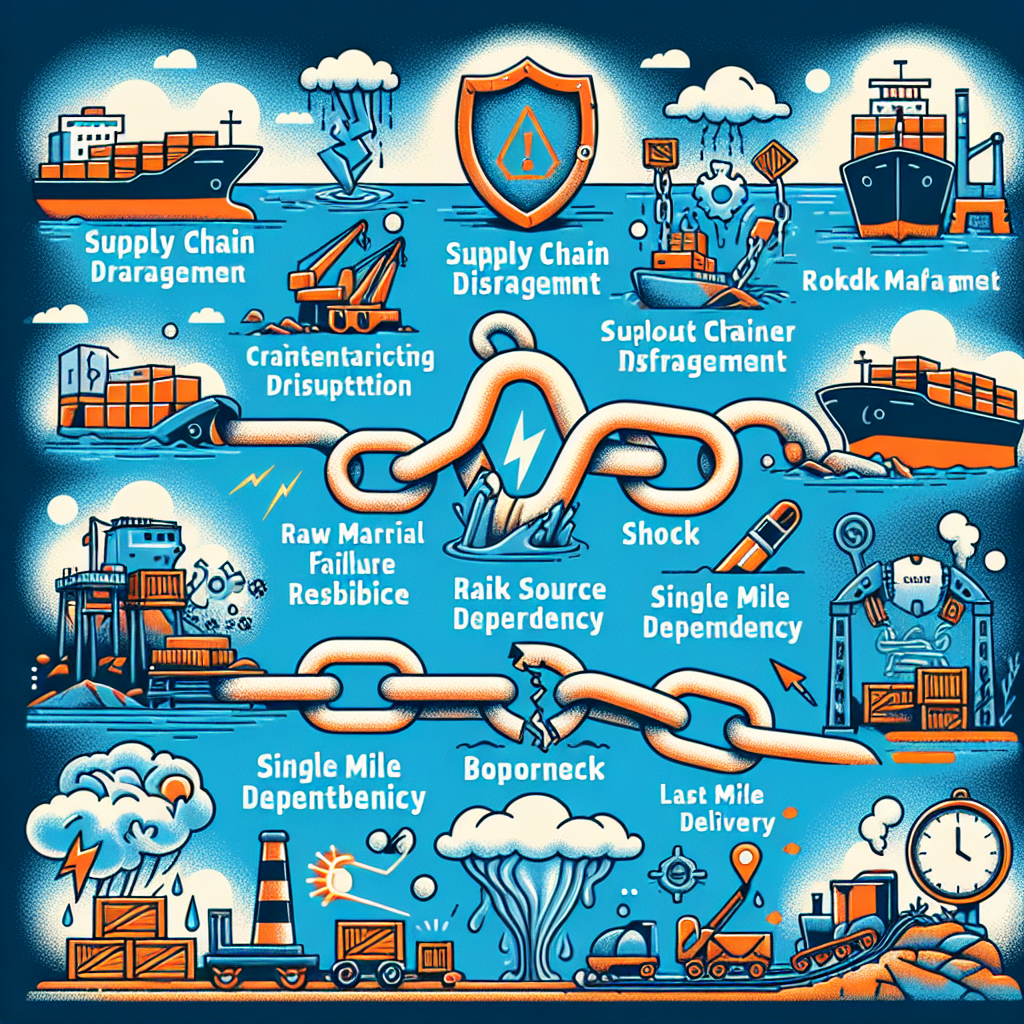
Common Sources of Supply Chain Disruption
Single Source Dependency and Supplier Failure
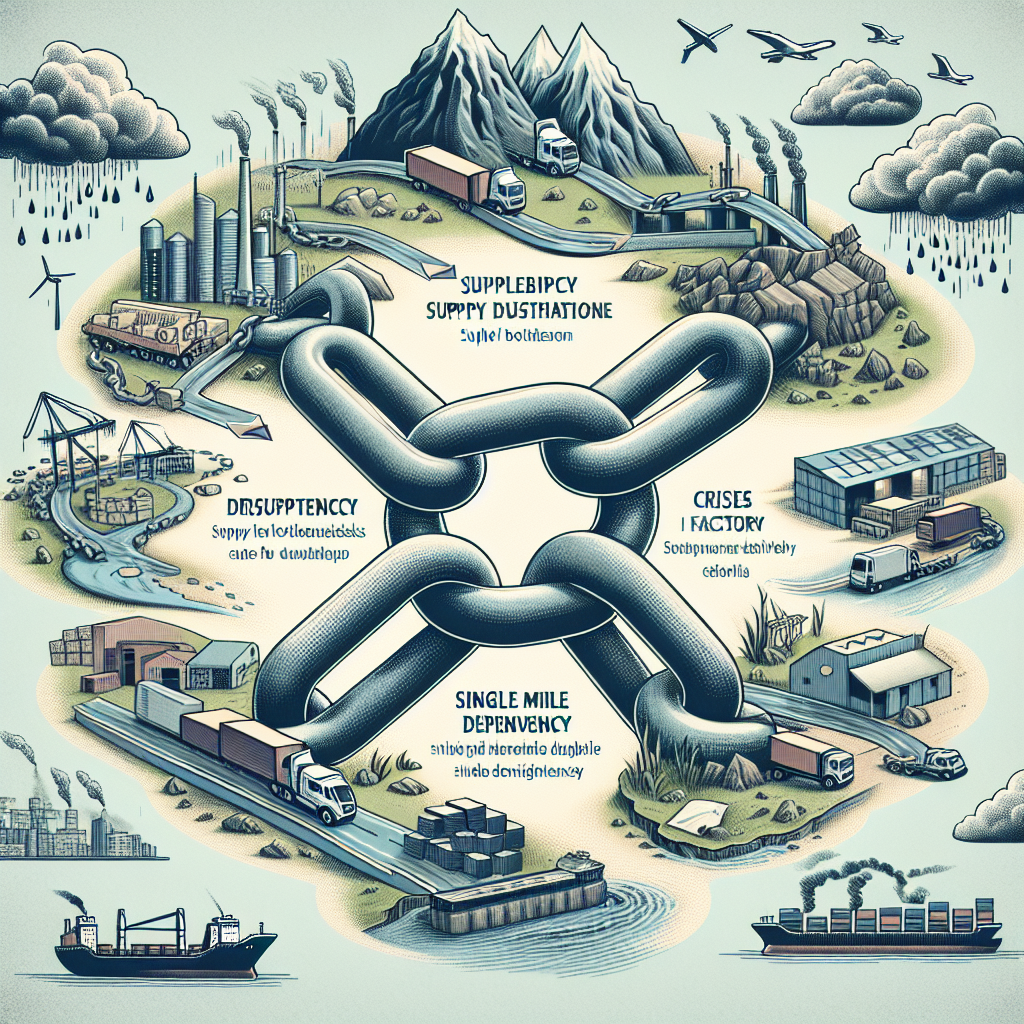
One of the most dangerous forms of supply chain fragility is single source dependency — relying on one supplier, one region, or one logistics route for a critical input. When that single point fails, whether due to supplier failure, geopolitical conflict, or natural disaster, the downstream impact can be catastrophic and immediate.
A striking example is the 2011 Tōhoku earthquake and tsunami in Japan, which disrupted the global automotive and electronics industries for months. Companies that had diversified their supplier base recovered significantly faster than those locked into single-source arrangements, underscoring the strategic value of supplier redundancy.
● Single source dependency is one of the leading drivers of supply chain crisis
● Supplier audits should evaluate financial stability and geographic concentration
● Diversifying suppliers by region reduces exposure to localized disruptions
Raw Material Shortage and Supply Shortage Risks
Raw material shortage has become increasingly common as demand volatility, climate-related disruptions, and export restrictions converge. The semiconductor shortage that began in 2020 offers a stark lesson: a supply shortage in a single commodity can halt production across automotive, consumer electronics, and industrial machinery sectors simultaneously.
Businesses that maintained strategic inventory buffers or had pre-negotiated allocation agreements with multiple suppliers were far better positioned to weather that supply chain shock. Proactive supply chain risk management means identifying which raw materials are critical, which are scarce, and where alternative sourcing is possible before a shortage occurs.
● Monitor commodity markets and geopolitical developments that affect key materials
● Build strategic buffer stock for high-risk, long-lead-time inputs
● Develop pre-qualified alternative suppliers before a supply shortage hits
Logistics Disruption: From Port Congestion to Last Mile Delivery Problems
Transportation Bottlenecks and Freight Delays
Logistics disruption has proven to be one of the most visible and costly dimensions of supply chain fragility. During 2021 and 2022, port congestion at major U.S. and European hubs created freight delays lasting weeks, with ships anchored offshore unable to unload cargo. These transportation bottlenecks exposed just how little buffer capacity existed across global freight networks.
The Federal Reserve noted that supply chain bottlenecks contributed significantly to inflationary pressure during this period, with freight costs surging by more than 500% on key trade lanes. Companies that had invested in freight visibility tools and multi-modal logistics strategies were able to reroute shipments and minimize delays more effectively.
● Port congestion and transportation bottlenecks can cascade into multi-week freight delays
● Real-time freight visibility tools are essential for dynamic rerouting decisions
● Multi-modal logistics strategies reduce dependency on any single shipping lane or carrier
Cold Chain Disruption and Last Mile Delivery Problems
Cold chain disruption presents unique risks for industries handling perishable goods, pharmaceuticals, and temperature-sensitive materials. A breakdown at any node — a refrigeration failure at a warehouse, a delayed reefer container, or extreme heat during transit — can render an entire shipment unsalvageable and create acute supply shortages downstream.
Last mile delivery problems add another layer of complexity, particularly as e-commerce growth has outpaced the infrastructure needed to support it. Urban congestion, driver shortages, and address accuracy issues consistently rank among the top causes of failed or delayed final deliveries, directly affecting customer satisfaction and inventory planning accuracy.
● Cold chain disruption requires redundant temperature monitoring and contingency storage
● Last mile delivery problems are amplified during peak demand periods
● Investing in carrier diversification and local fulfillment hubs reduces last mile risk
Building Supply Chain Resilience: A Strategic Framework
Assessing and Mapping Your Supply Chain Risk
Effective supply chain resilience begins with a rigorous risk mapping exercise that goes beyond your immediate supplier relationships. Businesses should use digital supply chain mapping tools to identify every critical node, assess the financial and operational health of key suppliers, and score risk across dimensions including geography, single source dependency, and demand volatility.
Tools such as supplier risk platforms — including solutions reviewed at BestInSupplies.com — can help procurement teams gain the visibility needed to prioritize where resilience investments will have the greatest impact. A supply chain vulnerability that is identified in advance is a problem that can be mitigated; one discovered mid-crisis is a far more expensive and disruptive challenge.
● Map your supply chain across all tiers, not just Tier-1 suppliers
● Score and prioritize risks by likelihood, severity, and recovery time
● Use technology platforms to maintain continuous supplier visibility
Proactive Supply Chain Risk Management Strategies
A robust supply chain risk management strategy combines diversification, inventory strategy, and supplier relationship investment. Nearshoring or reshoring portions of your supply base can reduce exposure to international logistics disruption and geopolitical supply chain shock, while dual-sourcing critical components eliminates single point-of-failure risk.
Building collaborative supplier relationships — including sharing demand forecasts and providing financial support to critical suppliers — strengthens the overall network against supplier failure. Organizations that treat their supply chains as strategic assets rather than cost centers are consistently faster to recover when disruption inevitably occurs.
● Dual-source or multi-source all critical, high-risk inputs
● Share demand forecasts with key suppliers to improve their planning capacity
● Consider nearshoring to reduce international logistics and freight delay exposure
Key Takeaways
Supply chain disruption is not a matter of if, but when — and the organizations that invest in proactive supply chain resilience are the ones that emerge from a supply chain crisis faster and stronger. From addressing single source dependency to building contingency plans for cold chain disruption and last mile delivery problems, resilience requires both strategic planning and the right operational tools.
● Map your full supply chain to uncover hidden supply chain vulnerability before a crisis strikes
● Diversify suppliers geographically to reduce raw material shortage and supplier failure risk
● Invest in logistics visibility to manage freight delays, port congestion, and transportation bottlenecks
● Build buffer inventory and pre-qualified alternative sources for high-risk inputs
● Treat supply chain risk management as an ongoing, board-level strategic priority
For expert reviews of tools and solutions designed to strengthen your supply chain risk management strategy, explore the resources available at BestInSupplies.com — where we help businesses find the right supplies, platforms, and partners to build lasting supply chain resilience.