






Zero-Touch Logistics Orchestration: How AMRs and Edge Computing Are Powering Industry 4.0 Smart Factories
The factory floor of the future is no longer a distant concept — it is being built right now. Across global supply chains, forward-thinking manufacturers and distributors are deploying zero-touch logistics orchestration systems that eliminate manual intervention, reduce error rates, and dramatically accelerate throughput. By converging autonomous mobile robots (AMRs), warehouse edge computing, and intelligent software platforms, organizations are achieving a new standard of operational excellence aligned with Industry 4.0 smart factory integration.
What Is Zero-Touch Logistics Orchestration?
Zero-touch logistics orchestration refers to the end-to-end automation of material movement, decision-making, and process coordination within a facility — with little to no human intervention required. This approach relies on tightly integrated layers of hardware, software, and real-time data to execute complex logistics tasks autonomously.
Think of it as a self-managing nervous system for your warehouse or production facility. Orders are received, inventory is located, routes are planned, and goods are delivered — all without a human lifting a finger at the operational level. This paradigm shift is a cornerstone of modern Industry 4.0 smart factory integration, where cyber-physical systems communicate and act in real time.
● Zero-touch orchestration minimizes human touchpoints, reducing error rates by up to 40% in documented deployments
● It integrates with WMS, ERP, and MES platforms for seamless data flow
● The approach is scalable across warehouse sizes and industry verticals
The Role of Autonomous Mobile Robots (AMRs) in Smart Logistics
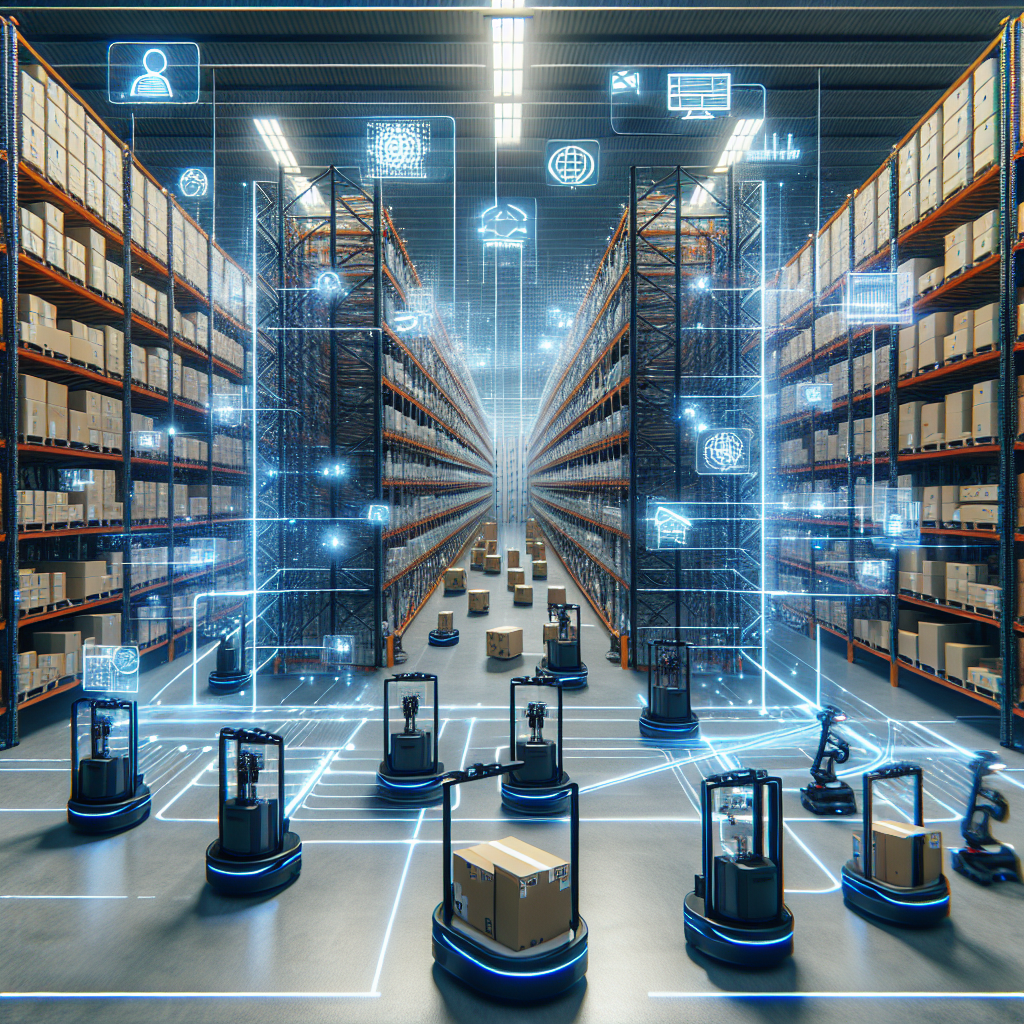
Autonomous mobile robots (AMRs) are the physical backbone of zero-touch logistics environments. Unlike traditional Automated Guided Vehicles (AGVs) that follow fixed paths, AMRs use onboard sensors, LiDAR, cameras, and AI-powered navigation to move dynamically through changing environments. Companies like 6 River Systems and Mobile Industrial Robots (MiR) have demonstrated that AMR fleets can increase picking productivity by 2–3x compared to manual operations.
In a real-world example, DHL Supply Chain deployed over 2,000 AMRs across its global fulfillment network, reducing labor costs by approximately 25% and improving order accuracy to 99.9%. These robots continuously share positional and task data with centralized orchestration platforms, enabling dynamic workload balancing and real-time rerouting around obstacles or traffic bottlenecks. The intelligence of autonomous mobile robots AMR systems lies not just in individual units, but in their coordinated fleet behavior.
● AMRs offer flexible deployment without costly infrastructure changes like floor tracks or ceiling mounts
● Fleet management software enables real-time task allocation and collision avoidance
● AMR ROI is typically realized within 12–24 months according to industry benchmarks
Warehouse Edge Computing: The Intelligence Layer Powering Real-Time Decisions
Warehouse edge computing is the critical infrastructure that enables zero-touch orchestration to function at the speed of operations. Rather than sending all sensor and robot data to a centralized cloud server — which introduces latency — edge computing places processing power directly within the facility, often within milliseconds of where data is generated. This is particularly vital for AMR navigation, real-time inventory tracking, and safety-critical decisions.
According to Gartner, by 2025 over 75% of enterprise-generated data will be created and processed outside of traditional centralized data centers — a shift driven largely by industrial IoT and warehouse applications. Edge nodes within a smart facility can process computer vision feeds, RFID signals, and conveyor sensor data simultaneously, feeding actionable insights directly to AMR fleets and warehouse management systems without cloud round-trips. Warehouse edge computing effectively eliminates the latency bottleneck that would otherwise compromise real-time autonomous operations.
● Edge computing reduces data processing latency from seconds to under 10 milliseconds in industrial environments
● Local processing enhances cybersecurity by minimizing sensitive data transmission to external networks
● Edge nodes support redundancy, keeping operations running even during cloud connectivity interruptions
Industry 4.0 Smart Factory Integration: Connecting the Ecosystem
True Industry 4.0 smart factory integration requires more than deploying individual technologies — it demands a unified ecosystem where machines, software, and humans communicate through standardized protocols such as OPC-UA, MQTT, and REST APIs. When AMRs, edge computing nodes, ERP systems, and production planning tools share a common data language, the factory becomes genuinely self-optimizing.
Bosch’s smart factory in Blaichach, Germany, is a widely cited benchmark for Industry 4.0 integration. The facility uses a combination of AMRs, digital twins, edge analytics, and automated quality inspection systems to achieve near-zero unplanned downtime and a 25% increase in overall equipment effectiveness (OEE). This level of zero-touch logistics orchestration is made possible by the seamless interoperability between operational technology (OT) and information technology (IT) layers — a defining characteristic of mature Industry 4.0 implementations.
● Standardized communication protocols are essential for cross-vendor system compatibility
● Digital twin technology enables simulation and optimization before physical changes are made
● IT/OT convergence is the foundational requirement for achieving full smart factory orchestration
Key Challenges and Considerations for Implementation
Despite the compelling benefits, deploying zero-touch logistics orchestration is not without challenges. Organizations must navigate significant upfront capital investment, workforce retraining requirements, and the complexity of integrating legacy systems with modern automation platforms. A phased implementation strategy — beginning with high-volume, repetitive tasks — is generally recommended to manage risk and demonstrate early ROI.
Cybersecurity is also a non-trivial concern. As warehouses become more connected through warehouse edge computing and IoT devices, the attack surface expands. Industry leaders recommend adopting a zero-trust security architecture alongside edge deployments to ensure that every device and data stream is authenticated and monitored. Partnering with experienced systems integrators who specialize in Industry 4.0 smart factory integration can significantly reduce implementation risk and accelerate time-to-value.
● Start with a pilot zone to validate ROI before full-scale rollout
● Prioritize cybersecurity architecture from day one, not as an afterthought
● Choose AMR and edge vendors with proven integration capabilities and open APIs
Key Takeaways
Zero-touch logistics orchestration represents the convergence of robotics, edge intelligence, and integrated software into a self-managing supply chain ecosystem. Organizations that invest strategically in these technologies are positioning themselves for sustained competitive advantage in an era of rising labor costs, increasing order complexity, and accelerating customer expectations.
● Zero-touch logistics orchestration eliminates manual intervention across the full logistics workflow, reducing errors and accelerating throughput
● Autonomous mobile robots (AMRs) deliver flexible, scalable physical automation with proven ROI across industries
● Warehouse edge computing provides the real-time processing power required for autonomous decision-making at machine speed
● Industry 4.0 smart factory integration depends on unified data ecosystems, standardized protocols, and IT/OT convergence
● A phased, security-conscious implementation strategy is the most effective path to long-term success
Ready to explore the tools and technologies driving the next generation of smart factory operations? Visit BestInSupplies.com for expert reviews, product comparisons, and in-depth guides on warehouse automation, AMR solutions, and Industry 4.0 technologies tailored for supply chain professionals.