






The supply chain world is undergoing a seismic shift — and autonomous intelligence is at the center of it. Agentic AI in supply chain operations is no longer a futuristic concept; it’s a competitive differentiator that leading enterprises are deploying right now to outpace disruption, reduce costs, and serve customers faster than ever before. At BestInSupplies.com, we track these emerging technologies closely so procurement and logistics professionals can stay ahead of the curve.
What Is Agentic AI — and Why Does It Matter for Supply Chains?
Agentic AI refers to AI systems that can autonomously set goals, make decisions, and take actions across complex environments — without requiring constant human input. Unlike traditional automation scripts or even standard machine learning models, agentic systems perceive their environment, reason through trade-offs, and execute multi-step workflows independently. In the context of AI in supply chain management, this translates to systems that can renegotiate supplier contracts, reroute shipments mid-transit, or trigger purchase orders — all in real time.
The distinction between conventional AI tools and agentic AI is critical for supply chain leaders to understand. Traditional AI might flag a potential stockout; an autonomous agent will identify the root cause, source an alternative supplier, adjust the replenishment order, and notify stakeholders — all within minutes. According to Gartner, by 2028, at least 15% of day-to-day work decisions will be made autonomously through agentic AI, up from virtually 0% in 2024.
● Agentic AI acts, not just advises — it executes end-to-end workflows autonomously
● It represents a leap beyond RPA and traditional ML models used in supply chains
● Gartner projects rapid enterprise adoption within the next three to four years
Autonomous Procurement Agents: Transforming How Companies Buy
One of the most transformative applications of agentic AI in supply chain is autonomous procurement. Autonomous procurement agents can monitor market pricing in real time, evaluate supplier performance metrics, issue RFQs, compare bids, and execute purchase orders — all without human intervention at each step. Companies like Siemens and Unilever have begun piloting these systems to dramatically compress procurement cycle times from days to hours.
These agents also integrate with ERP systems, supplier portals, and financial platforms to enforce compliance and spending policies dynamically. For example, an autonomous agent might detect that a preferred supplier has a 48-hour lead time spike due to a port disruption and automatically pivot to a pre-approved secondary vendor while flagging the situation for procurement manager review. This combination of autonomy and human oversight creates a resilient, continuously optimized procurement function.
● Autonomous procurement agents compress cycle times and reduce manual touchpoints
● They enforce spending policies dynamically by integrating with ERP and supplier data
● Human oversight remains built into exception-handling workflows for governance
AI-Powered Demand Forecasting and Continuous S&OP Planning
Accurate demand sensing is the heartbeat of any efficient supply chain, and AI-powered demand forecasting is raising the bar dramatically. Modern agentic systems ingest data from point-of-sale systems, social media sentiment, weather patterns, macroeconomic indicators, and even competitor pricing — synthesizing signals that no human planning team could process at scale. McKinsey research suggests that AI-driven demand forecasting can reduce forecasting errors by 20–50% and cut lost sales due to stockouts by up to 65%.
This capability feeds directly into continuous S&OP planning — a model where sales and operations planning is no longer a monthly boardroom exercise but a living, always-on process driven by real-time data. Autonomous agents continuously rebalance inventory positions, adjust production schedules, and update financial projections as conditions change. This shift from periodic planning to continuous S&OP planning gives enterprises the agility to respond to demand shocks — like those seen during pandemic supply disruptions — before they cascade into costly failures.
● AI forecasting models reduce error rates by 20–50% according to McKinsey data
● Continuous S&OP replaces periodic planning cycles with real-time adaptive workflows
● Demand signals now include social, environmental, and competitive data streams
Generative AI for Logistics and Cognitive Supply Chain Automation
Generative AI for logistics is expanding beyond chatbots and document generation into genuinely operational territory. Large language models (LLMs) are now being used to draft carrier contracts, generate customs documentation, simulate logistics network scenarios, and provide natural-language interfaces for warehouse management systems. Cognitive supply chain automation powered by generative AI means that even complex, unstructured tasks — like reconciling discrepant shipping invoices — can be handled autonomously at scale.
DHL, for instance, has integrated generative AI tools into its operations to accelerate shipment exception management, reducing the time to resolve delivery anomalies by over 30%. Similarly, FedEx has deployed AI co-pilots that guide logistics coordinators through real-time decision trees, surfacing the optimal rerouting options when weather or capacity constraints emerge. These are early but compelling demonstrations of how cognitive supply chain automation bridges the gap between data intelligence and operational execution.
● Generative AI handles unstructured logistics tasks like invoice reconciliation and contract drafting
● DHL reduced shipment exception resolution time by over 30% using generative AI tools
● Cognitive automation bridges intelligence and real-time operational execution
Supply Chain Digital Twins and IoT for Predictive Intelligence
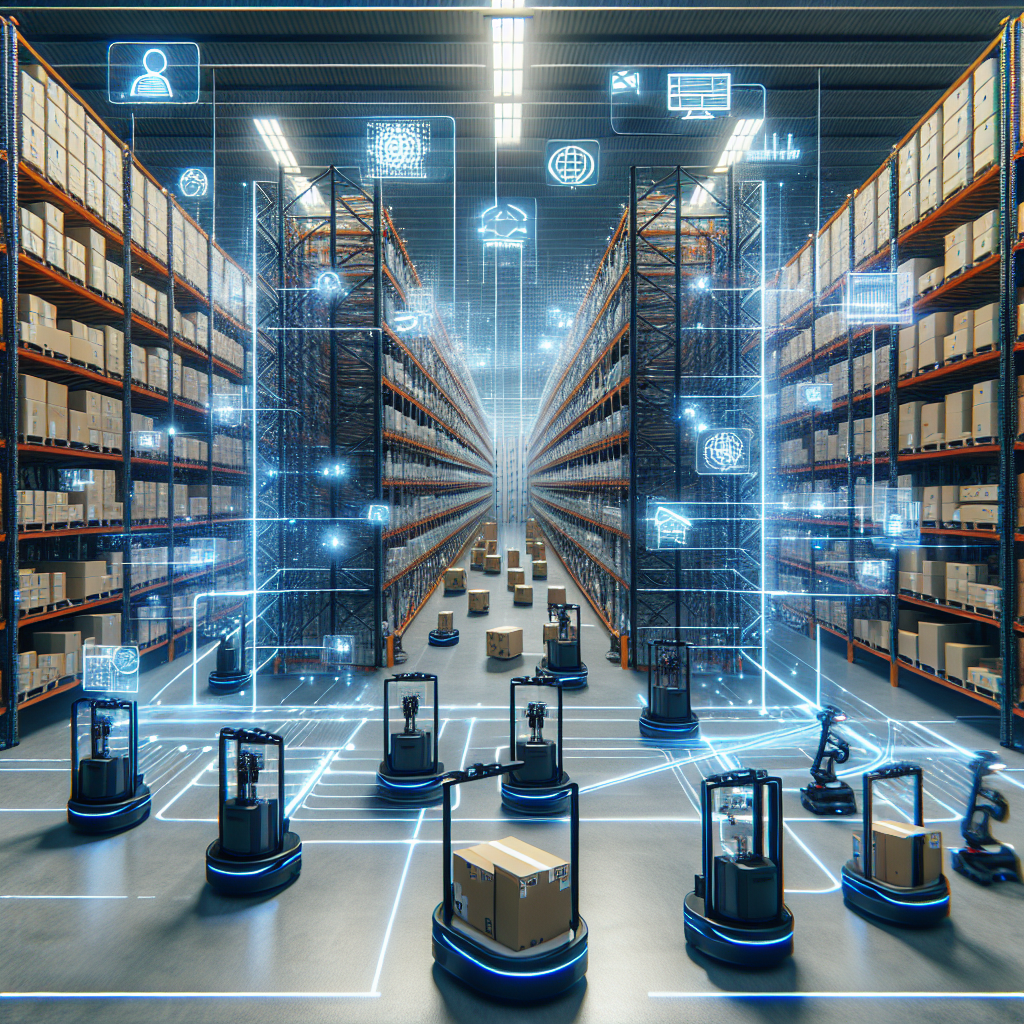
Supply chain digital twins are virtual, real-time replicas of physical supply chain networks that allow organizations to simulate disruptions, test response strategies, and optimize operations without touching live systems. When combined with IoT for supply chain and agentic AI, digital twins become dynamic command centers — continuously updated by sensor data from factories, warehouses, and transportation assets. Companies like Amazon and BMW have invested heavily in digital twin infrastructure to achieve end-to-end supply chain visibility.
A powerful subset of this capability is predictive maintenance for fleet IoT, where sensors embedded in trucks, rail cars, and shipping containers transmit real-time health data to AI systems that predict mechanical failures before they occur. A major logistics carrier deploying predictive maintenance for fleet IoT can reduce unplanned vehicle downtime by up to 25%, according to Deloitte analysis. When an agentic AI system detects an impending engine failure, it can autonomously schedule maintenance, reroute the load to an alternate vehicle, and update delivery ETAs across all downstream systems simultaneously.
● Digital twins enable risk-free disruption simulation and network optimization
● Predictive maintenance for fleet IoT reduces unplanned downtime by up to 25%
● Agentic AI converts IoT signals into coordinated, autonomous corrective actions
Implementation Challenges and What Supply Chain Leaders Must Address
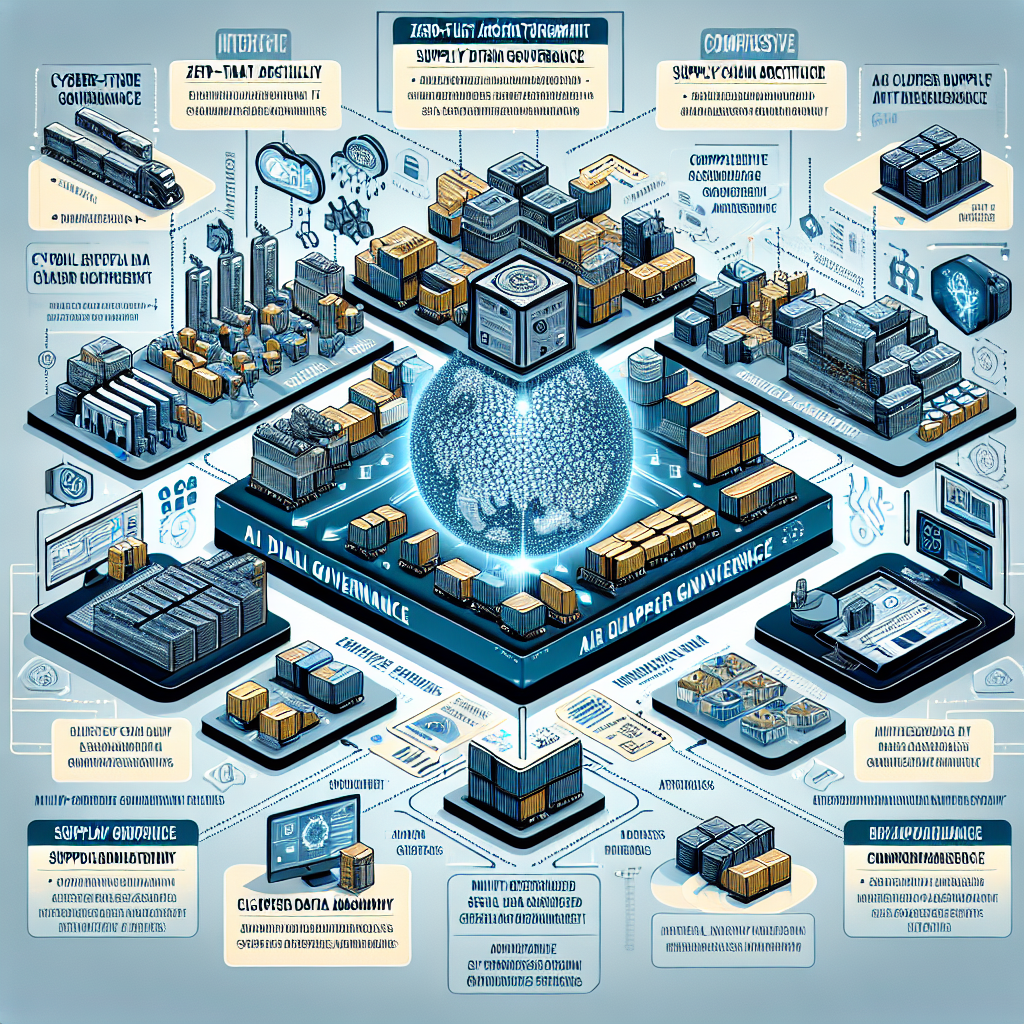
Despite the promise, deploying agentic AI in supply chain environments is not without significant challenges. Data quality and interoperability remain the most cited barriers — agentic systems are only as intelligent as the data they can access, and fragmented legacy systems create major gaps. Organizations must invest in data governance frameworks and API-first architecture strategies before autonomous agents can operate reliably across the supply chain ecosystem.
Trust and change management are equally critical. Supply chain professionals accustomed to manual decision-making may resist handing authority to autonomous systems, especially in high-stakes procurement or logistics scenarios. Leading organizations address this by designing human-in-the-loop escalation protocols where agents handle routine decisions but defer to humans for exceptions above defined risk thresholds. Building explainability into AI outputs — so that agents can articulate why they made a specific decision — is essential for earning organizational trust at scale.
● Data fragmentation and legacy system silos are the top barriers to agentic AI deployment
● Human-in-the-loop escalation protocols balance autonomy with governance
● Explainability and change management are non-negotiable for successful adoption
Key Takeaways
Agentic AI is rewriting the foundational rules of how supply chains sense, decide, and act — moving organizations from reactive operations to genuinely autonomous, self-optimizing value chains. The convergence of autonomous procurement agents, AI-powered demand forecasting, generative AI for logistics, supply chain digital twins, and predictive maintenance for fleet IoT represents a once-in-a-generation opportunity to build supply chains that are faster, smarter, and far more resilient than anything previously possible.
● Agentic AI moves supply chains from decision-support tools to fully autonomous action systems
● Continuous S&OP planning and AI-powered demand forecasting dramatically reduce planning errors and stockout risk
● Generative AI and cognitive supply chain automation handle unstructured, high-volume operational tasks at scale
● Supply chain digital twins and IoT-driven predictive maintenance enable proactive, real-time resilience
● Successful adoption requires strong data governance, explainability, and human-in-the-loop design principles
Ready to go deeper? Explore our expert resources on procurement technology, logistics innovation, and supply chain strategy at BestInSupplies.com — your trusted destination for the tools, insights, and supplier intelligence that modern supply chain professionals rely on.