

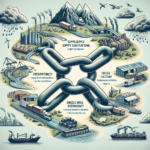







The AI revolution has a security problem that traditional firewalls were never designed to solve. As organizations rush to deploy agentic AI—autonomous systems that read data, make decisions, and act on behalf of users—the attack surface has exploded beyond anything classical perimeter security can defend. Pre-trained models pulled from public repositories, third-party datasets, sprawling API ecosystems, and machine identities operating at machine speed have collectively shattered the old assumption that “inside the network” means “trusted.”
The answer that’s emerging across regulated industries is the marriage of AI governance and Zero-Trust Architecture (ZTA): a “never trust, always verify” posture applied to every model, dataset, agent, and API call in the pipeline. With the EU AI Act’s high-risk obligations currently set to take effect on August 2, 2026—and ISO/IEC 42001 rapidly becoming the de facto operating system for AI compliance worldwide—getting this right is no longer optional.
This guide breaks down what a Zero-Trust AI supply chain actually looks like in practice, the specific risks it mitigates, the frameworks shaping the regulatory landscape, and a phased implementation path your team can start on this quarter.
Why Perimeter Security Failed the AI Era
Classical security treated the network like a castle: build a strong wall, check IDs at the gate, and trust everything inside. That model collapses when:
- Your “employees” include thousands of AI agents making thousands of decisions per second.
- Your “raw materials” are pre-trained models downloaded from Hugging Face, npm, or PyPI—each potentially carrying executable payloads.
- Your “supply chain” stretches across dozens of third-party APIs, vector databases, and inference endpoints.
- A single poisoned data point in a fine-tuning set can quietly bias every output downstream for months.
Zero Trust replaces the castle metaphor with continuous verification. Every request—whether from a human, a service account, or an autonomous agent—must prove its identity, its authorization, and the integrity of what it’s asking to do. Done well, governance becomes what the Cloud Security Alliance has called a “digital immune system”: always-on, automated, and embedded into the AI lifecycle rather than bolted on at audit time.
The Five Pillars of a Zero-Trust AI Supply Chain
Securing AI from data ingestion through model deployment requires control across the entire lifecycle. The following five pillars form the backbone of any credible Zero-Trust AI program.
1. Model Supply Chain Trust
Every model entering your environment—whether a foundation model from a major lab, an open-source checkpoint, or a fine-tuned variant from a vendor—needs cryptographic provenance. That means signed model artifacts, verifiable data lineage, and a software bill of materials (an “AI-BOM”) covering training data sources, dependencies, and third-party libraries. Without this, a malicious actor only needs to compromise one upstream library to reach every downstream consumer.
2. Data-Layer Governance
Policy enforcement has to live at the data layer, independent of any individual model. If you only enforce permissions at the application or model level, a clever prompt or a compromised agent can talk the model into accessing data the user behind it was never authorized to see. Data-layer governance treats the data store itself as the authority on who—and which agent—gets to read what.
3. Continuous Verification and Monitoring
“Always verify” means every interaction is checked, every time. Modern Zero-Trust AI platforms establish behavioral baselines for agents and users, then flag deviations: a customer-service agent suddenly querying HR records, a research assistant exfiltrating gigabytes overnight, a model output pattern consistent with a prompt-injection attack. Anomaly detection at this layer is what catches the attacks signature-based tools miss.
4. Micro-segmentation
Treat every AI workload as if it lives on a hostile network. Isolating training pipelines from inference services, separating agent runtimes by sensitivity tier, and enforcing east-west traffic policies between microservices means a compromise in one component doesn’t become a free pass to the rest of your stack. The core ZTA principle of preventing lateral movement applies just as forcefully to AI infrastructure as it does to traditional cloud workloads.
5. Cryptographic Identity for Every Entity
Humans, devices, services, and AI agents all need unique, cryptographically verifiable identities. “Service account shared by the team” is not an identity strategy. Standards like SPIFFE/SPIRE for workloads and emerging machine-identity frameworks for autonomous agents make it possible to attribute every action to a specific actor and revoke trust the moment something goes wrong.
Implementing Zero-Trust Governance: A Phased Approach
You don’t get to Zero Trust in a single sprint. The organizations succeeding at it are following a phased rollout that builds the foundation before piling on advanced controls.
Phase 1 — Identity Foundation
Establish unique cryptographic identities for every human, machine, and AI agent operating in your environment. This is the prerequisite for everything that follows; you can’t enforce least privilege if you can’t tell who’s asking.
Phase 2 — Comprehensive AI Asset Inventory
Catalog every dataset, model, third-party API, training framework, and inference endpoint your organization touches. If you don’t know it exists, you can’t govern it. Most enterprises starting this exercise discover their AI footprint is two to three times larger than what’s officially tracked.
Phase 3 — Implement Least Privilege
Restrict every AI agent to the minimum data and the minimum action set required to perform its function. An agent that summarizes sales reports does not need write access to production databases. This single control eliminates a huge class of “the agent did something we never asked it to” incidents.
Phase 4 — Shadow AI Discovery
Deploy AI-driven observation tools to detect undocumented or unapproved AI systems—the spreadsheet macros calling OpenAI, the marketing team’s unsanctioned chatbot, the engineer’s local fine-tune running on a company laptop. Shadow AI is to 2026 what shadow IT was to 2015, and the data exposure risk is significantly higher.
Phase 5 — Policy Enforcement Points (PEPs)
Integrate Policy Enforcement Points at every ingestion boundary to validate source integrity, authentication, and content safety before data ever touches a model or training pipeline. PEPs are where your governance policies stop being PowerPoint slides and start being enforced code.
The Specific Supply Chain Risks You’re Defending Against
Zero Trust is the architecture, but it’s worth being concrete about the threats it counters. Three risk categories dominate AI supply-chain incidents in 2026.
Malicious Model Infiltration
Models distributed in formats like Python’s pickle can carry arbitrary executable code that runs the moment the file is loaded. Researchers have repeatedly demonstrated weaponized models on public repositories that look identical to legitimate ones. Cryptographic signing, scanning at ingest, and sandboxed loading environments are the table-stakes controls.
Dataset Poisoning
Third-party training data—scraped corpora, vendor-supplied labels, user-contributed feedback—can be deliberately seeded with biased, adversarial, or backdoor examples. The poison is often invisible at training time and only manifests when a specific trigger appears in production. Provenance tracking, statistical anomaly detection on training sets, and red-team probing of finished models are the defenses that work.
API Vulnerabilities
AI systems are usually a constellation of interconnected APIs—vector databases, embedding services, inference endpoints, vendor LLMs, retrieval systems. Each is a potential leak point. Strict authentication, rate limiting, response inspection, and the same OWASP-style hygiene you’d apply to any production API are non-negotiable.
The Frameworks and Standards Setting the Bar
Four frameworks are doing most of the heavy lifting in shaping how AI governance is being implemented and audited.
ISO/IEC 42001
Published in December 2023, ISO/IEC 42001 is the world’s first AI management system standard. It specifies how organizations should establish, implement, maintain, and continually improve an Artificial Intelligence Management System (AIMS), with detailed annexes covering controls and implementation guidance. While voluntary today, it’s rapidly becoming the certification of choice for organizations that want to credibly signal AI governance maturity—and it harmonizes well with overlapping regulatory regimes.
NIST AI Risk Management Framework
The NIST AI RMF provides a structured, risk-based approach to identifying, assessing, and managing AI risk across the lifecycle. It’s particularly influential in U.S. federal contracting and is widely used as a practical companion to ISO 42001.
The Agentic Trust Framework
A newer entrant focused specifically on autonomous AI agents, the Agentic Trust Framework (ATF) applies Zero-Trust principles to agent behavior—how agents authenticate, what actions they’re authorized to take, how their decisions are logged and reviewed. Expect this category of standards to mature rapidly as agentic deployments scale.
The EU AI Act
The EU AI Act is the world’s first comprehensive AI regulation. Prohibited-practice provisions took effect in February 2025; obligations for general-purpose AI model providers activated in August 2025; and high-risk AI system obligations are currently scheduled to apply on August 2, 2026.
One important caveat: the European Commission’s “Digital Omnibus” package, proposed in November 2025, would defer the high-risk compliance deadline to December 2027. As of late April 2026, trilogue negotiations between the Parliament, Council, and Commission have not produced an agreement, and the next round is on the calendar. Until the Omnibus is formally adopted, August 2, 2026 remains the operative deadline—and given the scale of the work involved (independent estimates put initial compliance investments at $8–15 million for large enterprises), prudent organizations are continuing to plan against the original date.
The Act’s extraterritorial reach mirrors GDPR: a U.S. company whose AI system affects EU residents is in scope, regardless of where the servers live.
Where to Start This Quarter
If you’re staring at this list and wondering what to do Monday morning, three actions deliver outsized returns:
- Run a shadow-AI discovery exercise. You almost certainly have more AI in production than your governance documents acknowledge. Knowing the real footprint is the precondition for everything else.
- Stand up cryptographic identity for your highest-risk agents first. Don’t try to boil the ocean. The agents touching customer data, financial systems, or regulated workflows are where verifiable identity pays back fastest.
- Map your existing controls against ISO 42001 and the EU AI Act. A gap analysis against published standards is far cheaper than a regulatory finding, and it gives leadership a concrete, prioritized backlog.
The Bottom Line
Zero Trust is not a product you buy; it’s an operating posture you build into how AI is developed, deployed, and run. The organizations treating governance as a parallel innovation track—rather than a brake on it—are the ones reaching production faster, surviving audits more easily, and building the kind of customer trust that compounds. With ISO 42001 setting the global benchmark and the EU AI Act establishing hard deadlines, the window for treating AI security as an afterthought has closed.
The supply chain feeding your AI is now part of your attack surface. Govern it accordingly.
Watch BestInSupplies.com for related news and information.