






What Is Zero-Touch Logistics Orchestration?
The supply chain world is changing fast, and if you’ve been keeping an eye on warehouse automation trends, you’ve probably noticed that zero-touch logistics orchestration is becoming one of the hottest buzzwords in the industry. But it’s not just hype — it represents a genuine shift in how goods move from point A to point B without human hands slowing things down.
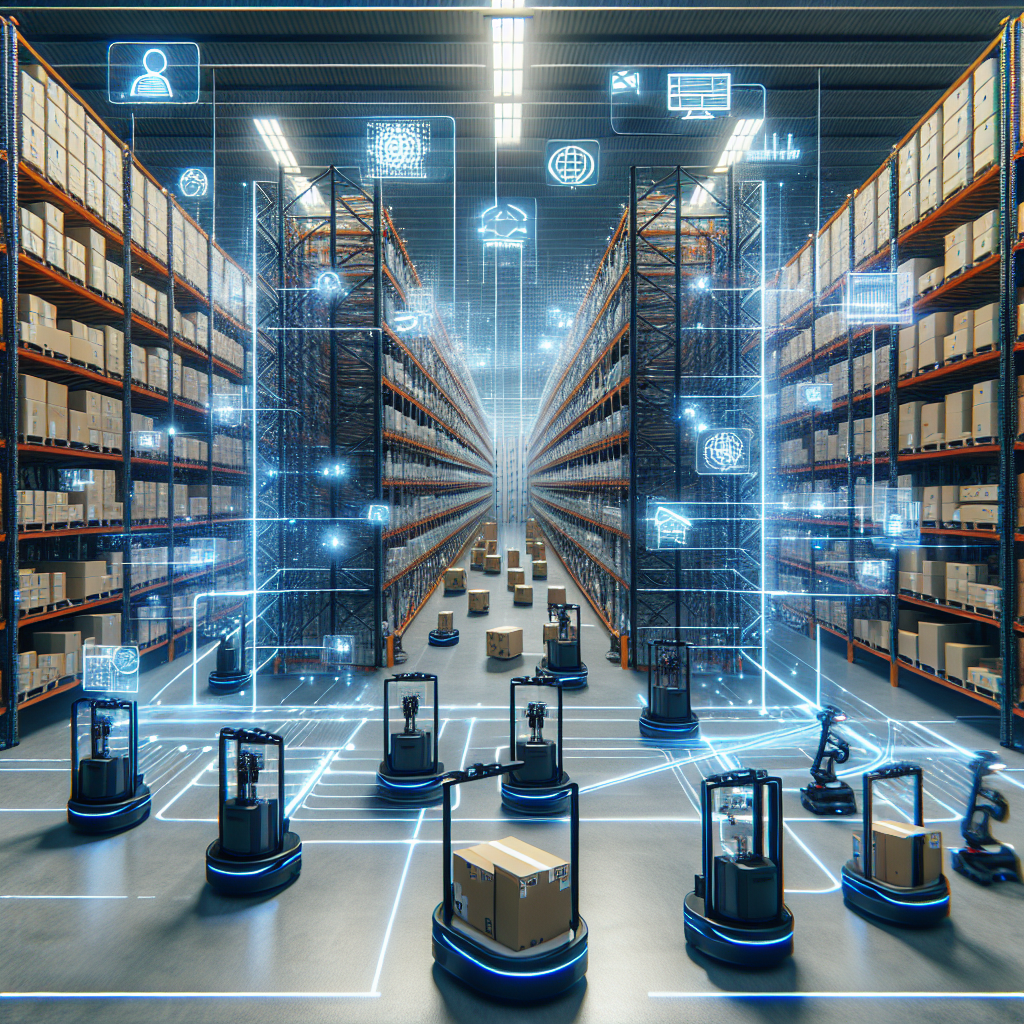
At its core, zero-touch logistics orchestration means that every step of a logistics workflow — from receiving inventory to sorting, storing, and shipping — is handled automatically by interconnected systems. Think of it as a symphony where robots, sensors, software, and data all play their parts in perfect harmony, with minimal human intervention required.
● Zero-touch logistics eliminates manual touchpoints, reducing errors and delays
● Orchestration means all systems communicate and coordinate in real time
● This approach is scalable and increasingly accessible for mid-size operations
The Role of Autonomous Mobile Robots in Modern Warehouses
Autonomous mobile robots (AMR) are the physical backbone of zero-touch logistics. Unlike older fixed conveyor systems or traditional automated guided vehicles (AGVs), AMRs navigate dynamically using onboard sensors, cameras, and AI-driven path planning. Companies like 6 River Systems and Locus Robotics have deployed AMR fleets in fulfillment centers handling tens of thousands of orders per day, dramatically cutting pick-and-pack cycle times.
A concrete example worth noting: Amazon’s Fulfillment Network uses over 750,000 robots across its global warehouses, with AMRs handling tasks ranging from shelf-to-station transport to pallet movement. These robots don’t just move items — they communicate with warehouse management systems (WMS) to prioritize orders, avoid congestion, and even predict when they need recharging. That level of intelligence is what makes autonomous mobile robots AMR central to modern supply chain strategy.
What makes AMRs especially powerful in a zero-touch environment is their adaptability. If a warehouse layout changes or a new product category is introduced, AMRs can be reprogrammed and redeployed without physical infrastructure changes. That flexibility is a game-changer for operations dealing with seasonal surges or rapidly shifting product catalogs.
● AMRs navigate dynamically, unlike fixed automation systems
● Real-world deployments show significant reductions in order cycle time
● AMRs can be quickly reprogrammed to adapt to changing warehouse needs
Warehouse Edge Computing: The Brain Behind the Operation
Warehouse edge computing is what gives autonomous systems the processing speed they need to make split-second decisions without relying on a distant cloud server. Edge computing places computational power physically close to the data source — in this case, right inside the warehouse. That means an AMR’s sensor data, a vision system’s image processing, and a WMS routing decision can all happen in milliseconds rather than seconds.
To put that in perspective, a study by IDC Research found that latency reduction from edge computing can improve operational throughput by up to 30% in high-velocity fulfillment environments. When you have hundreds of robots moving simultaneously, a 500-millisecond delay in routing instructions can cause gridlock. Edge nodes eliminate that bottleneck, ensuring that traffic management for robots is as smooth as a well-timed traffic light system.
Beyond speed, warehouse edge computing also strengthens data security and operational resilience. Because data is processed locally, a cloud outage doesn’t grind your entire warehouse to a halt. Edge systems can operate in a semi-autonomous mode, keeping robots moving and orders flowing even when central connectivity is interrupted — a critical advantage for large-scale distribution centers running 24/7 operations.
● Edge computing reduces latency, enabling faster real-time decisions
● Local data processing improves security and reduces cloud dependency
● Edge systems maintain warehouse operations even during connectivity disruptions
Industry 4.0 Smart Factory Integration: Connecting the Dots
Industry 4.0 smart factory integration is the broader framework that ties AMRs, edge computing, IoT sensors, and digital twins together into a cohesive, self-optimizing system. In a true Industry 4.0 environment, machines communicate with machines (M2M), data flows freely between the shop floor and the enterprise resource planning (ERP) layer, and predictive analytics continuously fine-tune operations. It’s the difference between a reactive warehouse and a proactive one.
A great real-world illustration is DHL’s SmartWarehouse initiative, which integrates IoT-connected shelving, AMR fleets, and AI-powered demand forecasting into a single orchestrated platform. Their pilot programs reported error rate reductions of over 40% and labor cost savings in the range of 25%. That kind of impact is exactly what Industry 4.0 smart factory integration promises — and increasingly delivers — for operations willing to invest in the right infrastructure.
For supply chain professionals, the exciting part is that full integration no longer requires a complete overhaul. Modular solutions now allow businesses to layer smart factory capabilities onto existing infrastructure incrementally. Starting with AMR deployment, then adding warehouse management tools from BestInSupplies.com, and progressively introducing edge nodes and digital twin monitoring creates a manageable, cost-effective path toward full orchestration.
● Industry 4.0 connects machines, data, and enterprise systems seamlessly
● Real deployments show measurable gains in accuracy and cost efficiency
● Modular integration allows businesses to adopt smart factory features incrementally
Challenges and Considerations for Implementation
Adopting zero-touch logistics orchestration isn’t without its challenges. The upfront investment in AMRs, edge infrastructure, and integration middleware can be significant, especially for smaller operations. However, the total cost of ownership often becomes favorable within two to three years when factoring in labor savings, error reduction, and throughput improvements.
Workforce adaptation is another key consideration. Shifting to highly automated logistics doesn’t necessarily mean eliminating jobs — it means reshaping them. Workers transition from manual picking to roles in robot supervision, system maintenance, and data analysis. Investing in retraining programs early is essential to a smooth operational transition and employee buy-in.
● Upfront costs are significant but ROI is typically realized within a few years
● Workforce roles shift toward supervision and technical maintenance
● Change management and training are critical to successful implementation
Key Takeaways
Zero-touch logistics orchestration, powered by autonomous mobile robots and warehouse edge computing, is reshaping how supply chains operate within the Industry 4.0 framework. The convergence of these technologies creates faster, smarter, and more resilient operations that can adapt to demand shifts and disruptions in real time. Whether you’re just starting your automation journey or looking to scale existing systems, understanding these technologies is essential for staying competitive.
● Zero-touch logistics orchestration automates the entire goods-movement workflow with minimal human intervention
● Autonomous mobile robots AMR provide flexible, intelligent physical automation at scale
● Warehouse edge computing ensures the low-latency data processing that real-time orchestration demands
● Industry 4.0 smart factory integration connects all systems into a self-optimizing supply chain ecosystem
● Modular, phased implementation makes these technologies accessible to a broad range of businesses
Ready to explore the tools and technologies that can power your logistics transformation? Visit BestInSupplies.com for in-depth guides, product comparisons, and expert insights on warehouse automation, AMR solutions, and smart factory equipment tailored to your operational needs.