

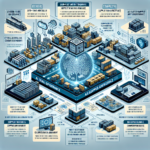





Zero-touch logistics orchestration is no longer a futuristic concept — it is the operational backbone of today’s most competitive supply chains. As manufacturers and distributors face mounting pressure to reduce labor dependency, accelerate fulfillment cycles, and eliminate manual errors, the convergence of autonomous mobile robots (AMR), warehouse edge computing, and Industry 4.0 smart factory integration is delivering measurable, real-world results. This post explores how these technologies work together to create self-managing logistics ecosystems.
What Is Zero-Touch Logistics Orchestration?
At its core, zero-touch logistics orchestration refers to the seamless, automated coordination of warehouse operations with minimal or no human intervention at the execution layer. Tasks such as inventory putaway, order picking, replenishment, and shipping are triggered, routed, and completed by interconnected systems that communicate in real time.
This model relies on a tightly integrated technology stack — warehouse management systems (WMS), fleet control software, IoT sensors, and edge computing nodes — all working in concert. According to a McKinsey & Company report, warehouse automation can reduce operational costs by up to 65% and improve throughput accuracy to near-perfect levels when fully implemented.
Zero-touch logistics removes manual bottlenecks at the execution layer.
It depends on real-time data exchange across connected systems.
Cost reduction and throughput accuracy are measurable, documented benefits.
The Role of Autonomous Mobile Robots (AMR) in Smart Warehousing
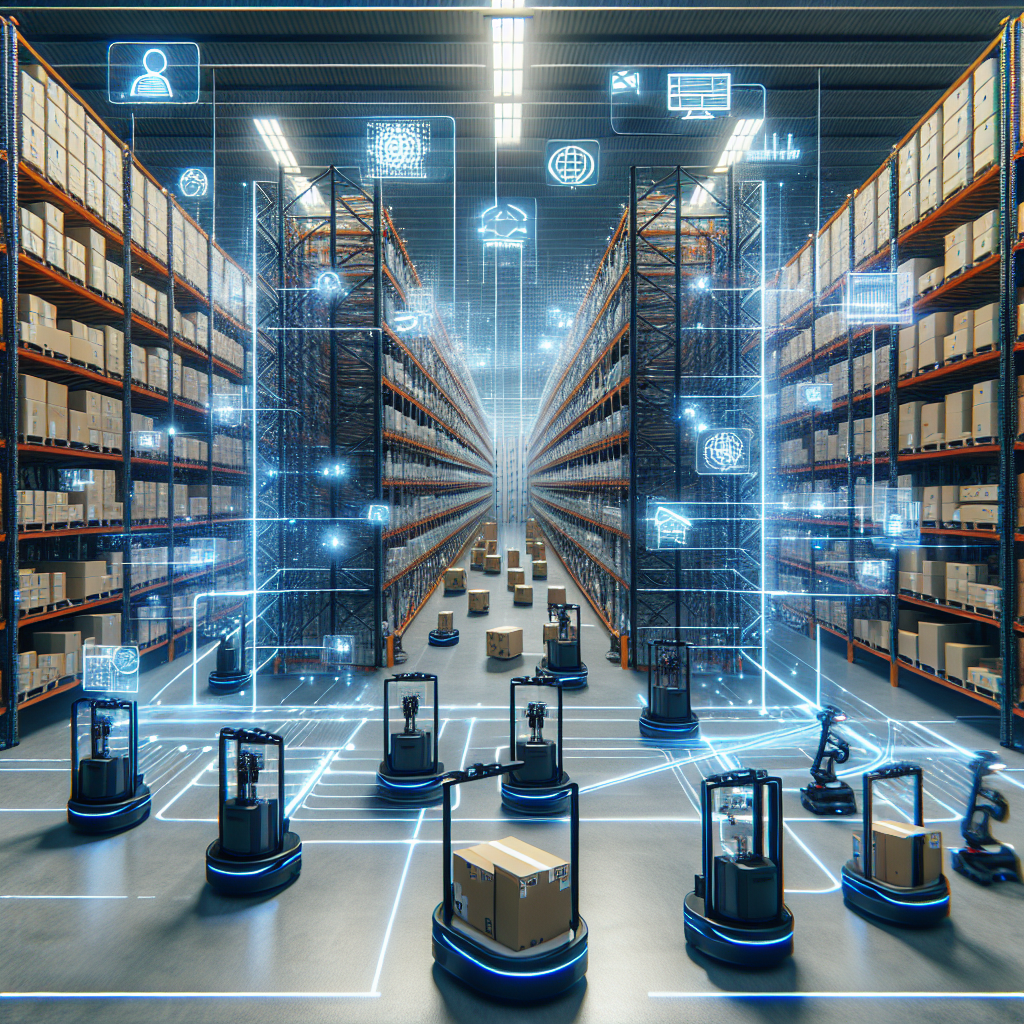
Autonomous mobile robots AMR are the physical execution agents of zero-touch logistics orchestration. Unlike traditional fixed conveyors or AGVs (Automated Guided Vehicles) that follow predetermined paths, AMRs use onboard sensors, LiDAR, and AI-driven navigation to move dynamically through warehouse environments, adapting to obstacles and changing conditions in real time.
Companies like 6 River Systems and Locus Robotics have deployed AMR fleets in distribution centers handling thousands of picks per hour. For example, DHL Supply Chain reported a 2x productivity increase and a significant reduction in worker fatigue after integrating AMR systems into its fulfillment operations. AMRs are scalable, redeployable, and capable of operating 24/7, making them indispensable in high-velocity logistics environments.
AMR Fleet Coordination and Task Orchestration
Effective AMR deployment requires sophisticated fleet management software that assigns tasks, balances workloads, manages battery charging cycles, and resolves traffic conflicts autonomously. This orchestration layer is what transforms a collection of individual robots into a coordinated, adaptive logistics workforce.
AMRs navigate dynamically, unlike fixed-path AGVs, enabling greater operational flexibility.
Fleet management software is essential for coordinating large-scale AMR deployments.
Documented case studies show 2x or greater productivity gains from AMR integration.
Warehouse Edge Computing: The Intelligence Layer Powering Real-Time Decisions
Warehouse edge computing places computational power at or near the data source — on the warehouse floor itself — rather than relying solely on centralized cloud infrastructure. This architecture is critical for zero-touch logistics orchestration because it enables sub-millisecond decision-making for AMR routing, conveyor control, inventory tracking, and anomaly detection without latency introduced by round-trip cloud communication.
A concrete example: in a large-scale fulfillment center processing 100,000 units per day, even a 200-millisecond delay in routing a robot to the correct pick location can cascade into significant throughput losses. Edge nodes running localized AI inference models solve this by processing sensor data, vision feeds, and WMS signals locally and instantly. According to Gartner, by 2025, 75% of enterprise-generated data will be created and processed outside a traditional centralized data center, underscoring the strategic shift toward edge-first architectures.
Edge-Cloud Hybrid Models for Scalable Logistics
Most mature implementations use a hybrid edge-cloud model: edge nodes handle real-time operational decisions locally, while cloud platforms aggregate historical data for analytics, machine learning model training, and strategic planning. This balance ensures both speed at the operational level and intelligence at the strategic level.
Edge computing eliminates latency that would otherwise disrupt real-time AMR coordination.
Gartner projects 75% of enterprise data will be processed at the edge by 2025.
Hybrid edge-cloud architectures combine operational speed with strategic analytical depth.
Industry 4.0 Smart Factory Integration: Connecting the Full Value Chain
Industry 4.0 smart factory integration extends zero-touch logistics orchestration beyond the four walls of the warehouse, connecting production floors, inbound receiving, outbound shipping, and supplier networks into a unified, data-driven ecosystem. In this model, production signals trigger automatic replenishment orders, finished goods are autonomously transported to shipping staging areas, and inventory records update in real time across all connected platforms.
Bosch’s Stuttgart plant is a frequently cited example of Industry 4.0 smart factory integration in action: the facility uses IoT-connected machinery, real-time data analytics, and automated logistics to achieve highly flexible, low-waste production. The plant reportedly reduced unplanned downtime by 25% and cut logistics handling costs significantly by integrating its manufacturing and warehouse operations on a unified digital backbone. Platforms such as SAP Extended Warehouse Management and PTC’s Industrial IoT solutions are frequently deployed to enable this level of cross-functional integration.
Digital Twin Technology as a Foundation for Smart Factory Logistics
Digital twins — virtual replicas of physical warehouse and factory environments — are increasingly central to Industry 4.0 smart factory integration. They allow operations teams to simulate workflow changes, test new AMR configurations, and identify bottlenecks before making costly physical changes to the live environment.
Smart factory integration links warehousing, production, and supplier networks in real time.
Industry leaders like Bosch demonstrate 25%+ downtime reductions through integrated digital operations.
Digital twins enable low-risk simulation of operational changes before live deployment.
Key Takeaways
Zero-touch logistics orchestration automates warehouse execution end-to-end, reducing costs and eliminating manual errors.
Autonomous mobile robots AMR provide dynamic, scalable physical execution with documented productivity gains of 2x or more.
Warehouse edge computing delivers the sub-millisecond decision intelligence required for real-time AMR and system coordination.
Industry 4.0 smart factory integration connects logistics with production and supplier networks for full supply chain visibility and automation.