

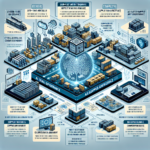





What Is Zero-Touch Logistics Orchestration?
Zero-touch logistics orchestration refers to the fully automated coordination of material flow, inventory tracking, and fulfillment processes with minimal or no human intervention. It combines real-time data processing, autonomous decision-making, and robotics to keep factory and warehouse operations running continuously and efficiently.
This approach is rapidly becoming a cornerstone of Industry 4.0 smart factory integration, enabling manufacturers to respond to demand changes, equipment failures, and supply disruptions in milliseconds rather than hours.
- Zero-touch systems reduce manual touchpoints that cause delays and errors
- They rely on real-time data loops between machines, sensors, and software
- The model supports 24/7 operations with consistent throughput
The Role of Autonomous Mobile Robots in Modern Supply Chains
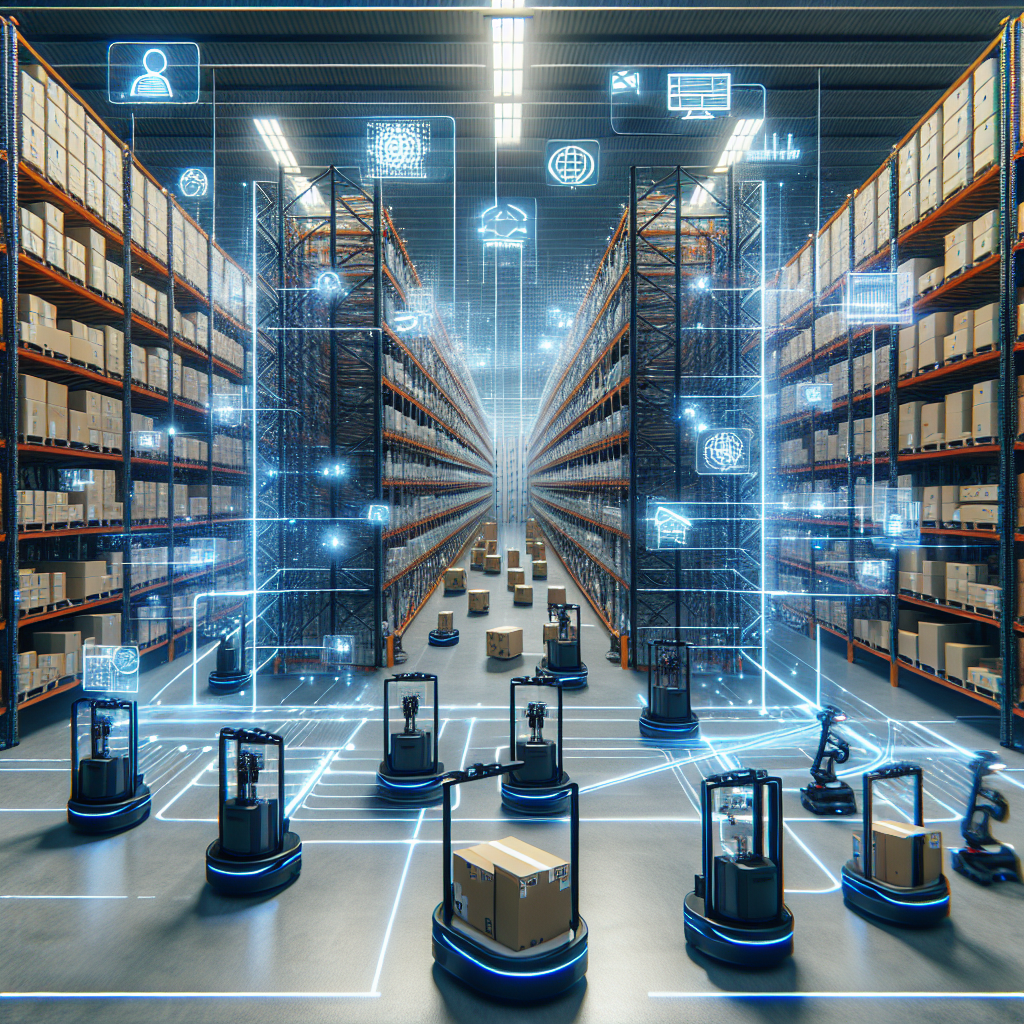
Autonomous mobile robots (AMR) are self-navigating machines that move materials across warehouse and factory floors without fixed tracks or human guidance. Unlike traditional automated guided vehicles (AGVs), AMRs use onboard sensors, cameras, and AI-powered mapping to dynamically reroute around obstacles and adapt to changing environments.
According to a MarketsandMarkets report, the global AMR market is projected to reach $13.2 billion by 2030, driven largely by demand from e-commerce fulfillment centers and smart manufacturing facilities. Companies like Amazon Robotics and Boston Dynamics have already deployed thousands of AMRs to handle repetitive transport tasks that previously required dedicated labor.
When integrated into a zero-touch logistics orchestration framework, AMRs receive task assignments automatically from a warehouse management system (WMS) and execute pick, sort, and deliver workflows without supervisor input.
- AMRs reduce labor costs for repetitive transport tasks by up to 70%
- Dynamic rerouting prevents bottlenecks during peak operational periods
- Fleet management software coordinates dozens of AMRs simultaneously
How Warehouse Edge Computing Enables Real-Time Decisions
Warehouse edge computing processes data at or near the source — on the warehouse floor itself — rather than sending it to a remote cloud server for analysis. This dramatically reduces latency, which is critical when AMRs and robotic arms must react to real-time conditions in fractions of a second.
For example, a major automotive parts distributor implemented edge nodes throughout its 500,000-square-foot facility to process sensor data from conveyor belts, forklifts, and AMRs locally. The result was a 40% reduction in system response time and a 22% improvement in order fulfillment accuracy, as reported by IDC’s manufacturing technology research.
Edge computing also ensures operational continuity during network outages, a critical advantage in facilities where even minutes of downtime translate to significant financial loss.
- Edge nodes process millions of sensor events per second without cloud dependency
- Local data processing reduces bandwidth costs and cybersecurity exposure
- Systems remain operational during internet or cloud connectivity disruptions
Industry 4.0 Smart Factory Integration: Connecting Every Layer
Industry 4.0 smart factory integration is the architectural philosophy that ties together AMRs, edge computing, ERP systems, and IoT sensors into a unified, self-optimizing ecosystem. In a true smart factory, every machine communicates with every other system, sharing status, capacity, and demand data continuously.
A practical example is Siemens’ Amberg Electronics Plant in Germany, often cited as one of the world’s most advanced smart factories. The facility achieves a 99.9988% defect-free production rate by integrating over 1,000 automated systems that share data in real time across production, logistics, and quality control layers. You can read more about their approach on the Siemens official site.
For supply managers, this level of integration means purchase orders, replenishment cycles, and vendor communications can be triggered automatically based on live production data, eliminating the lag that traditionally exists between factory floors and procurement teams.
- Smart factory integration connects procurement, production, and logistics in one data loop
- Automated replenishment triggers reduce stockout risk and overstock waste
- Cross-system visibility supports better supplier relationship management
Choosing the Right Supplies and Equipment for Zero-Touch Workflows
Implementing zero-touch logistics orchestration requires careful selection of compatible hardware, from AMR charging infrastructure to edge computing servers and sensor-equipped shelving systems. The wrong equipment can create integration gaps that undermine the entire automation strategy.
Buyers should prioritize equipment with open APIs, standardized communication protocols like OPC-UA or MQTT, and vendor support for integration with major WMS and ERP platforms. Investing in modular, scalable components ensures the system can grow alongside evolving factory demands.
- Prioritize hardware with open APIs for seamless system integration
- OPC-UA and MQTT protocols ensure interoperability across vendors
- Modular designs allow incremental scaling without full system overhauls
Key Takeaways
Zero-touch logistics orchestration is no longer a future concept — it is an operational reality being deployed in leading smart factories and distribution centers worldwide. By combining autonomous mobile robots (AMR), warehouse edge computing, and Industry 4.0 smart factory integration, organizations can achieve faster throughput, higher accuracy, and dramatically lower operational costs. The technologies are maturing rapidly, and the window for competitive advantage belongs to those who act strategically now.
- Zero-touch logistics orchestration eliminates manual bottlenecks across the supply chain
- AMRs provide flexible, scalable automation for transport and fulfillment tasks
- Warehouse edge computing enables sub-second decision-making on the factory floor
- Industry 4.0 integration connects every operational layer into a self-optimizing system
- Equipment selection based on open standards is critical for long-term scalability
Ready to equip your facility for the future of smart logistics? Visit BestInSupplies.com to explore.