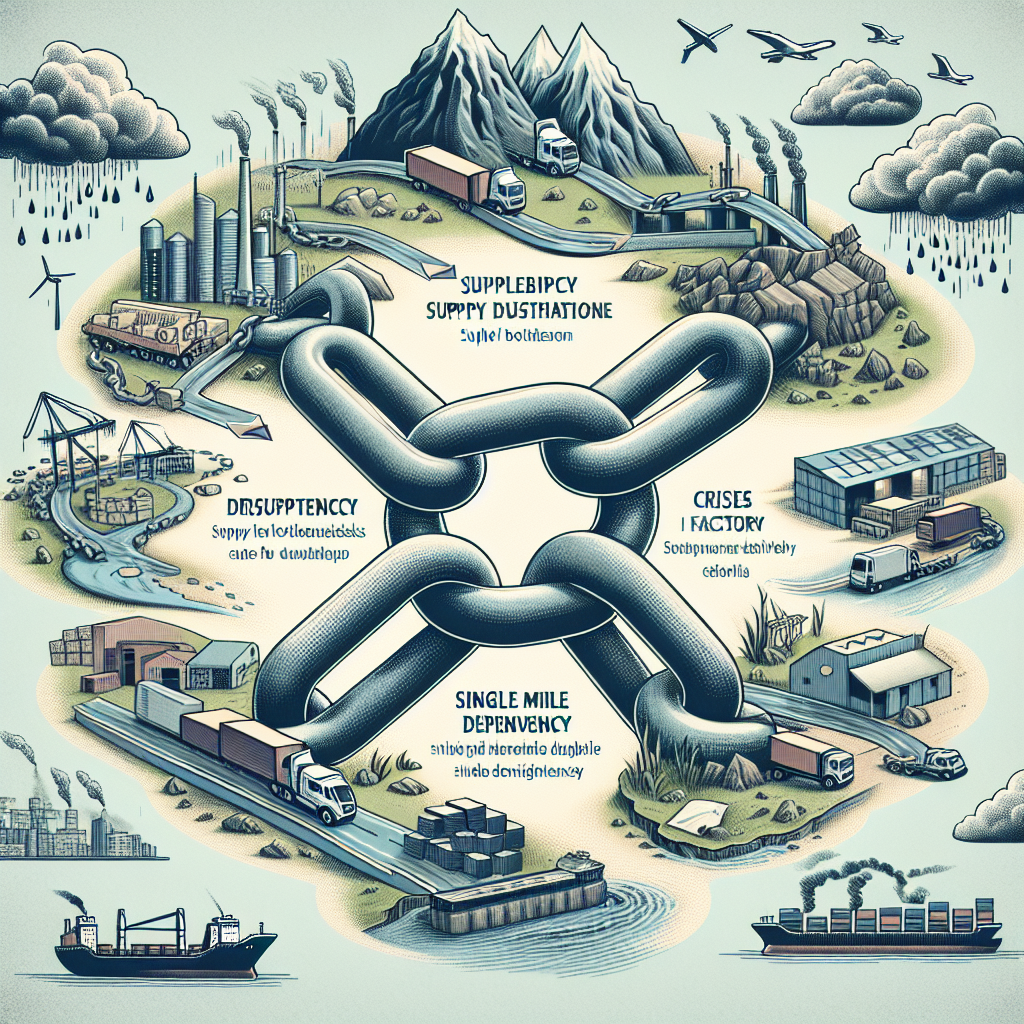








Global supply chains are under serious pressure right now, and two of the world’s most critical maritime corridors are at the center of it all. Red Sea shipping disruptions and escalating tensions near the Strait of Hormuz are forcing logistics managers, procurement teams, and businesses of all sizes to rethink how they move goods across the globe. Whether you’re importing electronics, fuel, or consumer goods, the ripple effects of these chokepoint crises are showing up in your shipping invoices and delivery timelines.
Why Maritime Chokepoints Matter More Than Ever
Maritime chokepoints are narrow passages where a massive volume of global trade gets funneled through a tight geographic corridor. When these passages are threatened — by conflict, piracy, or political instability — the consequences aren’t just regional; they cascade across global supply networks almost immediately.
The Red Sea, for example, typically handles around 12–15% of global trade, including a significant share of container traffic between Asia and Europe. When Houthi militant attacks began targeting commercial vessels in the region, major carriers like Maersk, MSC, and CMA CGM rerouted ships around the Cape of Good Hope — adding up to 10–14 days and thousands of extra dollars per container to voyage costs. That’s not a minor inconvenience; that’s a structural shift in how East-West trade flows.
The Strait of Hormuz is equally critical, carrying roughly 20% of the world’s oil supply through a passage just 21 miles wide at its narrowest point. Any escalation involving Iran or regional actors can send energy markets into a tailspin overnight, creating a cascading effect on freight rates and fuel surcharges across every mode of transport.
● Maritime chokepoints funnel enormous volumes of global trade through narrow corridors
● Red Sea disruptions have already pushed major carriers to reroute around Africa
● Strait of Hormuz tensions directly affect global energy prices and freight costs
Red Sea Shipping Disruptions: What’s Actually Happening
The Red Sea shipping disruptions that began gaining momentum with Houthi attacks on commercial vessels have fundamentally altered Asia-to-Europe shipping economics. Vessels that once transited the Suez Canal are now sailing around the southern tip of Africa, dramatically increasing voyage distances, fuel consumption, and transit times.
According to data from Freightos, spot freight rates on Asia-to-Europe lanes surged by over 200% in a matter of weeks following the initial rerouting decisions by major carriers. Shippers who had locked in long-term contracts initially felt somewhat insulated, but even contract rates have crept upward as ocean carriers push for emergency surcharges and revised terms. Businesses with lean inventory strategies — those relying on just-in-time replenishment — were hit particularly hard.
For procurement teams, this has meant rapidly revisiting supplier agreements, safety stock levels, and mode-of-transport decisions. Some companies have turned to air freight as a short-term bridge, but at a cost that is typically four to six times higher than ocean freight on a per-kilogram basis. It’s an expensive bandage, and it’s pushing companies to think more seriously about long-term supply chain resilience.
● Asia-to-Europe spot freight rates spiked over 200% due to Red Sea rerouting
● Just-in-time inventory strategies have proven especially vulnerable to these disruptions
● Air freight has emerged as a costly but necessary stopgap for time-sensitive cargo
Strait of Hormuz Maritime Security and Energy Market Volatility
Strait of Hormuz maritime security has long been a concern for energy markets, but recent geopolitical flare-ups in the Middle East have put it back in sharp focus. The strait serves as the primary export route for oil from Saudi Arabia, Iraq, Iran, the UAE, and Kuwait — making it arguably the single most strategically important waterway on the planet.
When tensions rise near the Strait, oil futures respond almost instantly. Brent crude price spikes of 5–8% within days of escalatory events have become something of a recurring pattern. For logistics and supply chain professionals, higher oil prices translate directly into elevated bunker fuel surcharges, diesel cost increases for trucking, and higher jet fuel prices for air freight — essentially a cost multiplier that touches every link in the supply chain.
The U.S. Energy Information Administration (EIA) has consistently flagged the Strait of Hormuz as the world’s most critical oil transit chokepoint. Companies with significant energy exposure — whether directly in oil and gas or indirectly through transportation-heavy operations — would be wise to incorporate Hormuz risk scenarios into their procurement and hedging strategies.
● The Strait of Hormuz carries approximately 20% of the world’s oil supply
● Brent crude can spike 5–8% within days of regional escalation events
● Energy cost increases ripple through every mode of freight transportation
Tariff Impact Analysis: Layering Trade Policy on Top of Disruption
If geopolitical shipping disruptions weren’t enough, businesses are simultaneously navigating a complex tariff environment that compounds supply chain costs further. A thorough tariff impact analysis has become an essential tool for any company sourcing internationally, especially when origin countries or transit routes are shifting due to conflict-related rerouting.
Consider a company that historically sourced components from a Chinese manufacturer and shipped them via the Suez Canal route to Europe. Now that route may be disrupted, pushing shipments around Africa and increasing landed costs by 15–25%. If those components are also subject to elevated tariffs — as many Chinese-origin goods are under current U.S. and EU trade policy — the compounded cost impact can seriously erode product margins or pricing competitiveness.
Smart procurement teams are now running dual-lens analyses: one focused on logistics cost modeling (rerouting scenarios, fuel surcharges, transit time buffers) and one focused on tariff classification and duty optimization. Tools that combine both views are increasingly valuable. For a deeper look at how tariff structures interact with your specific product categories, exploring resources at BestInSupplies.com can give you a practical starting point.
● Rerouting around Africa can increase landed costs by 15–25% before tariffs
● Tariff and logistics cost modeling should be run simultaneously, not in silos
● Duty optimization strategies can help partially offset elevated shipping expenses
Geopolitical Risk Mitigation in Logistics: Building a More Resilient Strategy
Effective geopolitical risk mitigation in logistics isn’t just about reacting to the next crisis — it’s about building systems and strategies that give your supply chain flexibility before disruptions hit. The companies that navigated Red Sea disruptions most successfully were generally those that had already diversified their carrier base, maintained relationships with multiple freight forwarders, and had pre-approved contingency routing options in place.
Supplier diversification is another cornerstone of resilience. Businesses that were sourcing exclusively from a single region — whether Southeast Asia, the Middle East, or elsewhere — found themselves with very few options when traditional shipping lanes became untenable or prohibitively expensive. Nearshoring and friendshoring strategies, while not overnight solutions, have gained significant momentum as a hedge against both geopolitical risk and long transit-time vulnerability.
Risk management frameworks like scenario planning and stress testing supply chain networks against geopolitical disruption events are now becoming standard practice among leading logistics organizations. The World Economic Forum’s Global Risks Report consistently ranks geopolitical conflict among the top near-term threats to global economic stability, reinforcing why supply chain resilience planning deserves executive-level attention.
● Pre-approved contingency routing options are a hallmark of resilient supply chains
● Supplier diversification reduces dependency on any single shipping corridor
● Scenario planning and stress testing should be ongoing, not reactive
Real-Time Chokepoint Tracking: Turning Data Into Decisions
One of the most powerful competitive advantages available to modern logistics teams is real-time chokepoint tracking — the ability to monitor maritime conditions, vessel rerouting trends, and geopolitical developments as they unfold, rather than learning about them days later through freight invoices. The faster you can detect a disruption, the more options you have to respond.
Platforms and data providers like The Maritime Executive and specialized freight intelligence tools now offer live vessel tracking, risk alerts for critical waterways, and predictive analytics that flag potential disruptions before they escalate. Integrating these data feeds into your supply chain visibility platform — or even into a simple operational dashboard — can dramatically reduce response lag time when situations like the Red Sea crisis develop.
For businesses that don’t have access to enterprise-grade logistics platforms, even free or low-cost tools like MarineTraffic provide meaningful situational awareness. The key is establishing a regular monitoring cadence and defining clear internal escalation protocols so that when a chokepoint event is detected, your team knows exactly what steps to take next.