







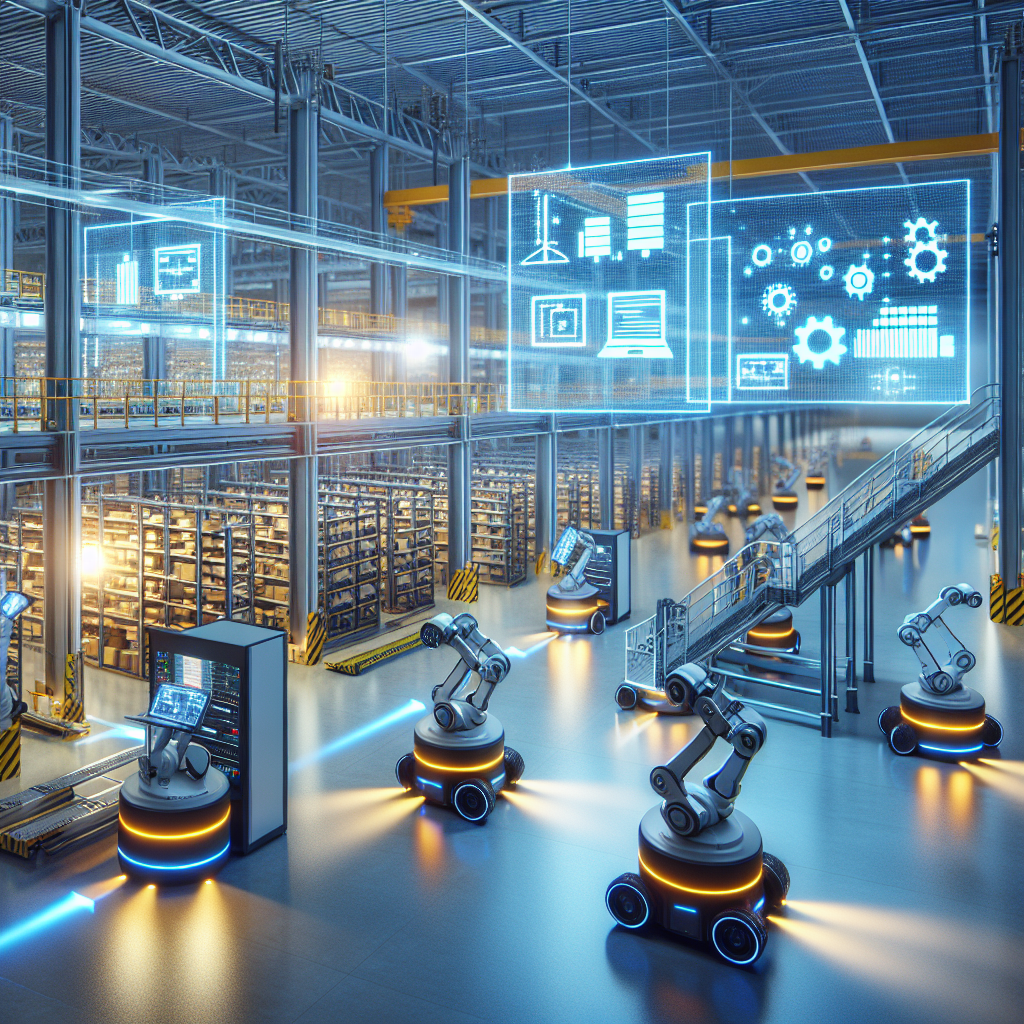
The factory floor has never been smarter — or more autonomous. As supply chains grow increasingly complex, manufacturers and logistics operators are turning to a powerful combination of zero-touch logistics orchestration, robotics, and real-time computing to keep operations running like clockwork. If you’ve been watching the evolution of fulfillment centers and smart warehouses, you already know things are moving fast. Let’s break down what’s actually happening on the ground and why it matters for the future of operations.
What Is Zero-Touch Logistics Orchestration?
Zero-touch logistics orchestration refers to the seamless, automated coordination of goods, data, and decisions across a supply chain — with minimal or zero human intervention at each handoff point. Think of it as the conductor of an orchestra, except every musician is a robot, a sensor, or a software system making split-second decisions.
This approach is gaining traction because it dramatically reduces errors, speeds up throughput, and lowers labor costs in high-volume environments. Companies like Amazon and DHL have already deployed early versions of this model, using software layers that route tasks, manage exceptions, and trigger actions without a human ever touching a keyboard.
● Zero-touch logistics orchestration removes manual handoff points to reduce errors and delays
● It relies on integrated software, sensors, and robotics working in unison
● Early adopters like Amazon and DHL are already seeing measurable efficiency gains
The Role of Warehouse Edge Computing in Real-Time Decision Making
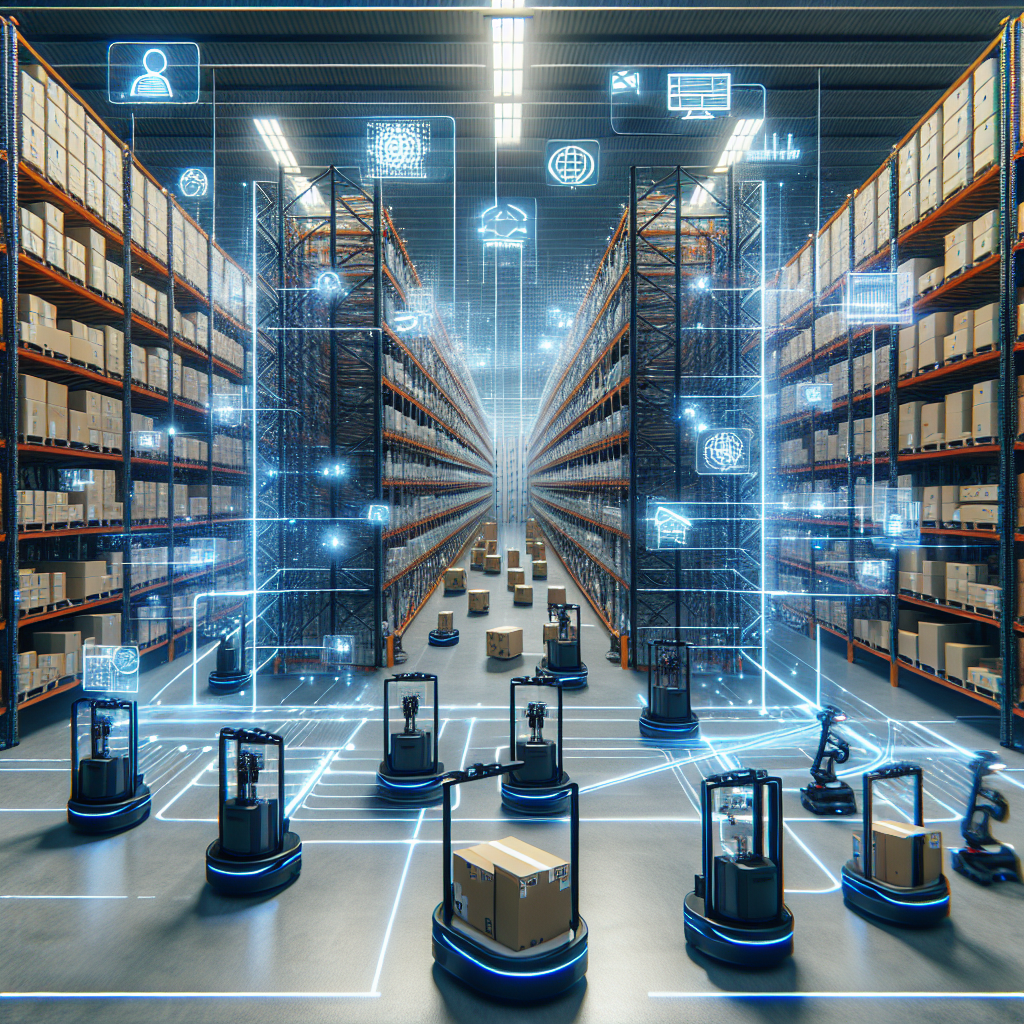
Warehouse edge computing is the backbone that makes zero-touch operations actually possible. Rather than sending every data packet to a distant cloud server and waiting for a response, edge computing processes information locally — right on the warehouse floor — in milliseconds.
This matters enormously when you have hundreds of robots navigating tight aisles, conveyor systems reacting to package dimensions, and inventory systems updating in real time. A latency delay of even a few seconds could cause a collision, a misroute, or a fulfillment error. According to Gartner, edge computing deployments in industrial settings are accelerating rapidly, driven precisely by these low-latency demands.
Edge nodes can also act as local intelligence hubs, aggregating data from AMRs, conveyor belts, RFID readers, and environmental sensors to build a live operational picture. This local awareness loop is what gives modern smart warehouses their almost uncanny ability to self-correct without human input.
● Warehouse edge computing processes data locally, eliminating costly cloud round-trip latency
● Edge nodes serve as real-time intelligence hubs integrating multiple data streams
● This architecture is critical for safe, high-speed autonomous robot operations
Autonomous Mobile Robots: The Workhorses of the Smart Factory
How AMRs Navigate and Communicate
Autonomous mobile robots (AMR) are not your grandfather’s conveyor belt. Unlike older automated guided vehicles (AGVs) that follow fixed magnetic tracks, AMRs use onboard LiDAR, cameras, and AI-driven path planning to navigate dynamically around obstacles and people.
Modern AMRs from companies like 6 River Systems and Locus Robotics can communicate with each other and with warehouse management systems (WMS) to self-assign tasks, avoid traffic jams, and even detect when a shelf is running low on inventory. In a fully orchestrated environment, these robots receive their assignments directly from the orchestration layer — no human dispatcher required.
AMRs and Edge Computing: A Natural Partnership
The symbiosis between autonomous mobile robots (AMR) and warehouse edge computing is what really unlocks next-level performance. Edge servers push updated navigation maps, task queues, and traffic data directly to AMR fleets in near real-time, keeping the robots operating at peak efficiency even as conditions change.
For example, a large e-commerce fulfillment center might run 300+ AMRs simultaneously. Without local edge infrastructure, coordinating that many robots through a centralized cloud would be practically impossible at the speeds required. Edge computing essentially gives each robot a smarter, faster brain by proxy.
● AMRs use AI, LiDAR, and cameras to navigate dynamically — no fixed tracks needed
● They communicate with orchestration layers and WMS systems without human dispatching
● Edge computing enables real-time coordination of large AMR fleets at scale
Industry 4.0 Smart Factory Integration: Bringing It All Together
Industry 4.0 smart factory integration is the broader framework that ties zero-touch logistics, edge computing, and AMRs into a cohesive operational ecosystem. Industry 4.0 refers to the fourth industrial revolution — characterized by cyber-physical systems, the Industrial Internet of Things (IIoT), and intelligent automation working together seamlessly.
A true Industry 4.0 smart factory doesn’t just automate individual tasks; it creates a digital twin of the entire operation, enabling predictive maintenance, dynamic resource allocation, and continuous process optimization. Companies like Siemens and Bosch have published extensively on how their facilities use real-time data loops to eliminate downtime and maximize throughput — you can explore Siemens’ approach on their Digital Enterprise hub.
The key to successful Industry 4.0 smart factory integration is interoperability — making sure the AMRs, edge nodes, ERP systems, WMS platforms, and IoT sensors can all speak the same language. Open standards like OPC-UA and MQTT are increasingly popular choices for achieving this kind of plug-and-play connectivity across vendors and platforms.
● Industry 4.0 smart factory integration unifies AMRs, edge computing, and IIoT into one ecosystem
● Digital twins enable predictive maintenance and real-time process optimization
● Open standards like OPC-UA and MQTT are essential for cross-vendor interoperability
Real-World Examples of Zero-Touch Orchestration in Action
Ocado, the UK-based online grocery giant, runs one of the most advanced examples of zero-touch logistics orchestration in the world. Their Customer Fulfilment Centres (CFCs) use thousands of robots moving across a grid system, coordinated by a proprietary software brain that processes over four million routing decisions per second — all with minimal human intervention.
Closer to the manufacturing side, BMW’s smart factory in Regensburg, Germany, uses AMRs to deliver components directly to assembly line workers, dynamically rerouting based on production schedules that update in real time. This is a textbook example of Industry 4.0 smart factory integration, where logistics and manufacturing are no longer separate silos but one unified, data-driven system.
These examples show that zero-touch orchestration isn’t a futuristic concept — it’s operational today at global scale. The companies investing in this infrastructure now are building competitive moats that will be very difficult for slower-moving competitors to close.
● Ocado processes over four million routing decisions per second with minimal human input
● BMW’s Regensburg factory uses AMRs tied to real-time production schedules
● Zero-touch orchestration at scale is already commercially proven and operational
Challenges and Considerations Before You Deploy
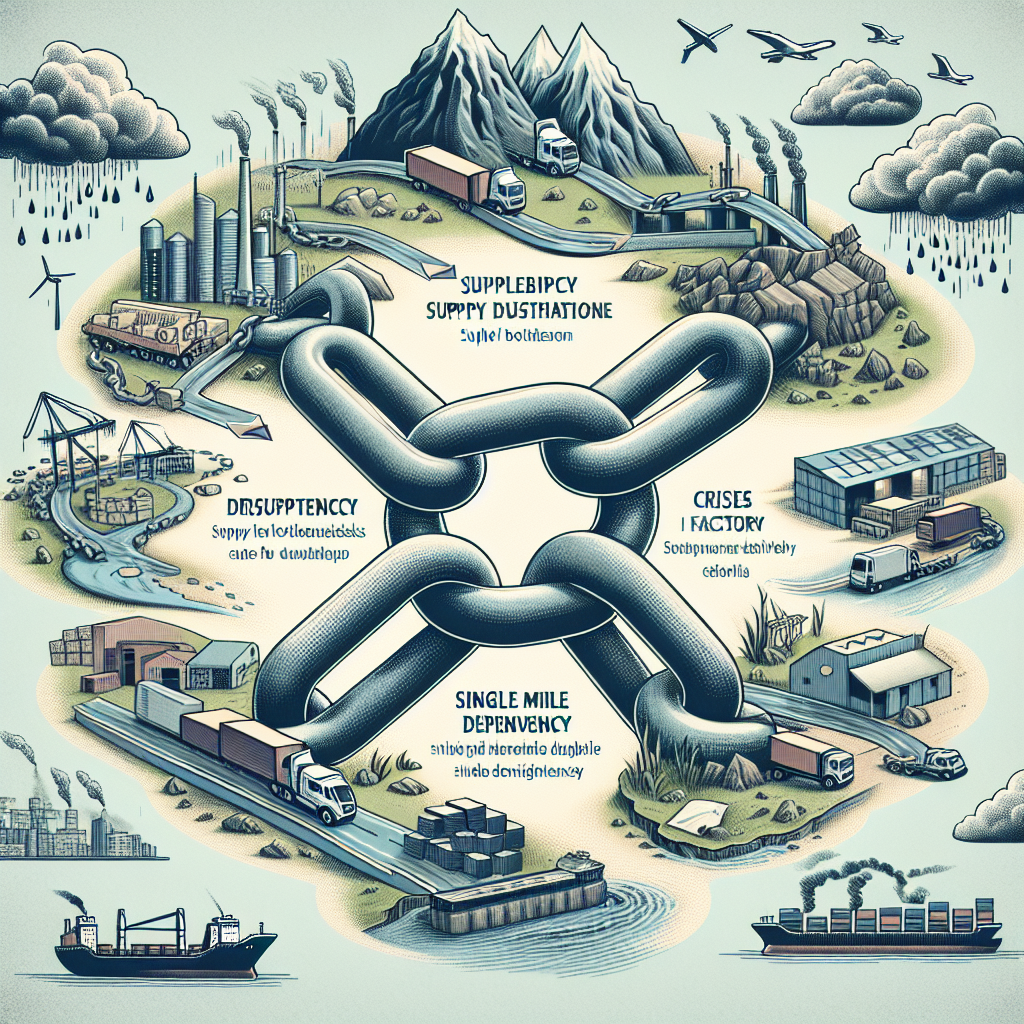
Deploying zero-touch logistics orchestration isn’t a flip-a-switch proposition. Legacy infrastructure, siloed data systems, and workforce change management are real friction points that organizations consistently underestimate. Integration projects often take longer and cost more than initial projections suggest.
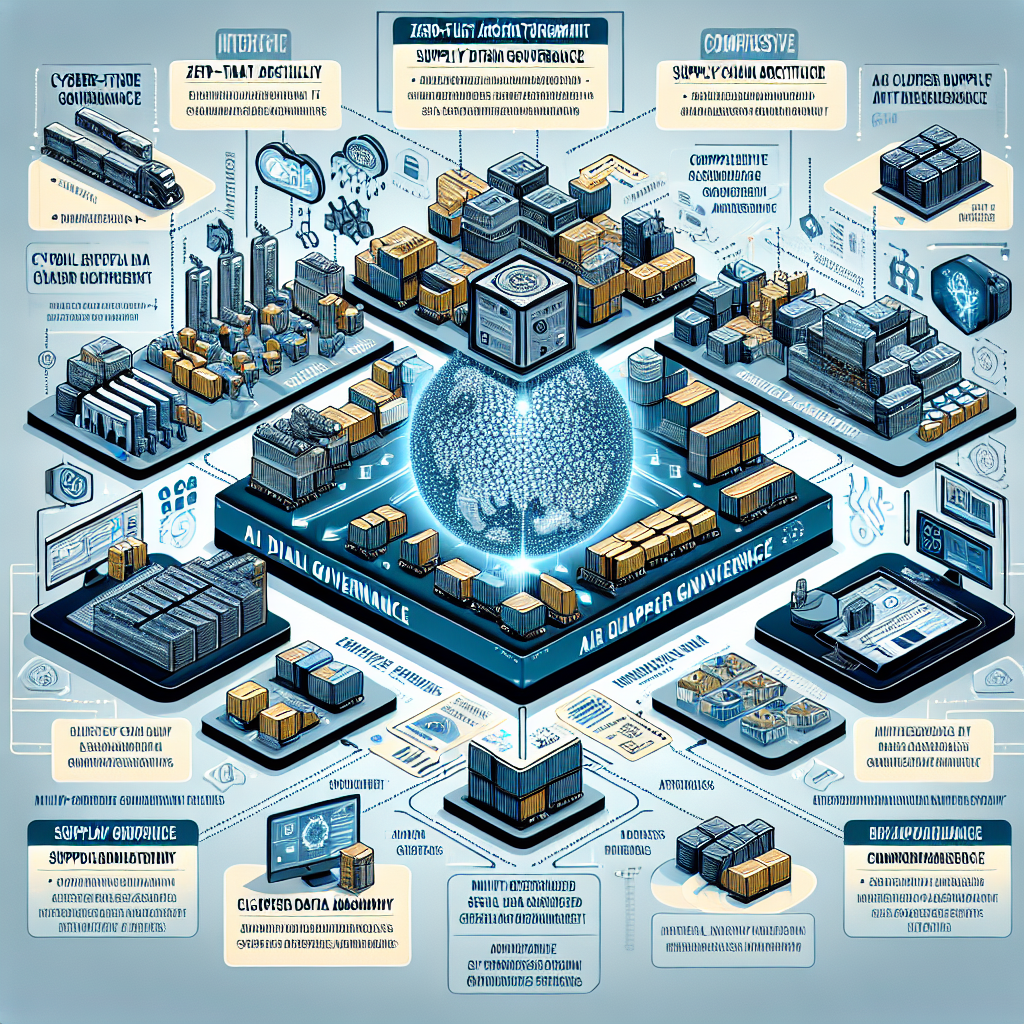
Cybersecurity is another serious concern — the more connected your warehouse becomes, the more attack surface you create. Edge nodes, AMRs, and IoT devices all need to be secured with the same rigor as your core IT systems. The National Institute of Standards and Technology (NIST) offers solid guidance on operational technology cybersecurity that’s worth reviewing before any major deployment.
Finally, the human element matters more than many technology-first narratives acknowledge. Workers need to be retrained, workflows need to be redesigned, and change management programs need to be well-funded. The best implementations treat people and robots as collaborative partners, not substitutes.
● Legacy systems and siloed data are common barriers to successful deployment
● Cybersecurity must be a first-class priority in any connected warehouse architecture
● Human change management is just as critical as the technology itself
Key Takeaways
The convergence of zero-touch logistics orchestration, warehouse edge computing, and autonomous mobile robots is fundamentally reshaping what’s possible in modern supply chains and smart factories. Here’s what to keep in mind as you think about your own operations:
● Zero-touch logistics orchestration eliminates manual handoffs and dramatically reduces operational errors at scale
● Warehouse edge computing provides the low-latency local intelligence that makes real-time robot coordination possible
● Autonomous mobile robots (AMR) are versatile, AI-powered workhorses that thrive in well-orchestrated, data-rich environments