





Supply chains have always been complex, but the emergence of agentic AI is turning that complexity into a competitive advantage. Unlike traditional automation tools that follow rigid scripts, autonomous AI agents can sense, reason, and act — making real-time decisions across procurement, logistics, and planning without waiting for a human to push a button. If you’re involved in supply chain management, buckle up, because this shift is bigger than anything we’ve seen since the ERP revolution.
What Is Agentic AI and Why Does It Matter for Supply Chains?
Agentic AI refers to AI systems that operate with a degree of autonomy, setting their own sub-goals and taking sequential actions to achieve a broader objective. In the context of AI in supply chain management, this means an agent might monitor inventory levels, detect a potential shortage, contact a supplier, negotiate a delivery window, and update the ERP system — all without a single human touchpoint.
Traditional AI tools were reactive and narrow. Agentic systems are proactive and cross-functional, capable of orchestrating decisions across entire supply chain ecosystems. That’s a fundamental change in how businesses can operate.
● Agentic AI acts autonomously across multiple systems and decisions
● It goes beyond prediction to actual execution of supply chain tasks
● Early adopters are already reporting significant reductions in cycle times
Autonomous Procurement Agents: The End of Manual Purchasing?
Autonomous procurement agents are software entities that handle sourcing, vendor evaluation, purchase order generation, and even contract negotiation with minimal human oversight. Companies like Coupa and Ivalua are already embedding agentic capabilities into their platforms, allowing procurement teams to shift from transactional work to strategic oversight.
A concrete example: a global electronics manufacturer recently piloted an autonomous procurement agent that monitored 200+ supplier feeds in real time. When a tier-2 supplier flagged a production delay, the agent automatically identified three alternative vendors, ran a cost-benefit comparison, and issued a contingency purchase order — all within 11 minutes. That same process previously took a procurement analyst two to three days.
The implications for cost savings and supply chain resilience are enormous. According to McKinsey, AI-driven procurement can reduce procurement costs by 3–10% and cut administrative burden by up to 40%.
● Autonomous agents can evaluate and act on supplier data in near real time
● Procurement cycle times can shrink from days to minutes
● Human teams shift from execution to strategy and exception management
AI-Powered Demand Forecasting and Continuous S&OP Planning
Smarter Forecasting with Cognitive Supply Chain Automation
AI-powered demand forecasting has evolved well beyond statistical models. Modern systems ingest structured data like POS and order history alongside unstructured signals such as social media sentiment, weather patterns, and geopolitical news to generate probabilistic demand forecasts. Cognitive supply chain automation platforms from vendors like o9 Solutions and Blue Yonder are leading this charge.
What makes this powerful is the connection to continuous S&OP planning. Traditionally, Sales and Operations Planning happened in monthly cycles — a cadence that’s simply too slow for today’s volatile markets. Agentic AI enables a rolling, always-on S&OP process where plans are recalibrated daily or even hourly based on incoming signals.
Supply Chain Digital Twins Powering Real-Time Decisions
Supply chain digital twins take this a step further by creating a live virtual replica of your entire supply chain network. These twins allow planners and AI agents alike to simulate disruptions, test scenarios, and deploy responses before committing real resources. Gartner predicts that by the mid-2020s, more than half of large global manufacturers will have deployed digital twins in some form.
When paired with agentic AI, digital twins become dynamic decision engines rather than passive dashboards. An agent can run thousands of simulations per hour inside the twin and surface the optimal response to a distribution center closure or a demand spike.
● AI forecasting integrates diverse data signals for higher accuracy
● Continuous S&OP replaces slow monthly cycles with always-on planning
● Digital twins enable risk-free scenario testing before real-world execution
Generative AI for Logistics and Last-Mile Innovation
Generative AI for logistics is opening up new possibilities in route optimization, carrier communication, and documentation management. Tools built on large language models can draft freight contracts, generate customs documentation, and even negotiate spot rates with carriers through natural language interfaces.
On the operational side, generative AI models are being used to synthesize complex logistics data and produce plain-language exception reports for dispatchers and managers. Instead of digging through dashboards, a logistics manager can simply ask, “What’s causing the delay on the Dallas corridor today?” and receive a synthesized, actionable answer in seconds.
Companies like Flexport are embedding generative AI directly into freight visibility platforms, giving shippers natural language access to shipment data, carrier performance metrics, and proactive delay alerts.
● Generative AI automates complex logistics documentation and communication
● Natural language interfaces reduce the learning curve for operational teams
● AI-driven route optimization cuts fuel costs and improves delivery reliability
Predictive Maintenance for Fleet and IoT Integration
Predictive maintenance for fleet operations is one of the highest-ROI applications of AI in physical supply chains. By connecting vehicle telematics, engine sensor data, and historical maintenance records through IoT platforms, AI agents can predict component failures before they cause unplanned downtime. A failed truck in the middle of a delivery run doesn’t just cost repair money — it cascades into missed SLAs, spoiled goods, and strained customer relationships.
Caterpillar’s Cat Connect platform is a well-known example, using machine sensor data to predict equipment failures with accuracy rates exceeding 90% in controlled environments. For logistics fleets, similar approaches are being deployed by companies like Samsara and Geotab, which combine IoT sensor feeds with AI models to surface maintenance alerts days before a breakdown would occur.
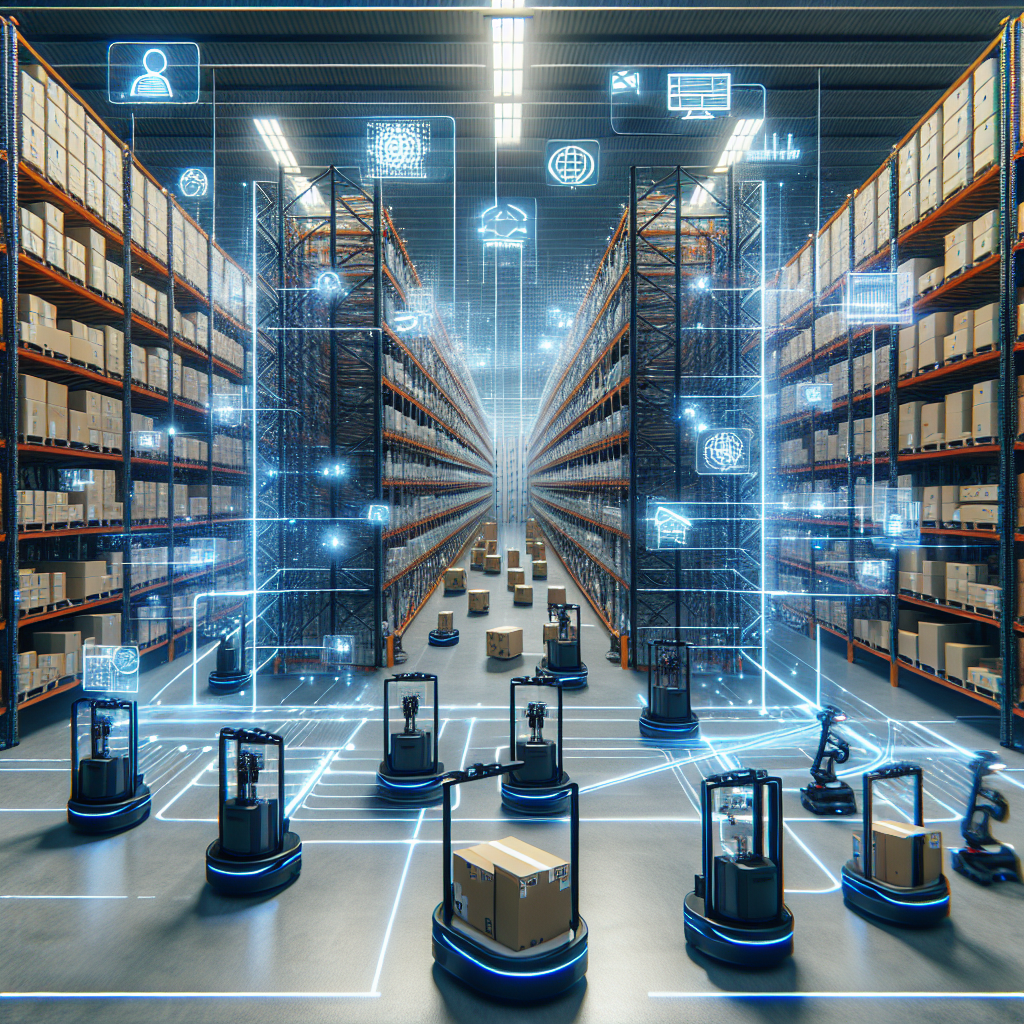
When these predictive signals are fed into an agentic supply chain system, the AI can automatically schedule service appointments, reroute loads to healthy vehicles, and update delivery windows in the TMS — closing the loop from prediction to action without human intervention.
● IoT sensors combined with AI enable proactive rather than reactive fleet maintenance
● Predictive accuracy rates above 90% are achievable with mature platforms
● Agentic systems close the loop by acting on maintenance signals automatically
Challenges and Human-in-the-Loop Considerations
For all the promise of agentic AI in supply chain operations, there are real challenges to address. Data quality remains a persistent barrier — agents are only as good as the signals they receive, and many supply chains still run on fragmented, siloed data systems. Before deploying autonomous agents, companies need clean, integrated data pipelines.
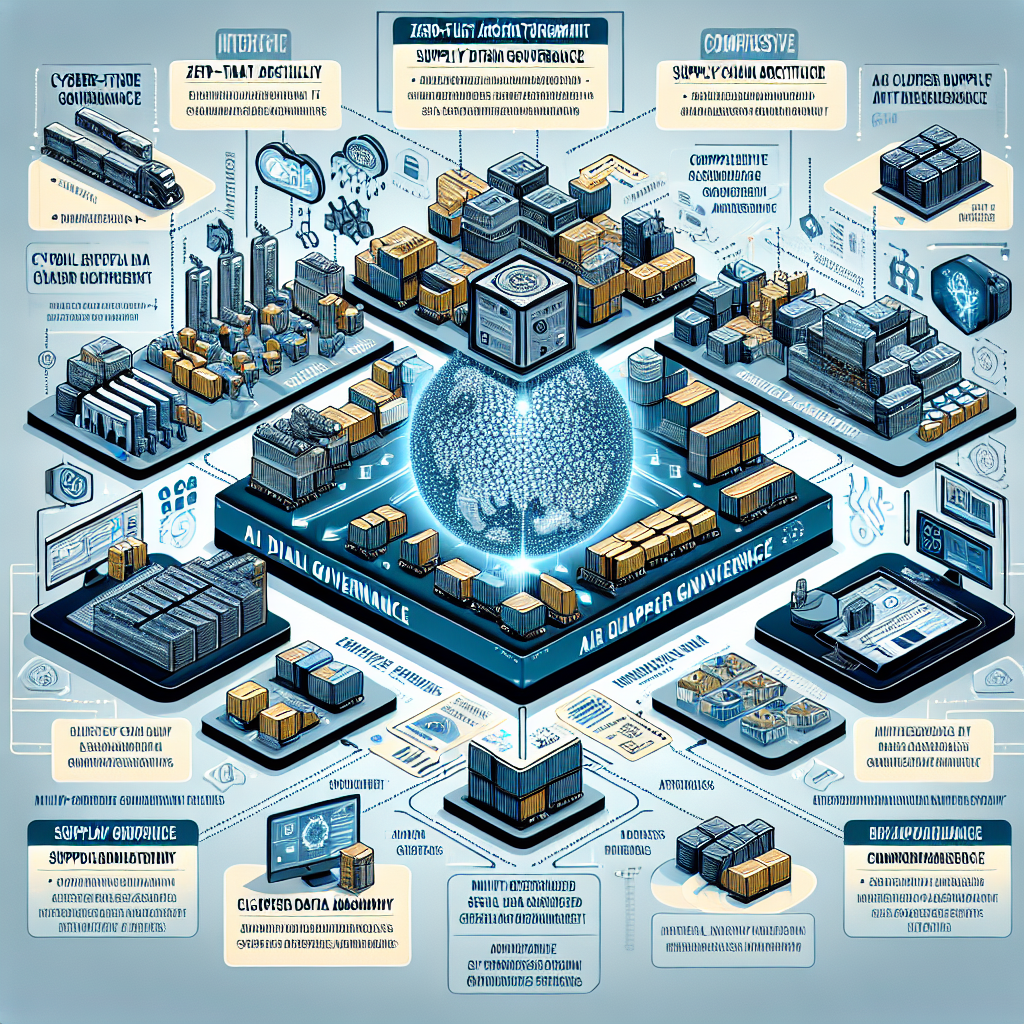
There’s also the question of trust and governance. Fully autonomous decisions carry risk, especially in high-stakes procurement or compliance-sensitive logistics contexts. Most organizations are wisely adopting a human-in-the-loop model, where agents handle routine decisions autonomously but escalate exceptions to human operators for review.
Building that trust incrementally — starting with lower-risk use cases and expanding as confidence grows — is the playbook most successful implementations follow.
● Data quality and integration are prerequisites for effective agentic AI
● Human-in-the-loop models balance autonomy with appropriate oversight
● Incremental deployment reduces risk and builds organizational confidence
Key Takeaways
Agentic AI is not a distant future concept — it’s actively reshaping how supply chains procure, plan, move, and maintain. Organizations that embrace these technologies thoughtfully will gain durable advantages in cost, resilience, and responsiveness. Here’s what to keep in mind:
● Agentic AI enables end-to-end autonomous decision-making across procurement, logistics, and S&OP
● Autonomous procurement agents can compress multi-day processes into minutes, with measurable cost savings
● Supply chain digital twins and continuous S&OP create a real-time planning capability that replaces outdated monthly cycles
● Predictive maintenance for fleet using IoT data dramatically reduces unplanned downtime and cascading disruptions
● Success depends on data quality, governance frameworks, and a phased human-in-the-loop deployment strategy
Want to dive deeper into the tools, platforms, and strategies transforming modern supply chains? Head over to BestInSupplies.com for expert guides, product reviews, and practical insights on everything from procurement technology to logistics innovation. There’s a lot more to explore — and your next supply chain breakthrough might just be one article away.