







The New Era of Supply Chain Security
In today’s interconnected business landscape, supply chains have become complex digital ecosystems spanning multiple enterprises, continents, and technology platforms. As organizations embrace digital transformation, the need for robust AI governance in supply chain operations and cyber-resilience in logistics has never been more critical. The convergence of artificial intelligence and zero-trust supply chain architecture is reshaping how enterprises protect their most valuable asset: data flowing through their supply networks.
This blog post explores how forward-thinking organizations are building resilient supply chain architecture design that combines the power of AI with the security principles of zero-trust frameworks. Whether you’re a supply chain professional, IT leader, or business strategist, understanding these concepts will help you navigate the complex world of modern supply chain management.
Understanding Zero-Trust Supply Chain Architecture
The traditional approach to supply chain security relied on perimeter defenses—trusting everything inside the network while keeping threats outside. However, this model falls short in today’s multi-enterprise supply chain networks where data constantly moves between partners, suppliers, and service providers. Zero-trust supply chain architecture operates on a simple principle: never trust, always verify.
In a zero-trust environment, every access request, data transaction, and system interaction is authenticated and authorized, regardless of its origin. This approach is particularly crucial for digital supply chain architecture, where cloud supply chain architecture enables seamless collaboration but also introduces new vulnerabilities. By implementing supply chain identity and access management protocols, organizations ensure that only authorized users and systems can access sensitive supply chain data.
Core Principles of Zero-Trust in Supply Chains
Implementing zero-trust principles requires a fundamental shift in how we think about enterprise supply chain architecture. First, organizations must assume breach—designing systems that limit damage even when security perimeters are compromised. Second, verify explicitly by using all available data points to authenticate and authorize access. Third, apply least-privilege access, ensuring users and systems have only the permissions they absolutely need.
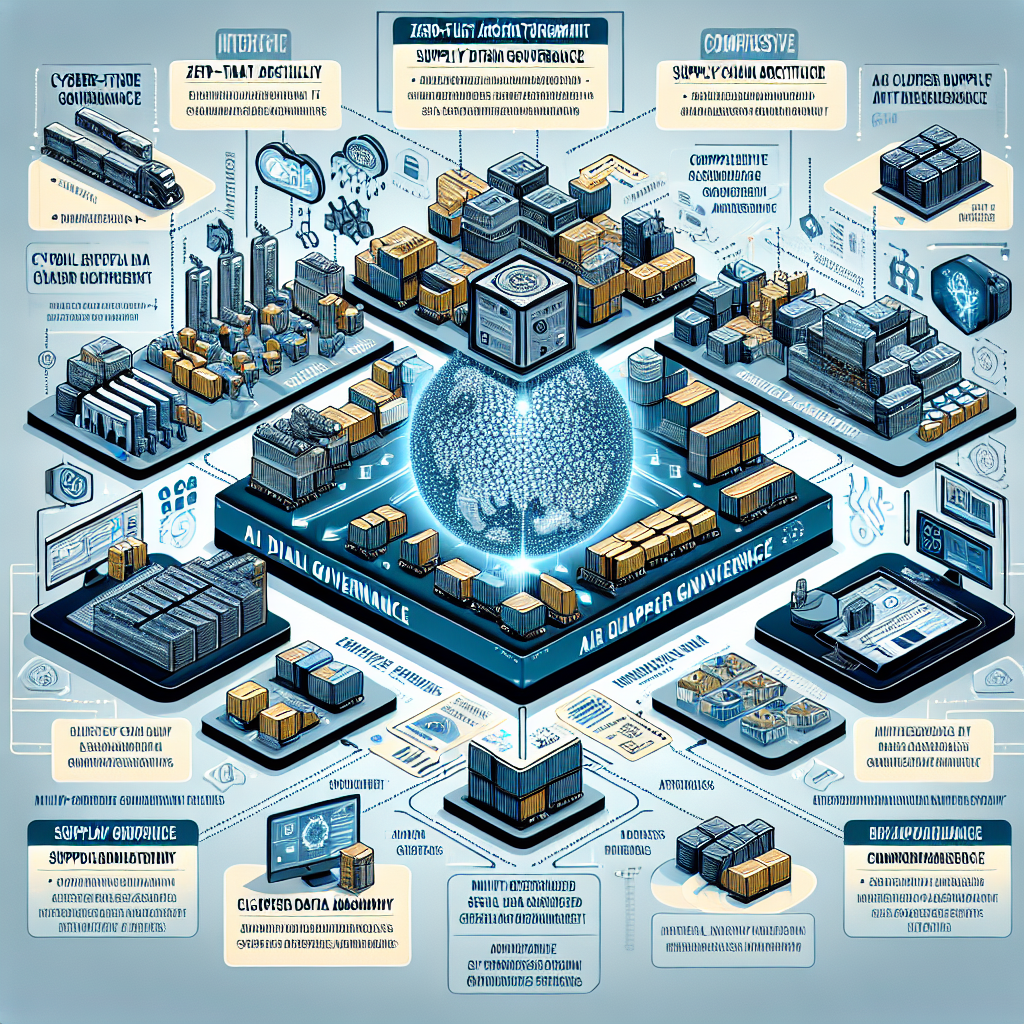
These principles extend naturally to secure data sharing in supply chain networks, where master data management supply chain practices ensure that sensitive information is protected while remaining accessible to authorized stakeholders. The combination of zero-trust architecture and proper supply chain data governance creates a robust foundation for cyber-resilience in logistics operations.
AI Governance: The Intelligence Behind Resilient Supply Chains
Artificial intelligence is revolutionizing supply chain operations, from demand forecasting to route optimization and inventory management. However, without proper AI governance in supply chain systems, these powerful tools can introduce new risks and compliance challenges. AI governance frameworks establish the policies, processes, and controls needed to ensure AI systems operate ethically, transparently, and securely.
Effective supply chain IT governance incorporates AI oversight into broader technology management practices. This includes establishing clear accountability for AI decisions, implementing supplier data governance protocols that protect sensitive information used to train AI models, and ensuring supply chain auditability across all AI-driven processes. Organizations must be able to explain how their AI systems make decisions, especially when those decisions impact inventory levels, supplier selection, or logistics routes.
Ensuring Transparency and Compliance
One critical aspect of AI governance involves data lineage in supply chain systems—understanding where data comes from, how it’s transformed, and how it flows through various processes. This transparency is essential for regulatory compliance in global supply chains, where different jurisdictions may have varying requirements for data privacy, security, and AI usage.
A comprehensive supply chain compliance framework addresses these challenges by integrating AI governance with existing risk governance frameworks in logistics. This approach ensures that AI innovations enhance rather than compromise supply chain security and compliance. Organizations implementing these frameworks can confidently leverage AI while maintaining the trust of customers, partners, and regulators.