







Zero-touch logistics orchestration is no longer a futuristic concept — it is the operational backbone of today’s most competitive manufacturing and distribution environments. By combining autonomous mobile robots (AMR), real-time warehouse edge computing, and seamless Industry 4.0 smart factory integration, enterprises are eliminating manual bottlenecks and achieving unprecedented throughput. This blog explores how these converging technologies are reshaping modern supply chains.
What Is Zero-Touch Logistics Orchestration?
Zero-touch logistics orchestration refers to the end-to-end automation of material movement, inventory tracking, and order fulfillment — executed with minimal or no human intervention. It relies on interconnected systems that sense, decide, and act in real time across the entire facility floor.
This paradigm shift is driven by labor shortages, rising customer expectations, and the need for continuous operational resilience. According to McKinsey & Company, warehouses that adopt full automation can reduce operational costs by up to 65% while improving order accuracy to near-perfect levels.
Eliminates manual touchpoints across receiving, putaway, picking, and shipping
Integrates sensors, AI, and robotics into a single orchestration layer
Enables 24/7 operations without performance degradation
The Role of Autonomous Mobile Robots (AMR) in Smart Factories
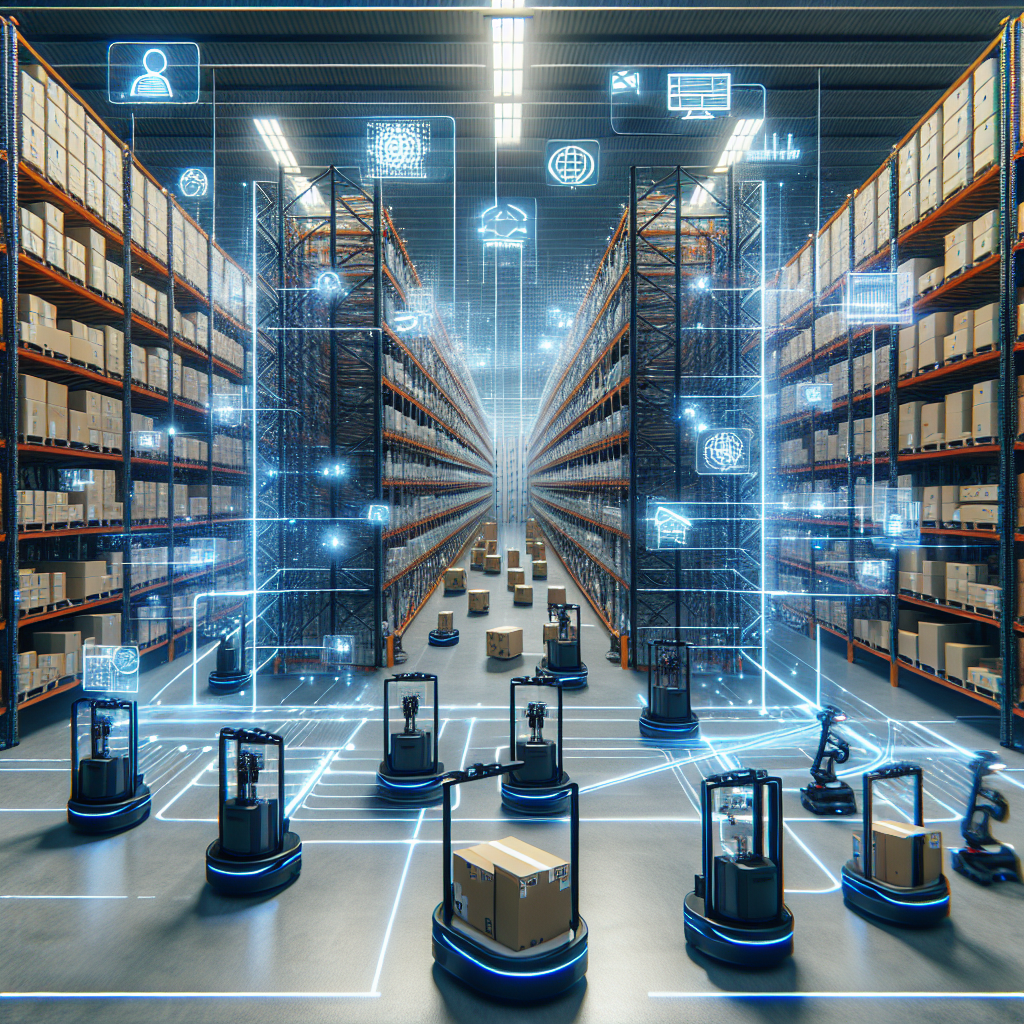
Autonomous mobile robots (AMR) are the physical agents that make zero-touch logistics orchestration tangible. Unlike traditional Automated Guided Vehicles (AGVs), AMRs use onboard LiDAR, computer vision, and AI-driven path planning to navigate dynamically changing warehouse environments without fixed infrastructure.
Companies like Amazon Robotics and 6 River Systems have demonstrated that deploying AMR fleets can increase pick rates by 2–3x while reducing the footprint required for storage operations. In a notable deployment at a Walmart fulfillment center, AMR integration reduced order cycle times by 40%, directly improving same-day delivery capability.
For Industry 4.0 smart factory integration, AMRs serve as mobile data nodes, continuously feeding location, inventory, and performance telemetry back to central orchestration platforms. This creates a live digital twin of operations that management systems can act upon in milliseconds.
AMRs adapt dynamically to obstacles, unlike rigid AGV systems
They function as mobile IoT endpoints, enriching operational data streams
Fleet sizes can scale elastically based on demand cycles
Warehouse Edge Computing: The Intelligence Layer Powering Real-Time Decisions
Warehouse edge computing places processing power at or near the point of data generation — on robots, conveyor systems, dock doors, and shelving units — rather than relying solely on centralized cloud infrastructure. This architecture reduces latency from hundreds of milliseconds to under 10 milliseconds, which is critical for real-time AMR coordination.
According to Gartner, by 2025 over 75% of enterprise-generated data will be processed at the edge rather than in centralized data centers. In logistics, edge nodes handle tasks like barcode and RFID decoding, collision avoidance computation, and dynamic slotting recommendations — all without a round-trip to the cloud.
Edge computing also enhances system resilience. If a cloud connection drops, edge-enabled AMRs and warehouse management subsystems continue operating autonomously, preventing costly shutdowns during peak periods such as holiday fulfillment seasons.
Reduces decision latency to sub-10ms for time-critical robotics coordination
Maintains operational continuity during network interruptions
Processes sensitive inventory and customer data locally for compliance advantages
Industry 4.0 Smart Factory Integration: Connecting Every Node
True Industry 4.0 smart factory integration requires that AMRs, edge nodes, warehouse management systems (WMS), enterprise resource planning (ERP) platforms, and supplier networks all communicate through standardized protocols such as OPC-UA and MQTT. This integration fabric transforms isolated automation islands into a unified, self-optimizing operation.
A practical example is the smart factory deployment by Siemens at its Amberg Electronics Plant, where over 75% of the value chain is digitally integrated. The facility achieves a defect rate of fewer than 12 parts per million, a benchmark enabled by the continuous feedback loops between physical operations and digital systems.
On BestInSupplies.com, we cover solutions that bridge these integration gaps — from middleware platforms to AMR fleet management tools — helping procurement teams and operations managers select components that work cohesively within their existing technology stacks.
Standardized protocols (OPC-UA, MQTT) are foundational for cross-system interoperability
Digital twins enable predictive maintenance and scenario planning across the factory floor
ERP and WMS integration ensures inventory accuracy flows bidirectionally in real time
Key Takeaways
Zero-touch logistics orchestration removes human bottlenecks by automating sensing, decision-making, and physical execution across the supply chain
Autonomous mobile robots (AMR) deliver measurable gains — 2–3x pick rate improvements — and serve as mobile IoT data sources for continuous operational intelligence
Warehouse edge computing provides the sub-10ms latency required for real-time AMR coordination while ensuring resilience during cloud outages
Successful Industry 4.0 smart factory integration depends on standardized communication protocols connecting every system from shop floor to ERP
Organizations that invest in these converging technologies today are positioning themselves for compounding competitive advantages in cost, speed, and accuracy
Ready to explore the tools and technologies powering zero-touch logistics orchestration in your facility? Visit BestInSupplies.com.