







Zero-touch logistics orchestration is no longer a futuristic concept — it is rapidly becoming the operational backbone of modern manufacturing and distribution. By combining autonomous mobile robots (AMRs) with real-time warehouse edge computing, facilities are achieving levels of speed, accuracy, and efficiency that were impossible just five years ago.
This post explores how these converging technologies are reshaping Industry 4.0 smart factory integration and what supply chain professionals need to know to stay competitive.
Zero-touch logistics reduces manual intervention across the supply chain lifecycle.
AMRs and edge computing form the core technology stack of next-generation warehouses.
Early adopters are reporting measurable gains in throughput, safety, and cost reduction.
What Is Zero-Touch Logistics Orchestration?
Zero-touch logistics orchestration refers to the automated coordination of goods movement, inventory management, and order fulfillment with minimal or no human intervention. It relies on a tightly integrated ecosystem of sensors, software platforms, and intelligent hardware to execute decisions in real time.
According to a McKinsey & Company report, warehouses that deploy end-to-end automation can reduce operational costs by up to 65% while improving order accuracy to near-perfect levels. This is the promise that zero-touch logistics orchestration delivers at scale.
Orchestration platforms unify AMRs, conveyors, and WMS systems into a single control layer.
Real-time decision-making replaces batch-processing workflows that slow fulfillment cycles.
Human roles shift from manual execution to strategic oversight and exception handling.
The Role of Autonomous Mobile Robots in Smart Warehouses
How AMRs Enable Continuous Material Flow
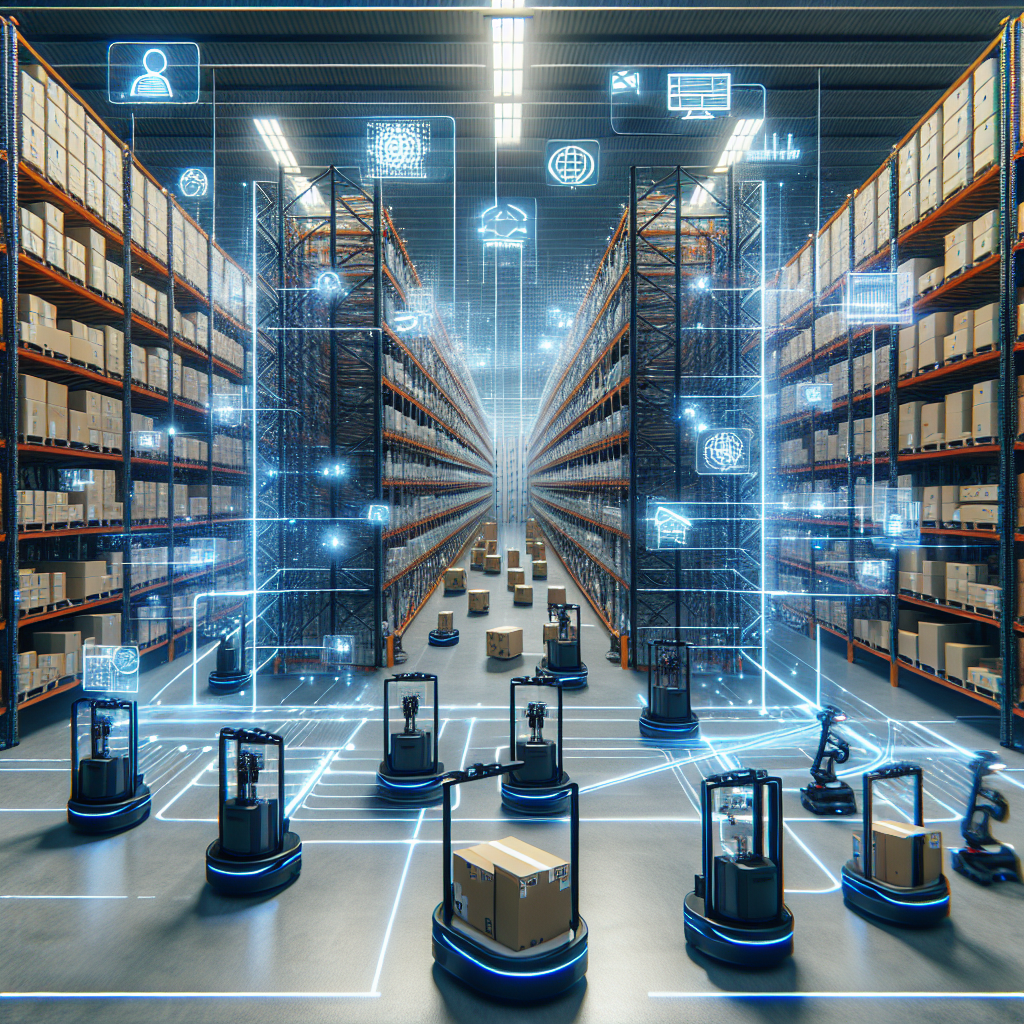
Autonomous mobile robots (AMRs) are self-navigating machines that transport goods across warehouse floors without fixed tracks or manual guidance. Unlike their predecessors — automated guided vehicles (AGVs) — AMRs use onboard LiDAR, cameras, and AI-driven path planning to adapt dynamically to changing environments.
Amazon Robotics, for example, deploys over 750,000 AMR units globally, enabling its fulfillment centers to process millions of items per day with dramatically reduced pick-and-pack cycle times. In a typical deployment, AMRs can reduce the distance warehouse associates travel on foot by up to 70%, directly improving throughput and reducing injury rates.
AMRs integrate with warehouse management systems (WMS) via open APIs for seamless task assignment.
Fleets of AMRs can be scaled up or down rapidly to match seasonal demand surges.
Modern AMRs offer battery hot-swapping or autonomous charging to maintain near-100% uptime.
Warehouse Edge Computing: The Intelligence Behind Real-Time Decisions
Why Latency Kills Logistics Efficiency
Warehouse edge computing brings computational power physically close to where data is generated — on the warehouse floor — rather than relying on distant cloud servers. This proximity reduces data round-trip latency from hundreds of milliseconds to single-digit milliseconds, a critical requirement when coordinating dozens or hundreds of AMRs simultaneously.
A concrete example is DHL’s Smart Warehouse initiative, which deployed edge computing nodes throughout its facilities to process data from over 1,000 IoT sensors and AMR units in real time. The result was a 25% improvement in picking efficiency and a significant reduction in fleet collision incidents. Explore warehouse technology solutions at BestInSupplies.com to see how edge-enabled hardware supports these outcomes.
Edge nodes process AMR telemetry, sensor feeds, and inventory data locally without cloud dependency.
Low-latency decision loops are essential for dynamic obstacle avoidance and traffic management.
Edge computing also enhances cybersecurity by limiting the volume of sensitive data transmitted externally.
Industry 4.0 Smart Factory Integration: Connecting Every Layer
From Shop Floor to ERP: A Unified Data Architecture
True Industry 4.0 smart factory integration means creating a seamless data flow between operational technology (OT) — machines, robots, sensors — and information technology (IT) systems like ERP and supply chain management platforms. Zero-touch logistics orchestration serves as the connective tissue that makes this integration actionable.
Bosch’s smart factory in Homburg, Germany, is a well-documented case study in full-stack Industry 4.0 integration. By connecting AMRs, CNC machines, and edge computing infrastructure through a unified industrial IoT platform, Bosch reduced machine downtime by 10% and cut logistics overhead by approximately 30% within the first year of deployment. Learn more from Bosch’s official smart factory documentation.
OT-IT convergence enables predictive maintenance triggers that prevent unplanned downtime.
Unified data models allow AMR task queues to respond dynamically to ERP demand signals.
Digital twin environments, fed by edge data, allow simulation of logistics changes before deployment.
Key Takeaways
Zero-touch logistics orchestration automates end-to-end material flow, dramatically cutting costs and error rates.
Autonomous mobile robots (AMRs) are the physical execution layer that enables continuous, scalable goods movement.
Warehouse edge computing provides the low-latency intelligence required to coordinate complex robotic fleets in real time.
Industry 4.0 smart factory integration connects shop-floor automation with enterprise systems for holistic operational visibility.
Organizations that invest in these technologies now are building a durable competitive advantage in the supply chain economy.
For more expert insights on AMR solutions, warehouse edge hardware, and smart factory tools, visit BestInSupplies.com and explore our curated resources for supply chain professionals ready to lead the Industry 4.0 transformation.