






The factory floor is undergoing a quiet revolution — one driven not by human hands, but by intelligent machines, real-time data, and seamlessly connected systems. Zero-touch logistics orchestration is emerging as the defining operational model for forward-thinking manufacturers and distributors who need speed, accuracy, and scalability without adding labor overhead. At BestInSupplies.com, we explore how the convergence of autonomous mobile robots (AMR) and warehouse edge computing is reshaping the way smart factories source, move, and manage supplies.
What Is Zero-Touch Logistics Orchestration?
Zero-touch logistics orchestration refers to the end-to-end automation of supply chain tasks — from inventory replenishment to order fulfillment — with minimal or no human intervention at the operational level. It relies on interconnected systems that communicate, decide, and act in real time, eliminating manual touchpoints that traditionally slow down or introduce error into supply workflows.
This model is made possible by the maturation of several converging technologies: AI-driven decision engines, cloud-connected robotics, and distributed edge computing nodes that process data at the source rather than relying on distant servers. The result is a logistics environment that is self-correcting, adaptive, and continuously optimized.
● Zero-touch logistics orchestration removes manual bottlenecks across receiving, picking, and replenishment cycles
● It relies on AI, robotics, and real-time data integration to function autonomously
● The model is scalable and particularly well-suited for high-throughput manufacturing environments
The Role of Autonomous Mobile Robots (AMR) in Smart Factory Supply Chains
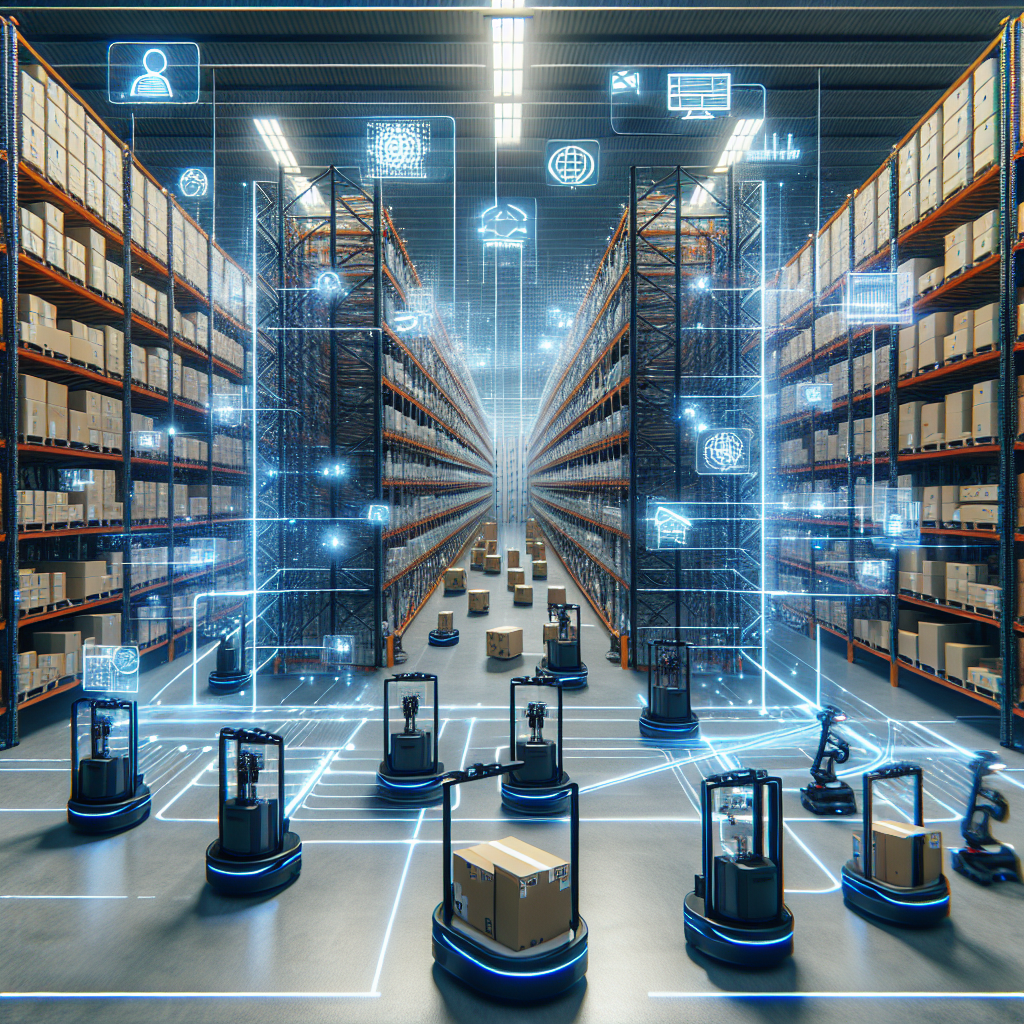
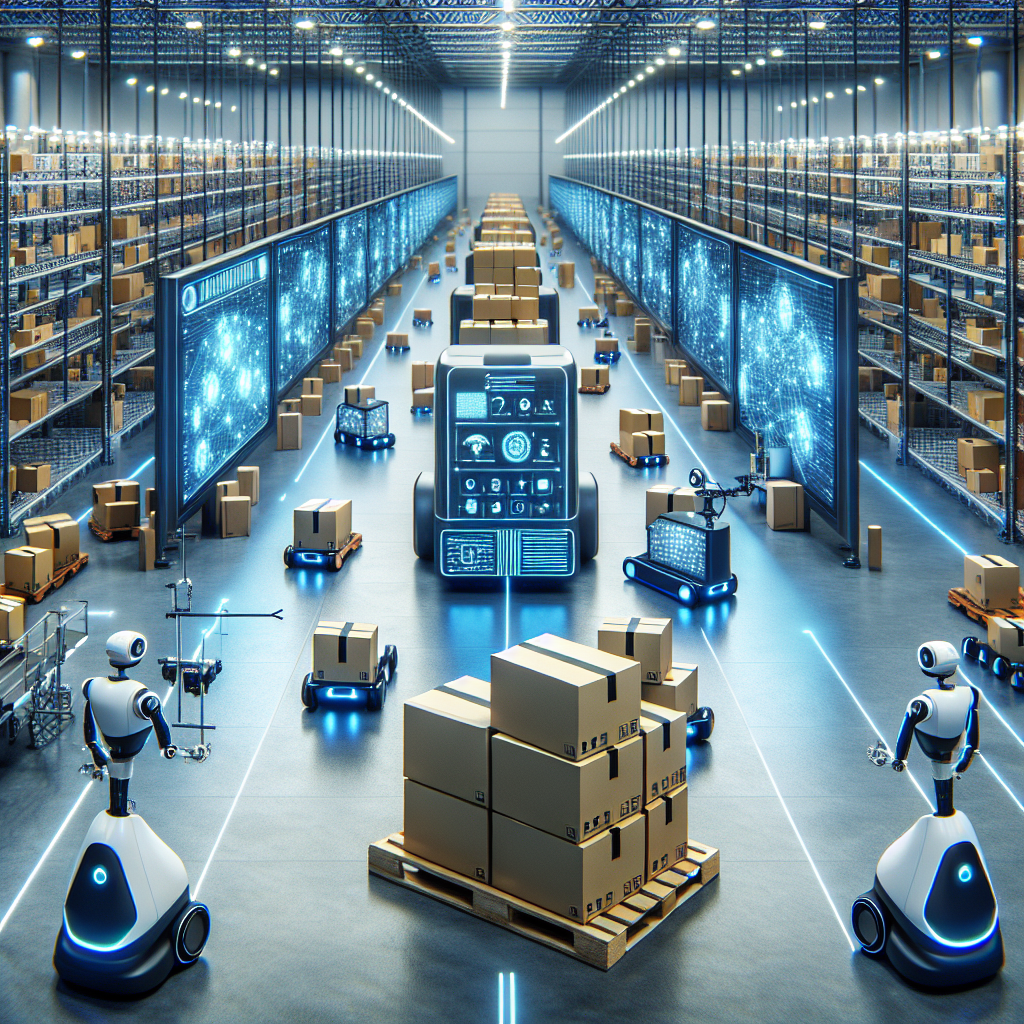
Autonomous mobile robots AMR have become the physical backbone of zero-touch logistics environments. Unlike traditional automated guided vehicles (AGVs), AMRs use onboard sensors, LiDAR, and machine learning algorithms to navigate dynamically — adapting to real-time obstacles, shifting floor layouts, and changing task priorities without reprogramming.
A concrete example of AMR impact can be found at BMW’s manufacturing facilities, where fleets of AMRs autonomously transport components between assembly stations, reducing intra-facility transit times by up to 30% and virtually eliminating mis-picks. Similarly, Amazon Robotics deploys over 750,000 AMR units globally to orchestrate inventory movement across fulfillment centers, processing millions of units daily with near-zero manual intervention.
For smart factory supplies specifically, AMRs enable just-in-time replenishment of tooling, consumables, and raw materials directly to production cells — a capability that reduces buffer inventory and frees up valuable floor space. Learn more about smart factory supply solutions at BestInSupplies.com.
● Autonomous mobile robots AMR navigate dynamically without fixed tracks or manual reprogramming
● Real-world deployments at BMW and Amazon demonstrate measurable throughput and accuracy gains
● AMRs enable just-in-time supply delivery directly to production points on the factory floor
Warehouse Edge Computing: The Intelligence Behind Real-Time Decisions
Warehouse edge computing brings computational power to the point of action — processing sensor data, robot telemetry, and inventory signals locally rather than routing them to centralized cloud servers. This dramatically reduces latency, which is critical when AMRs need sub-millisecond response times to avoid collisions or reroute around unexpected obstacles.
According to a 2023 report by Gartner, over 75% of enterprise-generated data will be processed outside of centralized data centers by 2025, with warehouses and factories representing a significant share of that edge workload. Warehouse edge computing platforms from providers like Intel and Cisco are already deployed in facilities to manage real-time robotics coordination, computer vision quality checks, and predictive maintenance alerts simultaneously.
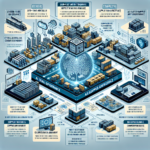
Edge nodes in a smart warehouse can also serve as local orchestration hubs, receiving task assignments from a central warehouse management system (WMS) and distributing them in real time to AMR fleets, conveyor systems, and pick stations — all without cloud round-trip delays. This architecture is what enables true zero-touch logistics orchestration at scale.
● Warehouse edge computing reduces latency by processing data locally at the point of operation
● Edge nodes act as real-time orchestration hubs for AMR fleets and automated subsystems
● Major technology providers are actively deploying edge platforms in manufacturing and distribution environments
Industry 4.0 Smart Factory Integration: Connecting the Ecosystem
Industry 4.0 smart factory integration is the overarching framework that ties AMRs, edge computing, and logistics orchestration into a unified operational ecosystem. It encompasses the digital thread connecting ERP systems, manufacturing execution systems (MES), IoT sensors, and robotic platforms — ensuring data flows bidirectionally and decisions are made with full operational context.
Siemens’ Amberg Electronics Plant is a widely cited benchmark for Industry 4.0 smart factory integration, achieving a 99.9988% product quality rate by connecting over 1,000 data points per device across its production line. The plant’s supply management operates with a high degree of automation, with components routed, tracked, and replenished through interconnected digital systems that leave little room for human error.
For procurement and operations leaders sourcing industrial supplies, this level of integration means that supply orders can be automatically triggered by machine consumption data, delivered by AMRs, and logged in real time — all without a single manual entry. Explore Industry 4.0-ready industrial supplies at BestInSupplies.com to align your procurement strategy with smart factory demands.
● Industry 4.0 smart factory integration connects ERP, MES, IoT, and robotics into a unified data ecosystem
● Siemens’ Amberg plant demonstrates near-perfect quality outcomes through deep system integration
● Automated supply triggering based on real-time machine consumption eliminates manual reorder processes
Implementing Zero-Touch Logistics: Practical Considerations for Smart Factory Operators
Starting with a Connected Infrastructure Foundation
Before deploying AMRs or edge computing nodes, facility operators must ensure their underlying infrastructure supports high-bandwidth, low-latency connectivity — typically through private 5G or Wi-Fi 6E networks. Without a reliable communication layer, real-time orchestration breaks down and the benefits of automation are significantly diminished.
Choosing the Right AMR Platform for Your Supply Workflow
Not all autonomous mobile robots AMR platforms are designed for the same use case — some specialize in pallet transport, others in bin-level picking or tote movement. Matching AMR capabilities to your specific supply workflow requirements (weight, speed, floor environment, and integration APIs) is essential for a successful deployment.
Scaling Edge Computing Alongside Operational Growth
Warehouse edge computing deployments should be architected for modular scalability, allowing additional edge nodes to be provisioned as AMR fleets expand or new production lines come online. Partnering with vendors who offer open, standards-based platforms ensures long-term flexibility and avoids costly proprietary lock-in.
● A reliable 5G or Wi-Fi 6E network is a prerequisite for effective zero-touch logistics orchestration
● AMR platform selection must align with specific supply workflow requirements and integration needs
● Modular, standards-based edge computing architectures support long-term scalability
Key Takeaways
Zero-touch logistics orchestration, powered by autonomous mobile robots AMR and warehouse edge computing, is no longer a futuristic concept — it is an actively deployed operational model delivering measurable results across global manufacturing and distribution facilities. Industry 4.0 smart factory integration provides the connective tissue that makes these systems work in harmony, enabling fully automated supply chains that are faster, more accurate, and more cost-efficient than their manual predecessors.
● Zero-touch logistics orchestration eliminates manual supply chain touchpoints through AI, robotics, and real-time data
● Autonomous mobile robots AMR deliver dynamic, adaptive material movement across smart factory environments
● Warehouse edge computing enables sub-millisecond decision-making at the point of operation
● Industry 4.0 smart factory integration connects all systems into a unified, self-optimizing ecosystem
● Successful implementation requires strong connectivity infrastructure, matched AMR platforms, and scalable edge architecture
Ready to equip your facility for the era of intelligent supply management? Visit BestInSupplies.com to explore our full range of smart factory supplies, industrial automation components, and expert resources designed to support your Industry 4.0 journey.