

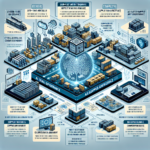





What Is Zero-Touch Logistics Orchestration?
Zero-touch logistics orchestration refers to the seamless, automated coordination of warehouse and supply chain operations with minimal or no human intervention at the execution level. By combining autonomous mobile robots (AMRs), real-time data processing, and intelligent software platforms, facilities can move goods from receiving to shipping with unprecedented speed and accuracy. This approach is rapidly becoming the operational backbone of the modern Industry 4.0 smart factory.
As supply chains grow more complex and customer expectations for rapid fulfillment intensify, manufacturers and distributors are turning to zero-touch logistics orchestration to stay competitive. The model eliminates manual touchpoints that typically introduce errors, delays, and labor costs. The result is a leaner, faster, and more resilient operation built for the demands of today’s global commerce.
● Zero-touch orchestration minimizes human intervention at every execution stage
● It integrates robotics, software, and data to create end-to-end automation
● It is a foundational strategy for competitive, modern warehouse operations
The Role of Autonomous Mobile Robots (AMRs) in Smart Warehouses
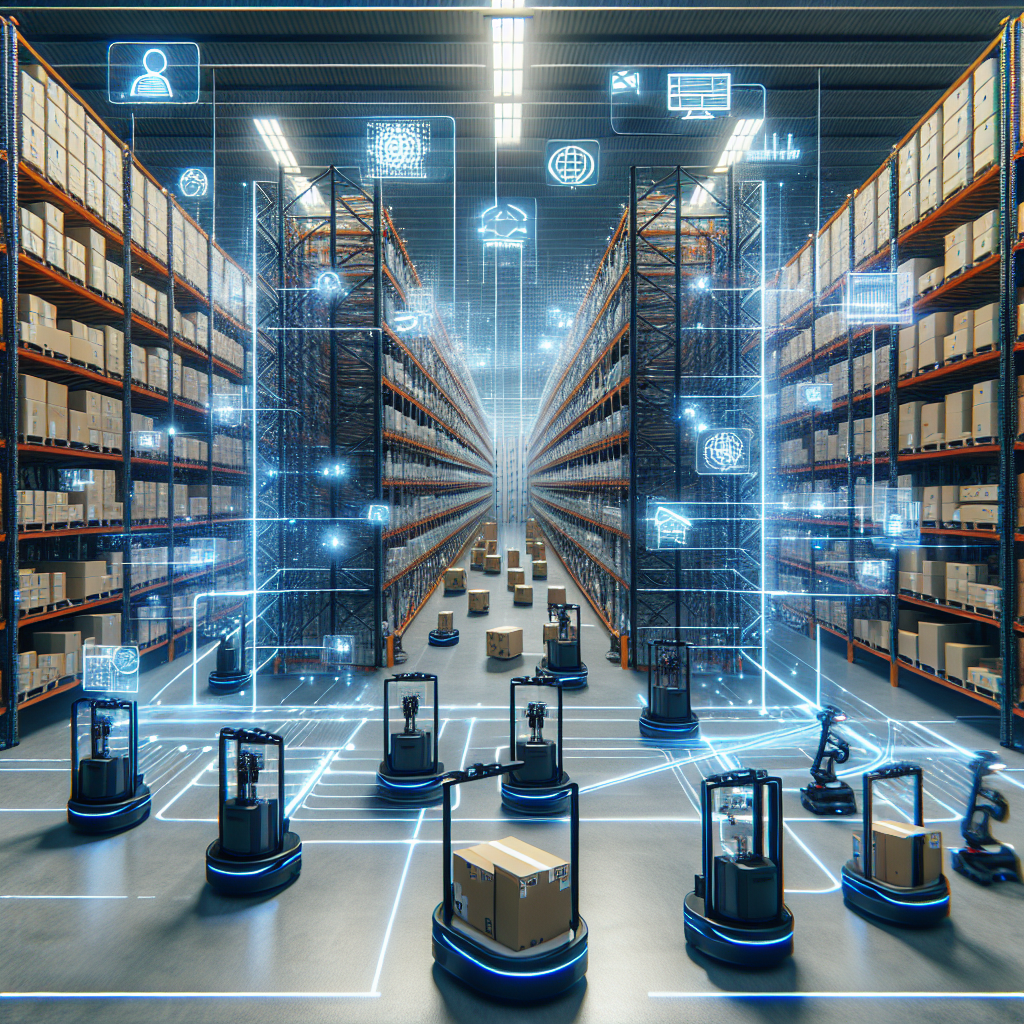
Autonomous mobile robots (AMRs) are at the physical core of zero-touch logistics orchestration, navigating warehouse floors dynamically using onboard sensors, LiDAR, and AI-powered mapping. Unlike their predecessors—fixed Automated Guided Vehicles (AGVs)—AMRs adapt in real time to changing environments, rerouting around obstacles and reprioritizing tasks without operator input. According to a Mordor Intelligence report, the global AMR market is projected to exceed $14 billion by 2029, underscoring their accelerating adoption across industries.
Leading companies like Amazon Robotics and Locus Robotics have deployed fleets of autonomous mobile robots (AMRs) that handle thousands of picks per hour, dramatically outpacing manual labor while reducing error rates to near zero. In a notable case, DHL Supply Chain reported a 2.5x improvement in productivity after deploying AMR fleets across several of its North American distribution centers. These robots communicate with warehouse management systems (WMS) in real time, ensuring that inventory data is always current and tasks are dynamically reassigned based on shifting priorities.
● AMRs navigate dynamically and adapt to real-time warehouse conditions
● Top companies report 2–3x productivity gains from AMR deployments
● Real-time WMS integration keeps inventory data accurate and tasks optimized
Warehouse Edge Computing: The Intelligence Behind the Automation
Warehouse edge computing is the technology layer that makes zero-touch logistics orchestration truly viable at scale. Rather than routing all sensor and robot data to a centralized cloud server—which introduces latency—edge computing processes data locally, at or near the source. This means AMRs receive routing instructions, collision-avoidance updates, and task reassignments in milliseconds, which is critical in a high-velocity fulfillment environment.
For example, a major automotive parts distributor implementing warehouse edge computing can process data from hundreds of conveyor sensors, robotic arms, and AMRs simultaneously without network bottlenecks. Edge nodes installed throughout the facility handle real-time analytics, anomaly detection, and predictive maintenance alerts locally, reducing dependency on cloud connectivity and improving system resilience. Research from Gartner indicates that by 2025, 75% of enterprise-generated data will be created and processed outside the traditional data center or cloud—a trend driven heavily by industrial and logistics applications.
● Edge computing processes data locally, eliminating cloud-latency bottlenecks
● It enables real-time analytics, predictive maintenance, and instant robot coordination
● Gartner projects 75% of enterprise data will be edge-processed by 2025
Industry 4.0 Smart Factory Integration: Connecting Every Layer
True Industry 4.0 smart factory integration means that AMRs, edge nodes, enterprise resource planning (ERP) systems, warehouse management systems (WMS), and IoT sensors all communicate within a unified digital architecture. This interoperability allows a purchase order entered into an ERP to automatically trigger inventory pulls, robot dispatch, packing station activation, and shipping label generation—all without a single manual input. The factory becomes a self-orchestrating system where every layer of the operation is digitally connected and responsive.
A practical example of Industry 4.0 smart factory integration can be seen at Bosch’s manufacturing facilities, where connected machinery, robotics, and analytics platforms share data across the production and logistics floor in real time. This level of integration has allowed Bosch to reduce unplanned downtime by up to 10% and cut logistics-related operational costs significantly. Platforms such as PTC’s ThingWorx and Siemens’ MindSphere are enabling this kind of deep integration for manufacturers and distributors of all sizes.
● Smart factory integration unifies ERP, WMS, robotics, and IoT in one architecture
● Bosch’s connected facilities demonstrate measurable downtime and cost reductions
● Leading IIoT platforms are making deep integration accessible across business sizes
Security and Scalability Considerations for Zero-Touch Environments
Deploying zero-touch logistics orchestration at scale introduces important considerations around cybersecurity and system scalability. Because edge nodes and AMRs are networked endpoints, they represent potential attack surfaces that must be secured with endpoint protection, encrypted communications, and regular firmware updates. Organizations should adopt a zero-trust security framework to ensure that every device and data stream is authenticated before being granted access to operational systems.
Scalability planning is equally critical, as a zero-touch system must handle peak demand events—such as holiday fulfillment surges—without performance degradation. Cloud-burst capabilities that complement warehouse edge computing allow facilities to temporarily expand compute capacity during high-demand periods without overprovisionin permanent infrastructure. A phased deployment strategy, starting with a pilot zone and expanding incrementally, helps organizations manage risk while building internal expertise.
● A zero-trust security framework is essential for protecting networked edge and AMR systems
● Cloud-burst capabilities extend edge capacity during peak demand without permanent overinvestment
● Phased deployment reduces implementation risk and accelerates internal capability building
Key Takeaways
Zero-touch logistics orchestration is transforming warehouses and manufacturing facilities into self-coordinating, highly efficient operations. By combining autonomous mobile robots (AMRs), warehouse edge computing, and full Industry 4.0 smart factory integration, organizations can achieve significant gains in throughput, accuracy, and resilience. The technology landscape is mature enough for broad adoption, and the competitive pressure to do so is intensifying with every passing quarter.
● Zero-touch orchestration eliminates manual execution touchpoints to drive speed and accuracy
● AMRs provide the physical automation layer, with documented 2–3x productivity improvements
● Warehouse edge computing delivers the millisecond-level data processing that AMR fleets require
● Industry 4.0 smart factory integration connects all operational layers into a single responsive system
● Security and scalability planning are non-negotiable foundations for sustainable deployment
Ready to explore the tools and technologies powering the next generation of smart logistics? Visit BestInSupplies.com for expert reviews, buying guides, and in-depth resources on warehouse automation, robotics, and Industry 4.0 solutions tailored to help your operation move forward with confidence.