







Zero-touch logistics orchestration is no longer a futuristic concept — it is rapidly becoming the operational backbone of modern supply chains. By combining autonomous mobile robots (AMR) with real-time warehouse edge computing, manufacturers and distributors are achieving unprecedented levels of speed, accuracy, and resilience. This post breaks down how these technologies converge to define Industry 4.0 smart factory integration at scale.
What Is Zero-Touch Logistics Orchestration?
Zero-touch logistics orchestration refers to the automated coordination of goods movement, order fulfillment, and inventory management with minimal or no human intervention. It relies on a tightly integrated ecosystem of sensors, AI-driven software, and edge-connected hardware to make real-time decisions across the supply chain. According to Gartner, by 2026 over 75% of large enterprises will have deployed some form of autonomous logistics coordination, up from fewer than 10% in 2021.
The orchestration layer acts as a digital conductor, routing autonomous mobile robots, managing dock scheduling, and adjusting inventory buffers — all without a single manual touchpoint. This level of automation reduces order cycle times by as much as 40% and cuts labor-related errors by up to 65%, based on data from McKinsey & Company.
- Zero-touch logistics orchestration automates end-to-end supply chain coordination with minimal human intervention.
- AI and sensor-driven systems make real-time routing and inventory decisions autonomously.
- Adoption is accelerating rapidly, with major ROI gains in cycle time and error reduction.
The Role of Autonomous Mobile Robots (AMR) in Modern Warehouses
How AMRs Differ From Traditional Automation
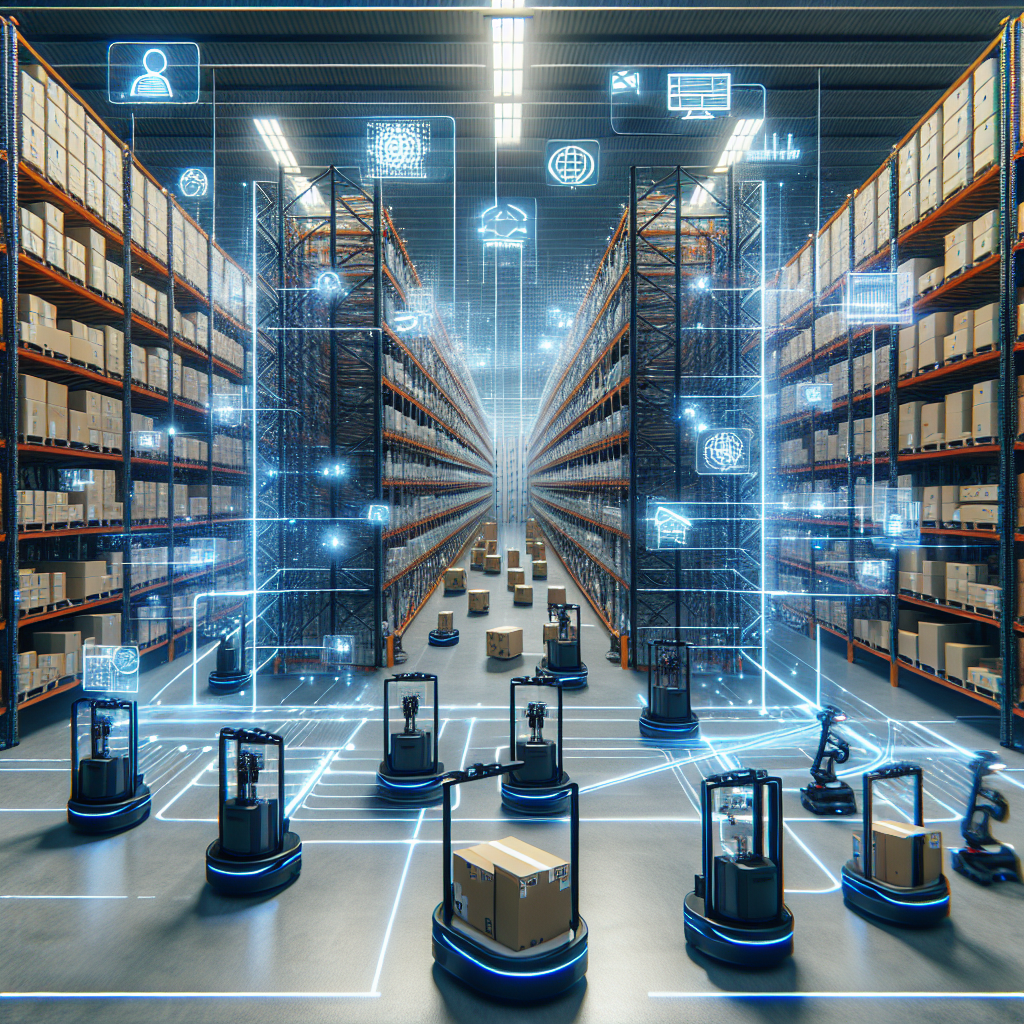
Unlike fixed conveyor systems or older automated guided vehicles (AGVs), autonomous mobile robots (AMR) navigate dynamically using onboard sensors, LiDAR, and machine learning algorithms. This means they adapt to changing floor layouts, avoid obstacles in real time, and collaborate with human workers safely and efficiently. Companies like Amazon Robotics and Fetch Robotics have deployed fleets of thousands of AMRs that collectively handle millions of picks per day.
For example, DHL Supply Chain reported a 25% increase in throughput and a 15% reduction in operational costs after deploying AMR fleets across three of its North American fulfillment centers in 2023. The robots communicate continuously with warehouse management systems (WMS) via low-latency wireless networks, ensuring task allocation is always optimized.
AMR Integration With Orchestration Platforms
Modern AMR platforms expose open APIs that allow seamless integration with third-party orchestration software, enabling cross-vendor fleet management. This interoperability is critical for organizations scaling their Industry 4.0 smart factory integration across multiple sites. Standards like VDA 5050 are emerging to ensure AMRs from different manufacturers can operate within a unified control layer.
- Autonomous mobile robots (AMR) navigate dynamically and adapt to real-time warehouse conditions.
- Industry deployments show measurable gains in throughput and cost reduction.
- Open API standards like VDA 5050 are enabling cross-vendor AMR interoperability.
Warehouse Edge Computing: The Intelligence Layer Powering Zero-Touch Operations
Why Edge Computing Beats Cloud-Only Architectures in Warehouses
Warehouse edge computing pushes data processing closer to the source — directly onto factory floors, dock doors, and robotic control nodes — eliminating the latency penalties of round-tripping data to centralized cloud servers. In environments where AMRs must make collision-avoidance or routing decisions in milliseconds, edge nodes with local inference capabilities are not optional; they are mission-critical. IDC forecasts that global spending on edge computing in logistics will exceed $9 billion by 2027.
Edge nodes also provide operational continuity during network outages — a significant risk factor in large distribution facilities. By running local decision models, warehouses maintain zero-touch orchestration workflows even when WAN connectivity is temporarily disrupted, ensuring SLA commitments to retailers and e-commerce platforms are consistently met.
Edge AI and Real-Time Inventory Visibility
When warehouse edge computing is paired with computer vision cameras and RFID readers, facilities gain real-time inventory accuracy rates exceeding 99.9%, compared to the industry average of 63% for manual cycle counts, according to the GS1 Standards Organization. Edge AI models continuously reconcile physical stock against digital records, triggering replenishment orders or re-routing AMRs without human oversight. This is the operational heart of true zero-touch logistics orchestration.
- Warehouse edge computing reduces latency to milliseconds, enabling real-time AMR decision-making.
- Edge architectures ensure operational continuity during cloud or WAN outages.
- Edge AI paired with RFID and computer vision achieves inventory accuracy above 99.9%.
Industry 4.0 Smart Factory Integration: Connecting the Dots
True Industry 4.0 smart factory integration goes beyond deploying individual technologies — it demands a unified data fabric that connects ERP systems, WMS platforms, AMR fleets, and IoT sensors into a single orchestrated workflow. Platforms such as SAP Digital Manufacturing and Honeywell Forge are enabling this convergence, offering pre-built connectors for leading AMR vendors and edge hardware providers. The result is a supply chain that is self-monitoring, self-optimizing, and capable of predictive resilience.
A compelling real-world example is Bosch’s Stuttgart smart factory, where Industry 4.0 integration reduced unplanned downtime by 30% and improved on-time delivery rates to 98.7% by synchronizing production scheduling with inbound logistics AMR workflows and edge-based quality inspection systems. Such outcomes illustrate why warehouse automation solutions are now boardroom-level strategic priorities.
- Industry 4.0 smart factory integration requires a unified data fabric connecting ERP, WMS, AMRs, and IoT.
- Leading platforms offer pre-built connectors to accelerate deployment timelines.
- Real-world deployments like Bosch Stuttgart demonstrate measurable gains in uptime and delivery performance.